Lessons from Edge City, after the world changed again.


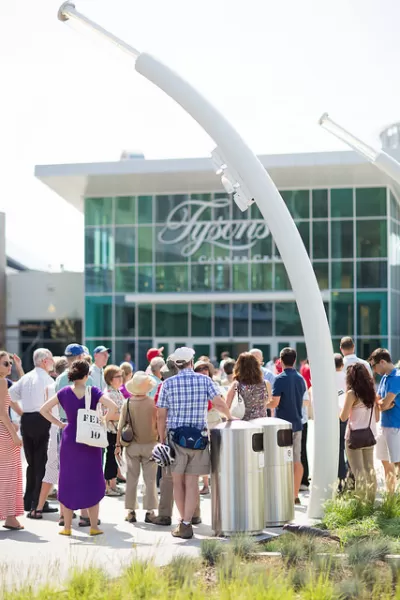
coined the term Edge City with his 1991 book Edge City: Life on the New Frontier, which Jake Blumgart writes revisits in a post for CityLab.
"For years, all across the country, stores, offices, and entertainment had been retreating into the suburban and exurban hinterlands where the middle class had decamped," explains Blumgart. The effect of these decades of migration amounted to the "suburbanization of everything."
Garreau's definition of an Edge City relied on statistics, explains Blumgart: "It’s a place that has at least 5 million square feet of leasable office space, 600,000 square feet of retail space, and a population that increases at 9 a.m. on weekdays. It’s perceived locally as a destination for work, shopping, entertainment, and housing. Finally, it sits on land that, 35 years prior, was primarily rural or residential." Garreau's primary example of an Edge City was Tyson's Corner, Virginia.
The book was wildly successful—reaching much-read status with planners and also finding wider popularity. Blumgart speaks with Garreau about the motivations and ideas that inspired the book (Garreau was far from sympathetic toward sprawl) and also examines the political and academic backlash against the book. Eventually Garreau also evolved his theory, saying that American's are "Santa Fe-ing the World," but a long term trend away from large, old cities.
FULL STORY: Return to Edge City

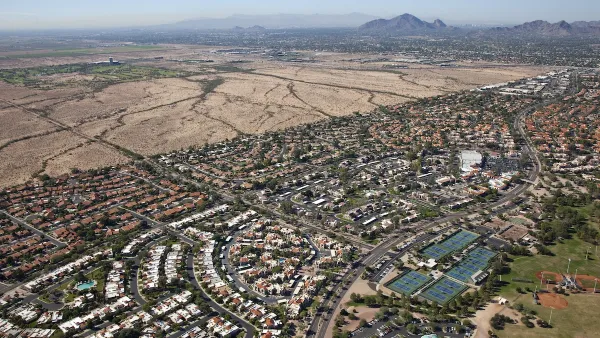
Nearly Half a Million New Arizona Homes Halted Due to Water Crisis
The Arizona Department of Water Resources has put a moratorium on new water supply permits, making the future of planned residential developments uncertain.
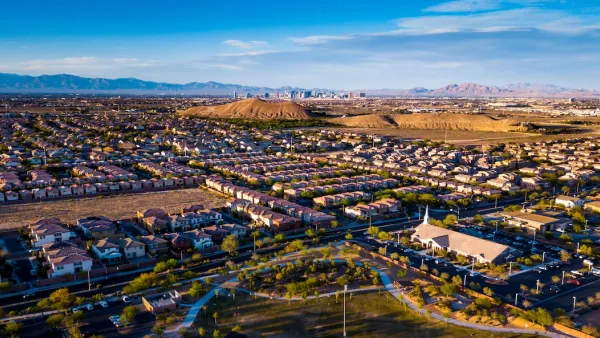
The Nation’s 40 Fastest-Growing Suburbs
Projected population growth will be concentrated in suburban communities around major metropolitan areas, with the Sunbelt experiencing the fastest growth.

The Natalist Case For Sprawl (And Why It Fails)
Some commentators defend anti-urban government policies such as exclusionary zoning on the basis that homeowning suburbanites have high birth rates. But this doesn't seem to be true in recent decades.

Planetizen Federal Action Tracker
A weekly monitor of how Trump’s orders and actions are impacting planners and planning in America.

The state-sanctioned urbicide of Austin
People don’t kill cities. Freeways do.

US to reduce Colorado River water deliveries to Mexico
A new Colorado Treaty amendment reduces Mexico’s Colorado River water allocation by 250,000 acre feet.

5 New England states march closer to 800 megawatt wind energy project
Securing federal approval for the project may be complicated under the Trump administration, which has historically been hostile towards domestic wind power.

Baltimore to break ground on $50 million Transit Priority Project
The project will bring faster bus trips, safer streets and better bike connections to Baltimore.

Airbnb launches $250 million 'last-dollar financing' housing accelerator, makes first investment in Austin
The company will put $6.4 million towards affordable housing development in Texas’ capital.

FREE Course: Walkable City 1: Why Walkability?
After describing his path towards focusing on walkability as the essence of good planning, Jeff Speck marches through his five principal reasons for making more walkable places.
Reinventing Malls: Planning Alchemy—Turning Gray Fields Into Gold
The course focuses on the opportunities and imperatives that shape reinvention of mall sites.

Eagle County Government
Harvard University Graduate School of Design
Nashville Planning Department
The Architects Foundation
University of Cincinnati Online
The Pocatello Development Authority
The Urban Renewal Agency of the City of Pocatello
Journal of the American Planning Association