Communities around Northwest Arkansas have placed bike infrastructure at the center of a plan to retrofit suburban communities.


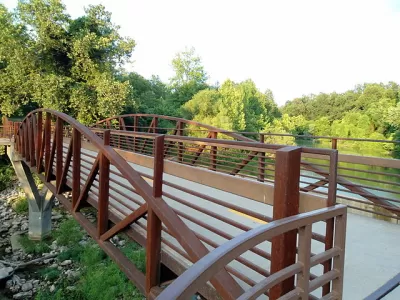
Robert Steuteville shares the development details of the Razorback Greenway and a larger effort that has added 163 of pedestrian and bike trails and implemented systematic attention to urban design in the Northwest Arkansas region.
Steuteville examines Northwest Arkansas as a case study for suburban retrofits, with special attention to the benefits of bike infrastructure.
Studies show that bicycling in general provided $137 million in health and economic benefits to the region in 2017, reports the Walton Family Foundation. The foundation provided $74 million for the construction of the trails over the last 10 years, working with municipalities that provide ongoing contributions—and use of trails rose 24 percent in the last two years.
The trail system is one layer of reforms, along with form-based development codes, revitalization of historic main streets, and investment in culture and the arts, that are designed to make this region more livable. Bicycling infrastructure is a suburban retrofit strategy in Northwest Arkansas.
The article provides historical context for the development of the region, a brief description of the current state of the region, and the goals and achievements of the ongoing suburban retrofit program.
Read the full story: The benefits of bike trails
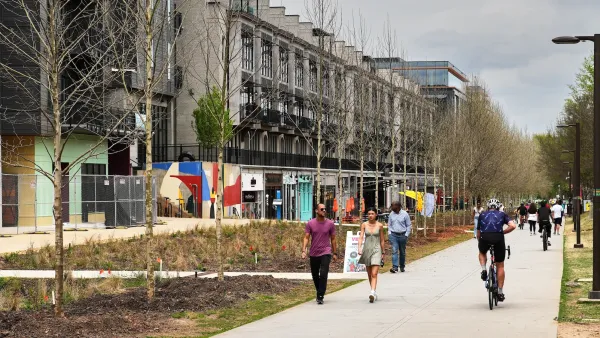
Trump has Slashed Over $750 Million From Bike and Walking Trail Projects
The Trump administration is pulling hundreds of millions allocated under the 2022 Inflation Reduction Act.
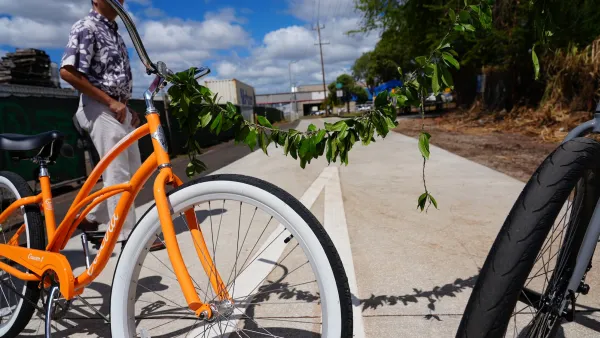
Hawaii’s Pearl Harbor Bike Path is Flooding More Often, Forcing Commuters Onto More Dangerous Roads
The 5-mile trail serves as a key bikeway for commuters connecting to local transit.
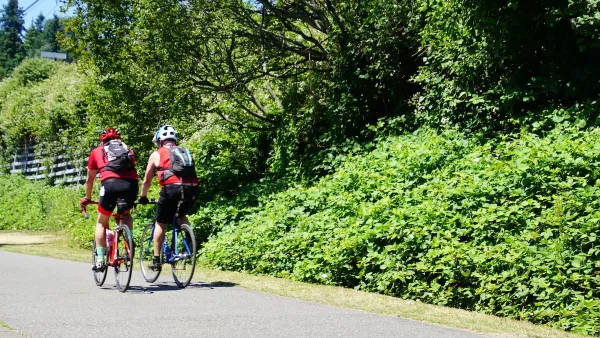
Washington State Plans Ambitious ‘Cycle Highway’ Network
The state is directing funding to close gaps in its existing bike network and make long-distance trips more accessible.

Planetizen Federal Action Tracker
A weekly monitor of how Trump’s orders and actions are impacting planners and planning in America.

California plans to bury El Niño’s downpour
If the state plays its cards right, it may be able to store a billion acre-feet of El Niño’s water in aquifers.

Desperate measures: Advocates weigh draining Lake Powell to fill Colorado River
Draining the reservoir could reduce evaporation losses by a couple hundred thousand acre-feet.

In Texas, data centers are swallowing promised parkland
Residents who moved to Taylor, Texas for a rural community now have to contend with three data centers in their backyard.

How a Chicago-sized wind farm beat the odds and powered on
The project spanned five presidential administrations and a standoff with a U.S. military base.

MTA gives itself 30 days to transform pit into basketball court
The site has been under construction since 2022; the city originally estimated it would finish the court in 2024.

FREE Course: Walkable City 1: Why Walkability?
After describing his path towards focusing on walkability as the essence of good planning, Jeff Speck marches through his five principal reasons for making more walkable places.
Reinventing Malls: Planning Alchemy—Turning Gray Fields Into Gold
The course focuses on the opportunities and imperatives that shape reinvention of mall sites.


City of Rosemead
Rutgers University, Edward J. Bloustein School of Planning and Public Policy
One Hundred Miles
Hunter College, City University of New York (CUNY)
The Architects Foundation
University of Cincinnati Online
City of Cambridge
Montrose County
The Pocatello Development Authority