The architects behind “Stalled!” see gender as one of many variables and identities to consider in designing inclusive environments.


The design of bathrooms — “men’s rooms” and “ladies’ rooms” as they are still commonly known — seems to be, first and foremost, all about gender. But appearances can be deceiving. In over twenty years of academic and professional practice, Joel Sanders has thought carefully about the ways that gender and sexual identity interact with architectural design, and over the last several years this focus has honed in on the bathroom. In this interview with representatives from the organizations QSPACE and QSAPP, together with Intersections guest editor Jacob Moore, he explains the ways that an updated approach to bathroom design, while critiquing and expanding society’s rigid definitions of gender, can and should additionally address issues of inclusivity, ability, and access that reach well beyond bathroom walls (or corridors, as the case may be).
Read the full story: Noncompliant Bodies, Accommodating Space

Off the Beaten Path
Designing comfort stations to accommodate more than 60 million annual New York State Parks visitors — representing many different genders, backgrounds, and accessibility needs — is no simple task.
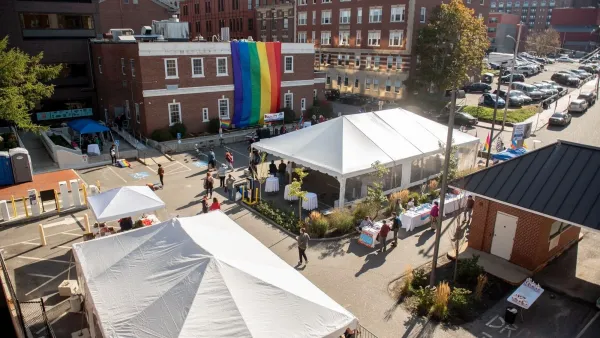
Portland unveils Maine’s first affordable housing complex for LGBTQ+ seniors
The building earmarks 11 units for people with disabilities or living with HIV/AIDS.
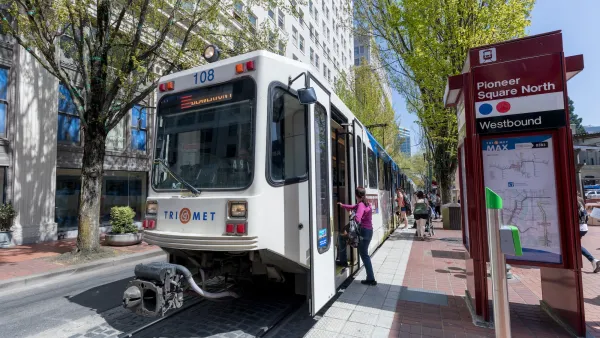
TriMet will eliminate 'Hand-to-Hand' paratransit service for half of its users
Roughly 300 Portland-area paratransit riders will lose access to a program that lets drivers escort them into their destination.

Planetizen Federal Action Tracker
A weekly monitor of how Trump’s orders and actions are impacting planners and planning in America.

The state-sanctioned urbicide of Austin
People don’t kill cities. Freeways do.

Colorado’s Largest Data Center Could Rise Next to Homes — Without a Public Hearing
The proposed campus would consume 11 times the power of Denver International Airport; as it has across the country, opposition mounts.

Nation's most wind-powered state turns to coal as data centers increase energy demand
For the first time in decades, Iowa has increased its generation of coal power.

NYC cools commuters with city's first rain garden above a bus stop
New York City officials say the plants in the rain garden can absorb 16 gallons of rainwater during heavy storms.

Brightline West’s future may rely on $6 billion federal loan
The company has until Nov. 2 to make a $400 million equity investment into its proposed high-speed rail line.

FREE Course: Walkable City 1: Why Walkability?
After describing his path towards focusing on walkability as the essence of good planning, Jeff Speck marches through his five principal reasons for making more walkable places.
Reinventing Malls: Planning Alchemy—Turning Gray Fields Into Gold
The course focuses on the opportunities and imperatives that shape reinvention of mall sites.

Greater Baltimore Committee
Eagle County Government
Harvard University Graduate School of Design
The Architects Foundation
University of Cincinnati Online
The Pocatello Development Authority
The Urban Renewal Agency of the City of Pocatello
Journal of the American Planning Association