A long-brewing controversy has finally resulted in legal repercussions for Facebook.



"Housing advocates filed a federal lawsuit against Facebook in a Manhattan courtroom [this week], alleging that the social network and advertising platform enables landlords and real estate brokers to exclude families with children, women, and other protected classes from seeing housing ads," reports Patrick Sisson.
"The plaintiffs—the National Fair Housing Association, the Fair Housing Justice Center of New York City, Housing Opportunities Project for Excellence, Inc. in Miami; and the Fair Housing Council of Greater San Antonio—allege that Facebook, by utilizing the personal data of users to help advertisers target (and exclude) specific groups and audiences, enables discriminatory practices that violate the Fair Housing Act," adds Sisson.
Sisson's coverage of the lawsuit includes a statement from a spokesperson for Facebook, which refutes the validity of the lawsuit. As noted in the article, this isn't the first time that Facebook's advertisement platform has been accused of housing discrimination. As recently at as November 2017, ProPublica was finding evidence of ongoing discriminatory practices.
A press release from the National Fair Housing Alliance announcing the lawsuit provides more details.
FULL STORY: Facebook sued for allowing discriminatory housing ads

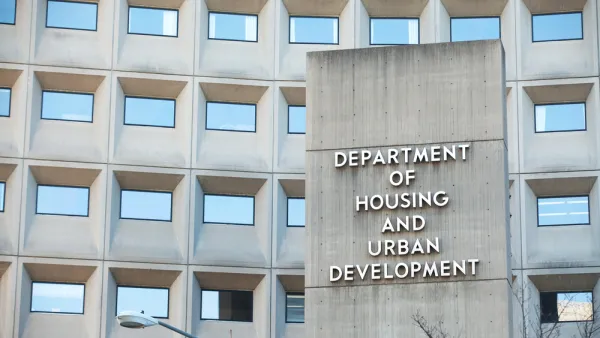
Breaking News: Feds Sue Facebook Over Discriminatory Housing Advertisement System
The U.S. Department of Housing and Urban Development escalated its actions against Facebook, even after the social media giant had settled a lawsuit with civil rights organizations and taken steps to reform its advertising system.

Facebook Among Targets of HUD's Latest Round of Fair Housing Enforcement
The U.S. Department of Housing and Urban Development is taking on one big fish and a few little fish in the battle against housing discrimination.
Amid Turmoil, HUD Relaxes Fair Housing Enforcement
The department's activities, or lack thereof, under the Trump administration have caused housing advocates a lot of consternation. Under Ben Carson, is HUD abandoning its fair housing mission?

The state-sanctioned urbicide of Austin
People don’t kill cities. Freeways do.

US to reduce Colorado River water deliveries to Mexico
A new Colorado Treaty amendment reduces Mexico’s Colorado River water allocation by 250,000 acre feet.

New Jersey’s second-largest city bans standalone data centers
Jersey City will continue to allow co-location facilities, such as those meant for research institutions that store their own data.

Amtrak not solely to blame for New Jersey commuter rail's unreliability, report finds
A new study from the Garden State Initiative found that NJ Transit’s budget grew 20% across a 4 year period, but reliability declined significantly over the same period.

EPA erases limits on planet-warming pollution from power plants
Under Monday’s plan, power plants would still have some limits on how much mercury, arsenic and other contaminants they can emit.

Phoenix announces new on-demand transit service, more frequent RAPID buses
Both new services will launch in October, and are part of Phoenix's Project Effective Access Solutions for Easing Congestion.

FREE Course: Walkable City 1: Why Walkability?
After describing his path towards focusing on walkability as the essence of good planning, Jeff Speck marches through his five principal reasons for making more walkable places.
Reinventing Malls: Planning Alchemy—Turning Gray Fields Into Gold
The course focuses on the opportunities and imperatives that shape reinvention of mall sites.

Eagle County Government
Harvard University Graduate School of Design
Nashville Planning Department
The Architects Foundation
University of Cincinnati Online
The Pocatello Development Authority
The Urban Renewal Agency of the City of Pocatello
Journal of the American Planning Association