The mission of the National League of Cities is to advocate for cities—and the organization is now gathering evidence to push back on growing amount of state preemption of local control.


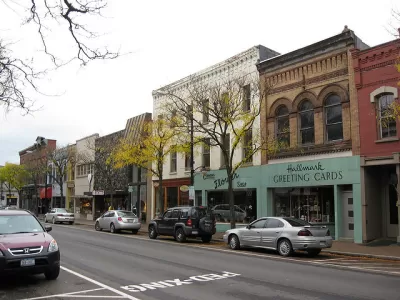
The National League of Cities is pushing back on a wave of threats to local control by states in every part of the country. The National League of Cities calls the expansion of state control "preemption," and it's re-upping its research efforts into the economic effect of preemption with a three-year research grant by the Ewing Marion Kauffman Foundation.
According to an article announcing the funding, the National League of Cities "[posits] that preemption is negatively affecting the entrepreneurial ecosystems of cities and thereby impeding growth and innovation in city economies." The forthcoming research will "test this hypothesis through rigorous analysis and quantitative research to provide data on the ultimate impact of these misguided policy dichotomies between state and city."
The article notes that the research is coning at a "critical time" in the political debate that pits state versus local municipalities. According to analysis published by the National League of Cities in 2017, "Preemption, or the use of state law to nullify a municipal ordinance or authority, has proliferate in recent years, particularly in economic development-related policy areas, including minimum wage, municipal broadband and the sharing economy."
FULL STORY: Preemption Threatens Economic Development and Innovation


Finding Ways for States and Cities to Work Together to Solve the Housing Crisis
The National League of Cities has a new report surveying local tools for addressing the housing affordability crisis. State partnerships are included.

HUD Took a Strong Stance Against Local Control and Hardly Anyone Noticed
Earlier this year, the U.S. Department of Housing and Urban Development devoted an entire issue of a quarterly newsletter to land use regulations and the idea that local laws are strangling the nation's supply of affordable housing.
Louisiana State Senate Votes to Preempt Locals on Inclusionary Zoning
Earlier this week, the Louisiana State Senate approved SB 462, which preempts local authorities from approving inclusionary zoning.

The state-sanctioned urbicide of Austin
People don’t kill cities. Freeways do.

US to reduce Colorado River water deliveries to Mexico
A new Colorado Treaty amendment reduces Mexico’s Colorado River water allocation by 250,000 acre feet.

New Jersey’s second-largest city bans standalone data centers
Jersey City will continue to allow co-location facilities, such as those meant for research institutions that store their own data.

Amtrak not solely to blame for New Jersey commuter rail's unreliability, report finds
A new study from the Garden State Initiative found that NJ Transit’s budget grew 20% across a 4 year period, but reliability declined significantly over the same period.

EPA erases limits on planet-warming pollution from power plants
Under Monday’s plan, power plants would still have some limits on how much mercury, arsenic and other contaminants they can emit.

Phoenix announces new on-demand transit service, more frequent RAPID buses
Both new services will launch in October, and are part of Phoenix's Project Effective Access Solutions for Easing Congestion.

FREE Course: Walkable City 1: Why Walkability?
After describing his path towards focusing on walkability as the essence of good planning, Jeff Speck marches through his five principal reasons for making more walkable places.
Reinventing Malls: Planning Alchemy—Turning Gray Fields Into Gold
The course focuses on the opportunities and imperatives that shape reinvention of mall sites.

Eagle County Government
Harvard University Graduate School of Design
Nashville Planning Department
The Architects Foundation
University of Cincinnati Online
The Pocatello Development Authority
The Urban Renewal Agency of the City of Pocatello
Journal of the American Planning Association