By the usual measures, wealthy "consumer cities" have largely put a check on their carbon emissions. But that doesn't account for the emissions that their consumption habits fuel in other places.


Citing the hefty figure of 60 percent, Stephen Leahy writes that "The world's cities emit 70 percent of the world’s carbon dioxide—and that's likely higher when consumption emissions are included."
The finding comes from a report released at the IPCC Cities and Climate Change Science Conference. The "vitality" of wealthy cities, the report says, gives rise to significant greenhouse gas emissions outside their boundaries. Leahy writes, "when the emissions associated with their consumption of goods and services are included, these cities' emissions have grown substantially and are among the highest in the world on a per person basis, the report says."
Measuring emissions only by what originates within city limits paints a rosy picture of "consumer cities" and may unfairly vilify the places that produce those goods. As Cleveland sustainability chief Matt Gray argued to The National Geographic, "Resource consumption was not a factor in last year's U.S. Cities Sustainable Development Goals Index, which put Cleveland at the bottom. Yet the fact that Cleveland is widely considered a national leader in local food production wasn't a factor in the index [...]"
Read the full story: Cities Emit 60% More Carbon Than Thought

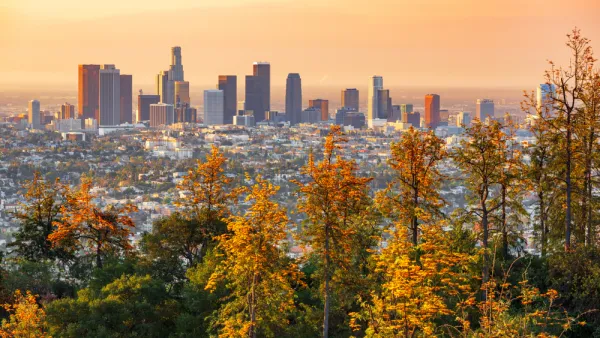
LA’s Trees Absorb More Carbon Than Expected, But Can’t Do It Alone
A USC study finds that Los Angeles’ urban trees absorb more carbon than expected, but while they provide crucial environmental benefits, they cannot replace the urgent need for systemic emissions reductions.

Assessing Prince George's County's Climate Action Plan
The Prince George's County draft Climate Action Plan includes ambitious goals and timetables, but falls short of recommended targets for emissions reductions in the transportation sector.
Report: How The U.S. Could Meet Its 2030 Climate Goals
If policymakers don't take clear, immediate action, emissions reductions will fall short of the 50-52 percent goal set in Paris.

Planetizen Federal Action Tracker
A weekly monitor of how Trump’s orders and actions are impacting planners and planning in America.

The state-sanctioned urbicide of Austin
People don’t kill cities. Freeways do.

US to reduce Colorado River water deliveries to Mexico
A new Colorado Treaty amendment reduces Mexico’s Colorado River water allocation by 250,000 acre feet.

Nation's most wind-powered state turns to coal as data centers increase energy demand
For the first time in decades, Iowa has increased its generation of coal power.

NYC cools commuters with city's first rain garden above a bus stop
New York City officials say the plants in the rain garden can absorb 16 gallons of rainwater during heavy storms.

Brightline West’s future may rely on $6 billion federal loan
The company has until Nov. 2 to make a $400 million equity investment into its proposed high-speed rail line.

FREE Course: Walkable City 1: Why Walkability?
After describing his path towards focusing on walkability as the essence of good planning, Jeff Speck marches through his five principal reasons for making more walkable places.
Reinventing Malls: Planning Alchemy—Turning Gray Fields Into Gold
The course focuses on the opportunities and imperatives that shape reinvention of mall sites.

Greater Baltimore Committee
Eagle County Government
Harvard University Graduate School of Design
The Architects Foundation
University of Cincinnati Online
The Pocatello Development Authority
The Urban Renewal Agency of the City of Pocatello
Journal of the American Planning Association