Arriving this week. Like, practically right now.


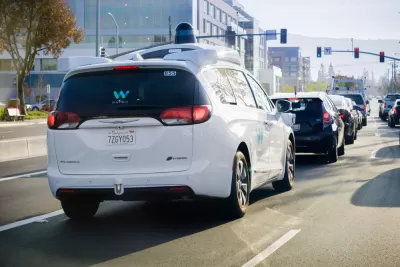
Waymo self-driving trucks (Waymo is a subsidiary of Google parent company Alphabet) will hit the road in Georgia this week. According to an article by Peter Holley, a pilot project will roll out "Peterbilt Class 8 trucks to carry cargo bound for Google’s data centers…"
"The company’s engineers have been testing self-driving trucks in California and Arizona, the same state where a fleet of 600 autonomous Waymo taxis has been on the roads without a human driver since November," adds Holley. November 2017 seems like a momentous month for the company—Waymo also announce a breakthrough with fully autonomous driving that same month.
Uber, one of Waymo's main competitors in the race to revolutionize the transportation market, announced earlier in the week that it recently began transporting freight across Arizona using driverless trucks. "Not to be outshone, a start-up called Embark recently drove an automated truck across the country without a driver, completing a 2,400-mile journey from California to Florida," adds Holley.
Read the full story: Waymo’s self-driving trucks will arrive on Georgia roads next week
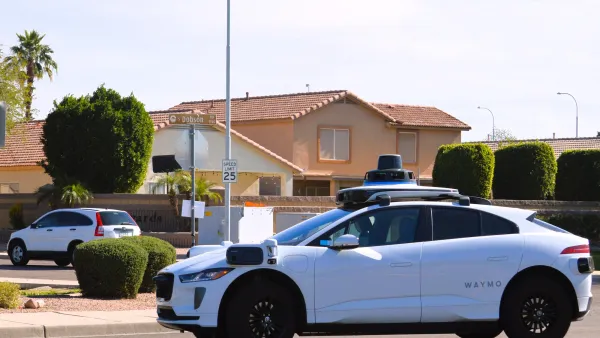
Uber and Waymo part ways in Phoenix
The companies ended a three-year pilot program, with Waymo saying it plans to keep its Phoenix robotaxi fleet available through its own app.

Atlanta, Dallas Area to Launch Robotaxi Rideshare Fleets
Lyft and Uber will begin including autonomous vehicles in their networks in Atlanta and Arlington, Texas starting later this year.

Uber Bails on Autonomous Vehicles
One of the highest-profile, and most legally fraught, efforts to beat the competition into the autonomous vehicles market is now defunct.

California plans to bury El Niño’s downpour
If the state plays its cards right, it may be able to store a billion acre-feet of El Niño’s water in aquifers.

Desperate measures: Advocates weigh draining Lake Powell to fill Colorado River
Draining the reservoir could reduce evaporation losses by a couple hundred thousand acre-feet.

Eastern Nebraska is running out of electricity
Data centers and electrification are straining eastern Nebraska’s grid, throttling economic development.

SpaceXAI may be fined $6 million for data center lacking water permits
A Mississippi agency also responds after a federal judge criticized the state’s Clean Air Act enforcement.

Housing is the top priority of Seattle’s sole new councilmember
Jenks campaigned on building 1,000 new units of affordable housing.

New tax cuts may slash $1.5 billion in funding for Miami transit, public parks
Amendment 3 will save Miami-Dade homeowners $2,700 in 2028.

FREE Course: Walkable City 1: Why Walkability?
After describing his path towards focusing on walkability as the essence of good planning, Jeff Speck marches through his five principal reasons for making more walkable places.
Reinventing Malls: Planning Alchemy—Turning Gray Fields Into Gold
The course focuses on the opportunities and imperatives that shape reinvention of mall sites.

City of Rosemead
Rutgers University, Edward J. Bloustein School of Planning and Public Policy
One Hundred Miles
University of Michigan School for Environment and Sustainability (SEAS)
Hunter College, City University of New York (CUNY)
The Architects Foundation
City of Cambridge
Montrose County
The Pocatello Development Authority