In a move to grant further autonomy and rights to the homeless population of Seattle, a court found in favor of a man who argued his truck was his home and should not have been towed after he didn't move for 72 hours.


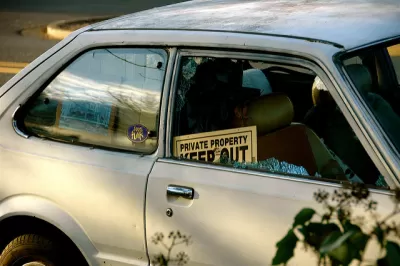
Steven Long lives in his 2000 GMC truck. One day after coming home from work he found that truck was gone. Seattle law requires that vehicles parked on the street be moved every 72 hours, Mr. Long's truck had been towed to the impound. Long sued the city and won.
"King County Superior Court Judge Catherine Shaffer ruled that the city’s impoundment of Long’s truck violated the state’s homestead act — a frontier-era law that protects properties from forced sale — because he was using it as a home. Long’s vehicle was slated to be sold had he not entered into a monthly payment plan with the city," Vianna Davila writes in The Seattle Times.
Long's attorney suggested that the finding could change the way parking laws are enforced for people living in their cars around the state. King County alone is home to more than 2,000 people living in cars according to a 2017 point-in-time count.
Some see the possibility that the change in the law may cause problems for the city, Davila writes, "Police and parking-enforcement officers could now find themselves in a bind if they can’t definitively determine whether a vehicle is simply abandoned or is someone’s home, said Assistant City Attorney Michael Ryan."
Read the full story: Judge rules Seattle homeless man’s truck is a home

Seattle Regional Homelessness Authority Plan Moves Forward, but Faces Controversy
A proposal for a regional entity to oversee homeless services in King County is running into jurisdictional conflicts.

Modular Housing for the Homeless
The Seattle region will try to save costs and speed construction on three new pilot projects by using modular construction to house homeless.

Seattle's Homeless Population Is Booming Too
While rates of homelessness drop elsewhere, tents and cardboard are becoming a very regular sight in Seattle. New wealth and newly unaffordable housing may be twin culprits.

Planetizen Federal Action Tracker
A weekly monitor of how Trump’s orders and actions are impacting planners and planning in America.

Amtrak, CN end decades-long dispute with eight-year agreement
The new operating agreement establishes an updated framework for the companies to work together, including processes to resolve disputes.

Judges permit Denver to divert 77,000 acre feet from the Colorado River for reservoir expansion
Overuse and climate change have caused the Colorado River’s water levels to plummet.

NYC DOT wants faster, more permanent street upgrades
The city is examining ways to build more concrete infrastructure without getting entangled in 'decades-long' projects.

'Something we’ve never seen before:' rising utility rates could strain city finances nationwide
Data centers, climate change and other factors have caused utility rates in the United States to increase by 38% since 2020.

Trump to overrule local leaders, lease millions of acres of America’s Pacific Island territories’ seafloors to mining companies
International law says that the Indigenous people of America’s territories have a right to prior and informed consent regarding projects that impact their countries.

FREE Course: Walkable City 1: Why Walkability?
After describing his path towards focusing on walkability as the essence of good planning, Jeff Speck marches through his five principal reasons for making more walkable places.
Reinventing Malls: Planning Alchemy—Turning Gray Fields Into Gold
The course focuses on the opportunities and imperatives that shape reinvention of mall sites.

Harvard University Graduate School of Design
KFH Group Inc.
Greater Baltimore Committee
The Architects Foundation
University of Cincinnati Online
The Pocatello Development Authority
The Urban Renewal Agency of the City of Pocatello