According to new research, the tragic impact of Hurricane Maria lingered for months after the storm hit Puerto Rico on September 20, 2017, and at far greater magnitude than the federal government has acknowledged.


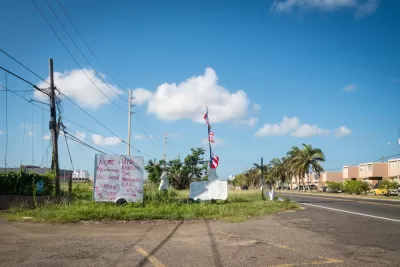
"Two months after Hurricane Maria ripped through Puerto Rico, scores of people were still dying in its aftermath," reports Milton Carrero.
Alexis Santos, a demographer at Pennsylvania State University, conducted the analysis with data from the Puerto Rico Institute of Statistics. Santos places the total number of deaths in September, October, and November at 1,230.
The number of deaths caused by Hurricane Maria raises troubling questions about the federal government's approach to the storm. As Carrero explains, "[w]hen President Trump visited Puerto Rico two weeks after the storm, he used the official death toll of 16 as evidence that his administration had been highly effective in dealing with the tragedy." The federal government has since adjusted the death toll, eventually maxing out the number at its current level of 64 on December 9. Obviously, Santos's research stands as a stark rebuttal of the government's narrative about the fallout from the storm.
The federal government's lack of attention to the lasting effects of the storm also stand in contrast to the creation of the Mayor Exchange, which Kristin Musulin reports will "connect mayors of U.S. mainland cities with mayors in Puerto Rico for guidance and support in rebuilding the island following Hurricane Maria."
"An estimated 40 mayors are expected to participate in the Exchange in the coming weeks, including Chicago Mayor Rahm Emanuel, Houston Mayor Sylvester Turner and Miami Mayor Francis Suarez," according to Musulin, New Orleans Mayor Mitch Landrieu has already been paired with Ponce Mayor Maria Meléndez.
FULL STORY: Puerto Rico deaths related to Hurricane Maria continued for months after the storm, data suggest

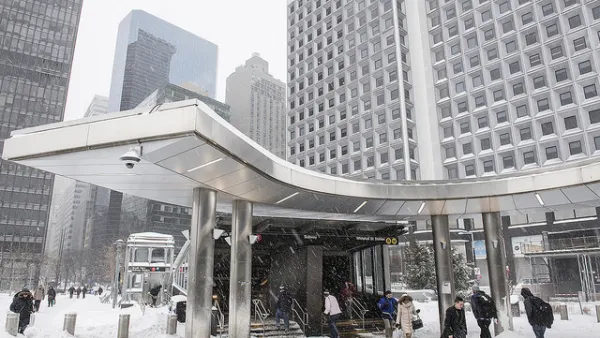
The East Coast's 'Bomb Cyclone' and Climate Change
When President Trump tweeted that the East Coast needed global warming due to the freezing cold, experts responded by explaining the difference between weather and climate. But climate change may indeed be a cause of the bomb cyclone.

Extreme weather is weakening social connections
Extreme heat, flooding and other weather events are increasing isolation and fraying social ties.
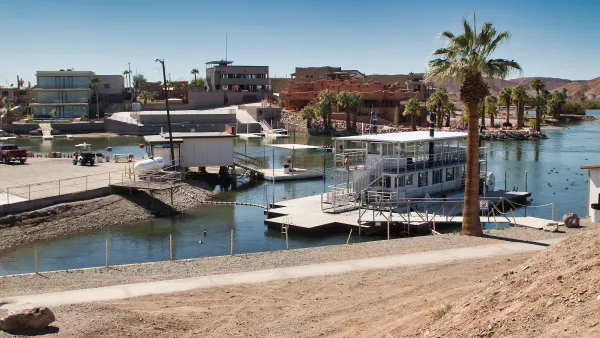
Arizona had its hottest spring in 131 years
Average March temperatures across the state were 12.5 degrees above normal.

The state-sanctioned urbicide of Austin
People don’t kill cities. Freeways do.

US to reduce Colorado River water deliveries to Mexico
A new Colorado Treaty amendment reduces Mexico’s Colorado River water allocation by 250,000 acre feet.

New Jersey’s second-largest city bans standalone data centers
Jersey City will continue to allow co-location facilities, such as those meant for research institutions that store their own data.

Amtrak not solely to blame for New Jersey commuter rail's unreliability, report finds
A new study from the Garden State Initiative found that NJ Transit’s budget grew 20% across a 4 year period, but reliability declined significantly over the same period.

EPA erases limits on planet-warming pollution from power plants
Under Monday’s plan, power plants would still have some limits on how much mercury, arsenic and other contaminants they can emit.

Phoenix announces new on-demand transit service, more frequent RAPID buses
Both new services will launch in October, and are part of Phoenix's Project Effective Access Solutions for Easing Congestion.

FREE Course: Walkable City 1: Why Walkability?
After describing his path towards focusing on walkability as the essence of good planning, Jeff Speck marches through his five principal reasons for making more walkable places.
Reinventing Malls: Planning Alchemy—Turning Gray Fields Into Gold
The course focuses on the opportunities and imperatives that shape reinvention of mall sites.

Eagle County Government
Harvard University Graduate School of Design
Nashville Planning Department
The Architects Foundation
University of Cincinnati Online
The Pocatello Development Authority
The Urban Renewal Agency of the City of Pocatello
Journal of the American Planning Association