"Why does Old City keep burning?" That's the question posed by Philadelphia Inquirer architecture critic Inga Saffron.


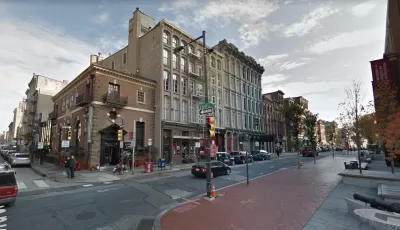
Inga Saffron establishes the boundaries of Old City as the blocks between the Delaware waterfront and Independence Mall, calling it home to one of the richest collections of architecture in the entire city. The neighborhood also attracted creative businesses and tech industry start-ups in recent years.
"And yet," writes Saffron, "in the 15 years since the city declared the area a historic district, Old City has lost no less than five distinctive, 19th-century commercial buildings to fire and other unfortunate events." The most recent fire "swept through a trio of mid-19th century merchant buildings over the quiet holiday weekend," according to Saffron. The "most devastating loss yet."
Saffron continues to explain more history of the buildings, which sets a conversation about the lack of maintenance and fire-safety technology in many of the buildings in Old City. Despite overwhelming financial reasons to install sprinkler (installing sprinklers tax breaks is less expensive than insurance premiums), many landlords still don't keep their buildings up to contemporary standards.
Read the full story: Why do Old City buildings keep burning?


U.S. Fire Administration to Investigate Building Fires
New legislation gives the federal agency power to identify the causes of deadly fires and recommend improvements.
The Philadelphia Design District Makes its Debut
Long a hub of creative workers in Philadelphia, a collaboration of companies based in the Old City neighborhood in Philadelphia has rebranded as the Philadelphia Design District.
A Plan to Make Philadelphia's Market Street More Like Main Street
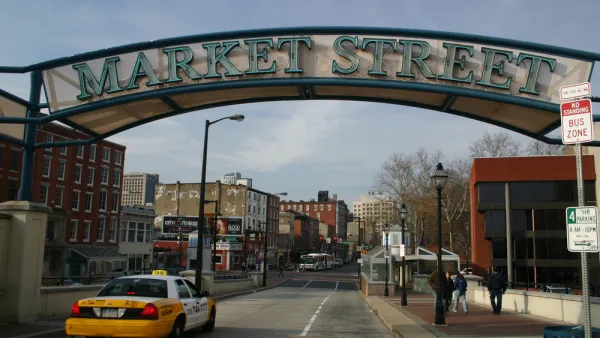
Changing demographics and mobility choices along the historic Market Street in Philadelphia have planners looking for ways to implement a road diet and put safety first.

Planetizen Federal Action Tracker
A weekly monitor of how Trump’s orders and actions are impacting planners and planning in America.

California plans to bury El Niño’s downpour
If the state plays its cards right, it may be able to store a billion acre-feet of El Niño’s water in aquifers.

Desperate measures: Advocates weigh draining Lake Powell to fill Colorado River
Draining the reservoir could reduce evaporation losses by a couple hundred thousand acre-feet.

In Texas, data centers are swallowing promised parkland
Residents who moved to Taylor, Texas for a rural community now have to contend with three data centers in their backyard.

How a Chicago-sized wind farm beat the odds and powered on
The project spanned five presidential administrations and a standoff with a U.S. military base.

MTA gives itself 30 days to transform pit into basketball court
The site has been under construction since 2022; the city originally estimated it would finish the court in 2024.

FREE Course: Walkable City 1: Why Walkability?
After describing his path towards focusing on walkability as the essence of good planning, Jeff Speck marches through his five principal reasons for making more walkable places.
Reinventing Malls: Planning Alchemy—Turning Gray Fields Into Gold
The course focuses on the opportunities and imperatives that shape reinvention of mall sites.

City of Rosemead
Rutgers University, Edward J. Bloustein School of Planning and Public Policy
One Hundred Miles
Hunter College, City University of New York (CUNY)
The Architects Foundation
University of Cincinnati Online
City of Cambridge
Montrose County
The Pocatello Development Authority