A new interactive maps brings a visual reality to the scale of displacement effected by urban renewal of the 1950s and 1960s.


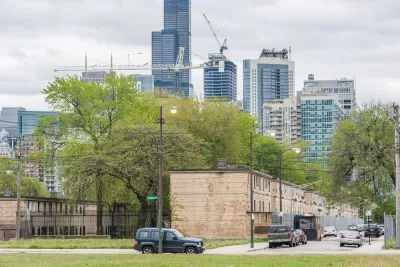
The latest mapping project from the University of Richmond: "Renewing Inequality," documents the displacement and racial dynamics of urban renewal in the United States between 1955-1966.
Whet Moser shares news of the new project, focusing specifically on the project's insights for Chicago, where 81,243 people, or 2.24 percent of the city's population, was displaced. "About one-third of displacements in Chicago came from two urban renewal projects: Hyde Park-Kenwood, which displaced about 4,000 families, and Lake Meadows, which displaced another 3,400 families," explains Moser. The article includes more details on the history and outcomes of urban renewal during this period in Chicago.
As noted by Moser, the "Renewing Inequality" project provides a compelling follow up to the University of Richmond's work on the redlining maps that raised awareness about the effects of 20th century zoning and home loan policies.
FULL STORY: Chicago’s Urban Renewal Displaced An Astonishing Number of People in the 20th Century

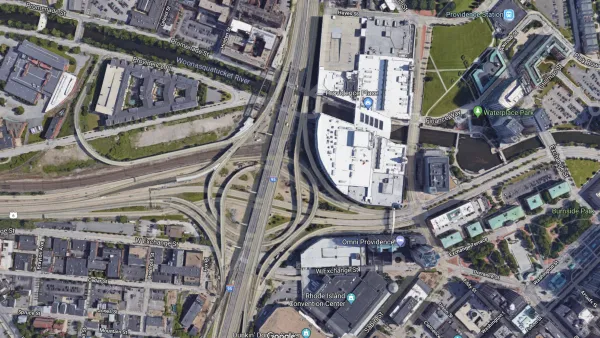
The Foundational Myth of America's Interstate Highway System
The erroneous belief that the negative impacts of interstate highways are simply "unintended consequences" fails to demand accountability for the project's failures.
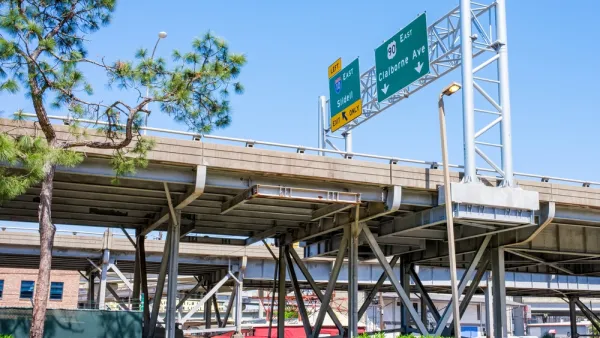
‘Reconnecting Communities’ Could Fund Highway Expansions
Applications to the program reveal a pattern of state agencies requesting funds for projects that perpetuate car-centric development with only nominal equity components.
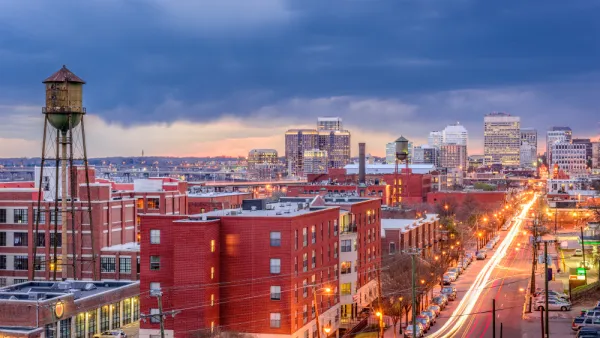
Mapping Richmond’s Displaced Communities
A new project catalogs the city’s history of displacement and its impact on communities of color.

The state-sanctioned urbicide of Austin
People don’t kill cities. Freeways do.

US to reduce Colorado River water deliveries to Mexico
A new Colorado Treaty amendment reduces Mexico’s Colorado River water allocation by 250,000 acre feet.

New Jersey’s second-largest city bans standalone data centers
Jersey City will continue to allow co-location facilities, such as those meant for research institutions that store their own data.

Amtrak not solely to blame for New Jersey commuter rail's unreliability, report finds
A new study from the Garden State Initiative found that NJ Transit’s budget grew 20% across a 4 year period, but reliability declined significantly over the same period.

EPA erases limits on planet-warming pollution from power plants
Under Monday’s plan, power plants would still have some limits on how much mercury, arsenic and other contaminants they can emit.

Phoenix announces new on-demand transit service, more frequent RAPID buses
Both new services will launch in October, and are part of Phoenix's Project Effective Access Solutions for Easing Congestion.

FREE Course: Walkable City 1: Why Walkability?
After describing his path towards focusing on walkability as the essence of good planning, Jeff Speck marches through his five principal reasons for making more walkable places.
Reinventing Malls: Planning Alchemy—Turning Gray Fields Into Gold
The course focuses on the opportunities and imperatives that shape reinvention of mall sites.

Eagle County Government
Harvard University Graduate School of Design
Nashville Planning Department
The Architects Foundation
University of Cincinnati Online
The Pocatello Development Authority
The Urban Renewal Agency of the City of Pocatello
Journal of the American Planning Association