The German capital could see a new system of cycle superhighways, an expanded bike lane network, and more by 2025.


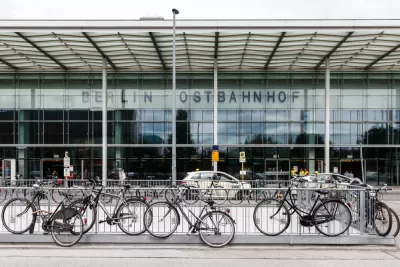
Comprehensive new plans from Berlin's Green Party could dramatically expand and improve bike and pedestrian infrastructure throughout the city, Fergus O’Sullivan reports in CityLab. Should the plans pass, Berlin would gain 100 kilometers of segregated cycle superhighways on former rail corridors throughout the city. The existing bike lane network would also be expanded to cover one-third of all city streets, up from 18 percent. And on the roads, traffic lights would be adjusted to prioritize buses and streetcars.
Cycling accounts for less than 25 percent of Berlin's work commutes today, but O'Sullivan writes that the city's wide streets and sidewalks, and overall "rangy" layout, make it a good candidate to accept comprehensive bike infrastructure—adding, "If Berlin can’t push through real changes to make it one of the most bike-friendly cities in the world, it's hard to see how anywhere else could."
FULL STORY: Berlin's Upcoming Bike Revolution

New Market-Rate Housing Lowers Rents for Everyone, According to New Research
A study published by a German researcher adds ammunition to the cause of improving housing affordability by legalizing and building new supply.
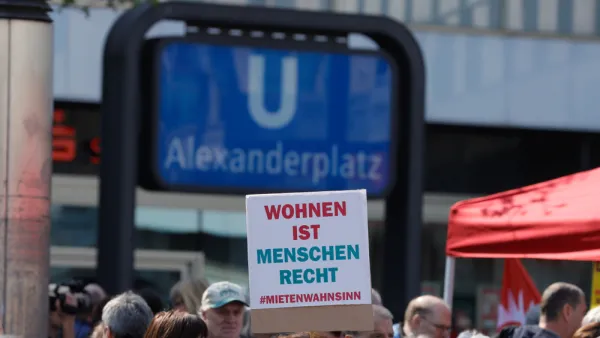
Berlin Caps Rents as Anti-Gentrification Measure
The capital city, known for its artists and party scene, is aiming to reduce gentrification by capping rent prices for a period of five years.
The Case for Banning SUVs
Global SUV ownership is skyrocketing, with consequences for carbon emissions and traffic safety. A few voices are now calling for bans on the large vehicles.

Planetizen Federal Action Tracker
A weekly monitor of how Trump’s orders and actions are impacting planners and planning in America.

The state-sanctioned urbicide of Austin
People don’t kill cities. Freeways do.

US to reduce Colorado River water deliveries to Mexico
A new Colorado Treaty amendment reduces Mexico’s Colorado River water allocation by 250,000 acre feet.

5 New England states march closer to 800 megawatt wind energy project
Securing federal approval for the project may be complicated under the Trump administration, which has historically been hostile towards domestic wind power.

Baltimore to break ground on $50 million Transit Priority Project
The project will bring faster bus trips, safer streets and better bike connections to Baltimore.

Airbnb launches $250 million 'last-dollar financing' housing accelerator, makes first investment in Austin
The company will put $6.4 million towards affordable housing development in Texas’ capital.

FREE Course: Walkable City 1: Why Walkability?
After describing his path towards focusing on walkability as the essence of good planning, Jeff Speck marches through his five principal reasons for making more walkable places.
Reinventing Malls: Planning Alchemy—Turning Gray Fields Into Gold
The course focuses on the opportunities and imperatives that shape reinvention of mall sites.

Eagle County Government
Harvard University Graduate School of Design
Nashville Planning Department
The Architects Foundation
University of Cincinnati Online
The Pocatello Development Authority
The Urban Renewal Agency of the City of Pocatello
Journal of the American Planning Association