In Mexico, one popular app illustrates the feasibility and efficacy of women-only transportation models.



In recent years, a variety of strategies have been proposed to improve women's safety during travel: Women-only buses and metro cars. Women-only taxis. A panic button in ride-hailing cars. And finally: the women-only ride-hailing app. In CityLab, Maya Kroth profiles the rise of Laúdrive, a women-only ride-hailing app in Mexico that skyrocketed in popularity after the murder of a woman by her ride-hailing driver this year.
Women-only apps have struggled to break into the duopolized ride-hailing market, faced with the same policy challenges plaguing dominant companies on top of the perils typical to any specialized startup. The model has appeared, and then declined, in several countries; in the U.S., it could be considered gender-based discrimination. In fact, researcher Alex Rosenblat tells CityLab that the subset's very existence is an indictment of the industry as a whole.
Rosenblat says the demand for women-only services points to a flaw in the current ride-hailing model, which relies on a user-ratings system to foster trust between strangers.
“Customers are expected to perform this task of flagging errant behavior,” she says. “Neither drivers nor passengers are paid for that kind of work, but the success of safety at scale implies the free labor that people are willing to perform. It’s clear that ratings don’t solve everything.”
And while strategies that isolate women can materially improve safety outcomes on a trip-by-trip basis, they don't address the larger question of women's ability to move and exist freely in the public realm. Mexico is beginning to devote attention to this issue, Kroth reports, but it remains a defining characteristic of cities around the world.
FULL STORY: In Mexico, Momentum Builds for Women-Only Ride-Hailing Apps


Minneapolis council proposes permitting framework for robotaxis
City leaders say they don't want to be left behind as Waymo and other companies eye the city for the expansion of self-driving fleets.
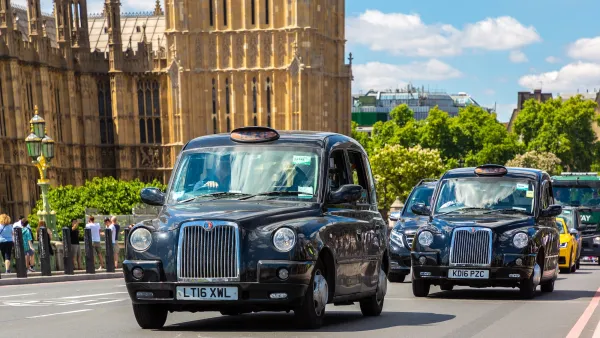
Can Robotaxis Handle London's Famously Tangled Streets?
Black Cab drivers say autonomous cars won’t be able to handle London’s unique conditions.
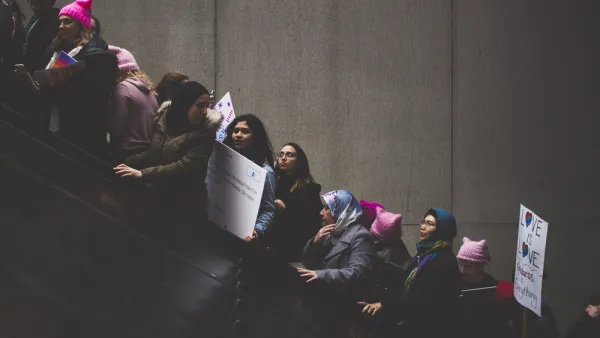
Breaking the Bias on Public Transport
How gender-sensitive data collection can make public transit safer for women.

Planetizen Federal Action Tracker
A weekly monitor of how Trump’s orders and actions are impacting planners and planning in America.

The state-sanctioned urbicide of Austin
People don’t kill cities. Freeways do.

US to reduce Colorado River water deliveries to Mexico
A new Colorado Treaty amendment reduces Mexico’s Colorado River water allocation by 250,000 acre feet.

5 New England states march closer to 800 megawatt wind energy project
Securing federal approval for the project may be complicated under the Trump administration, which has historically been hostile towards domestic wind power.

Baltimore to break ground on $50 million Transit Priority Project
The project will bring faster bus trips, safer streets and better bike connections to Baltimore.

Airbnb launches $250 million 'last-dollar financing' housing accelerator, makes first investment in Austin
The company will put $6.4 million towards affordable housing development in Texas’ capital.

FREE Course: Walkable City 1: Why Walkability?
After describing his path towards focusing on walkability as the essence of good planning, Jeff Speck marches through his five principal reasons for making more walkable places.
Reinventing Malls: Planning Alchemy—Turning Gray Fields Into Gold
The course focuses on the opportunities and imperatives that shape reinvention of mall sites.

Eagle County Government
Harvard University Graduate School of Design
Nashville Planning Department
The Architects Foundation
University of Cincinnati Online
The Pocatello Development Authority
The Urban Renewal Agency of the City of Pocatello
Journal of the American Planning Association