How can cities balance the benefits of historic preservation with the need for new housing?



In Sightline, Dan Bertolet argues against "overzealous or misplaced" historic preservation rules that restrict new, dense housing, especially in cities with housing shortages.
"Historic preservation, when it interferes with homebuilding, can worsen a city's shortage of homes, driving up rents and pushing out low-income residents," he writes. "If cities aren't careful, their historic preservation regulations can function as exclusionary zoning." (That dynamic, as it played out in in Columbus, Ohio, was captured as part of Laura Poitras's 2003 documentary Flag Wars.)
Bertolet acknowledges the array of benefits, including economic benefits, linked to preserving cultural resources. In the case that sparked his concern, a 200-unit transit-adjacent building was rejected, not because it would have demolished a historic building, but because it would have been taller than the surrounding historic neighborhood. He delves into a number of examples in Seattle, and proposes an overarching solution:
The ideal, longer-term fix entails establishing a housing “budget”: every preservation ruling that causes a number of homes not to be built would require an offsetting change in zoning elsewhere in the same neighborhood to allow construction of the same number of new homes. In this way, historic preservation would operate under the principle of no net loss of homes.
FULL STORY: http://www.sightline.org/2017/12/19/when-historic-preservation-clashes-with-housing-affordability/

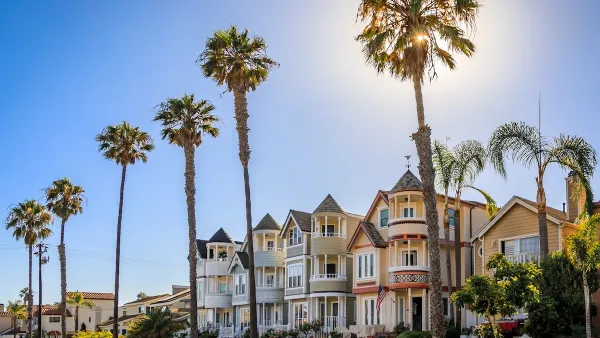
California Bill Seeks to Balance Preservation and Housing Demand
A bill awaiting the governor’s signature would require cities to report new historic preservation ordinances and assess how they impact local housing supplies.
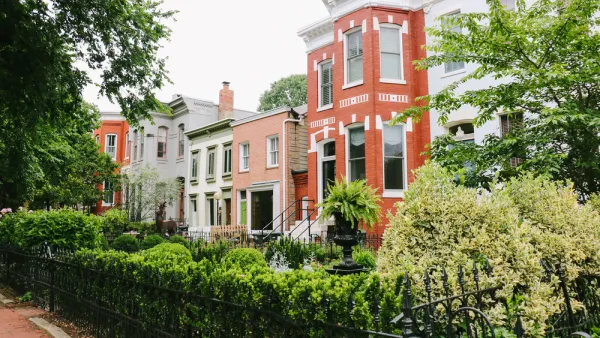
Balancing Aesthetics and Affordability
Policies too narrowly focused on design can drive up the cost of construction and prevent the development of affordable housing.
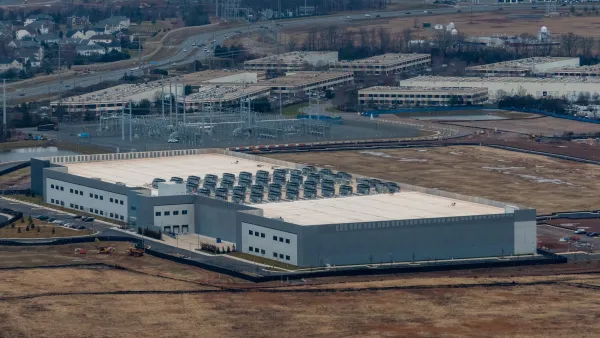
Data center developer offers over $4M per acre to buy out homeowners
Data center builders are outbidding home builders for land, prompting concerns about competition with housing.

Planetizen Federal Action Tracker
A weekly monitor of how Trump’s orders and actions are impacting planners and planning in America.

The state-sanctioned urbicide of Austin
People don’t kill cities. Freeways do.

US to reduce Colorado River water deliveries to Mexico
A new Colorado Treaty amendment reduces Mexico’s Colorado River water allocation by 250,000 acre feet.

5 New England states march closer to 800 megawatt wind energy project
Securing federal approval for the project may be complicated under the Trump administration, which has historically been hostile towards domestic wind power.

Baltimore to break ground on $50 million Transit Priority Project
The project will bring faster bus trips, safer streets and better bike connections to Baltimore.

Airbnb launches $250 million 'last-dollar financing' housing accelerator, makes first investment in Austin
The company will put $6.4 million towards affordable housing development in Texas’ capital.

FREE Course: Walkable City 1: Why Walkability?
After describing his path towards focusing on walkability as the essence of good planning, Jeff Speck marches through his five principal reasons for making more walkable places.
Reinventing Malls: Planning Alchemy—Turning Gray Fields Into Gold
The course focuses on the opportunities and imperatives that shape reinvention of mall sites.

Eagle County Government
Harvard University Graduate School of Design
Nashville Planning Department
The Architects Foundation
University of Cincinnati Online
The Pocatello Development Authority
The Urban Renewal Agency of the City of Pocatello
Journal of the American Planning Association