It's an idea that has already had some success in Philadelphia: give developers a tax abatement on projects that achieve some desired end, in this case fewer surface parking lots.


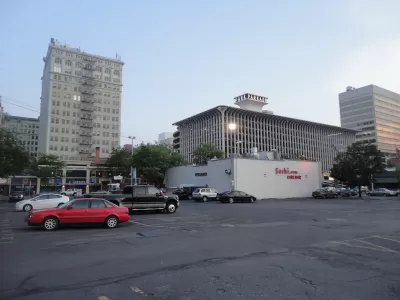
Several city leaders in Spokane, Washington want to do something about downtown's overabundance of parking lots. Their idea, Nicholad Deschais writes, is simple: "offer developers a 10-year break from taxes on any project they build on what is now a surface parking lot. It could be a residential tower or an office building. It could even be a parking garage."
We've seen something similar in Philadelphia recently. But the Washington legislation is still "far from assured. Its path is complex, and even if it does become law, it's unclear if it will stoke development at all." If passed, the bill would apply to Washington cities with populations between 150,000 and 250,000, bringing Tacoma and Vancouver (WA) into the fold.
In another piece on Spokane's plan in Streetsblog USA, Angie Schmitt writes, "In the very center of Spokane, right at the core of downtown, there are few surface parking lots — it's mainly garages that would be unaffected by the tax abatement. But [Andrew Rolwes, public policy and parking manager for Downtown Spokane Partnership] told Streetsblog USA the policy could be transformative for the 'next tier out from the downtown core.'"
Read the full story: Getting There: City floats plan to phase parking lots out of downtown
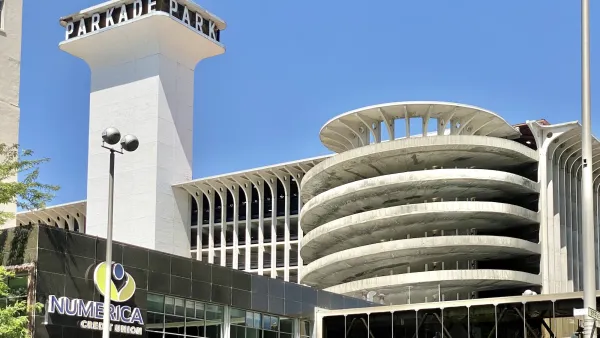
Spokane Passes 12% Parking Tax
The new tax will support city transportation projects.
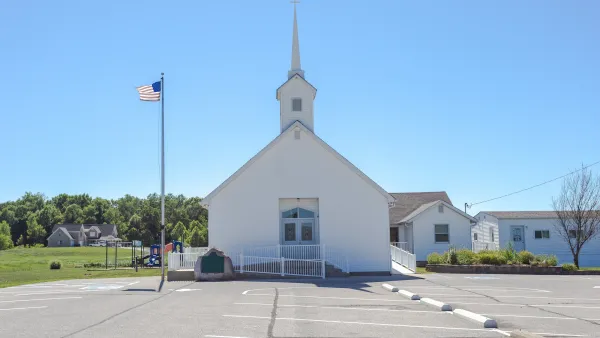
Three Ways to Activate Church Parking Lots Seven Days a Week
Churches need parking, but most of their lots are wasted space six days a week.

Who Wants to Play SimParkingLot?
The original urban planning game wanted to model real life cities. One grim reality of American urbanism held it back.

Planetizen Federal Action Tracker
A weekly monitor of how Trump’s orders and actions are impacting planners and planning in America.

California plans to bury El Niño’s downpour
If the state plays its cards right, it may be able to store a billion acre-feet of El Niño’s water in aquifers.

Desperate measures: Advocates weigh draining Lake Powell to fill Colorado River
Draining the reservoir could reduce evaporation losses by a couple hundred thousand acre-feet.

Chicago voters approve permanent festival grounds, penalty for vacant property owners
Currently, major summer and fall festivals take over public parks for weeks at a time, drawing criticism from nearby residents

NYC votes to cut outdoor dining red tape, speed up permitting
New York City also voted to allow the Department of Transportation to begin work on urgent projects before notifying elected officials.

California appears to reject Prop. 45
The proposition would have expanded the projects that qualify for a streamlined environmental review, effectively paring down the California Environmental Quality Act.

FREE Course: Walkable City 1: Why Walkability?
After describing his path towards focusing on walkability as the essence of good planning, Jeff Speck marches through his five principal reasons for making more walkable places.
Reinventing Malls: Planning Alchemy—Turning Gray Fields Into Gold
The course focuses on the opportunities and imperatives that shape reinvention of mall sites.

City of Rosemead
Rutgers University, Edward J. Bloustein School of Planning and Public Policy
One Hundred Miles
Hunter College, City University of New York (CUNY)
The Architects Foundation
University of Cincinnati Online
City of Cambridge
Montrose County
The Pocatello Development Authority