Infrastructure backlogs: burden or opportunity?


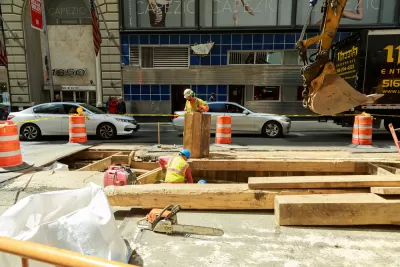
Matt Chaban, policy director at the Center for an Urban Future, argues in Crain's that New York should take its maintenance and repair backlog as an opportunity to create good-paying jobs.
From water mains to public buildings, much of the infrastructure in use in the city today is 60-80 years old, Chaban explains. New York would need to spend $47 billion just to reach a state of good repair across the board, he writes, noting that "any major expansion or sweeping modernization would cost billions more."
While the de Blasio administration is investing in infrastructure maintenance, the piece details just how short those efforts fall of addressing the scale of the problem, and suggests several schemes to raise more funds:
Smart rezonings that tie growth to public improvements should be part of the equation. The Move New York congestion pricing plan is another idea whose time has come, as are storm-water management fees, which would encourage landlords to take some of the burdens off the sewers. Public infrastructure dollars also need to go further than they do today. The state benefits from design-build contracts that can cut costs and time, but Albany should extend the same authority to New York City, which could save billions over the decade ahead.
FULL STORY: NYC's infrastructure woes run deeper than the subway

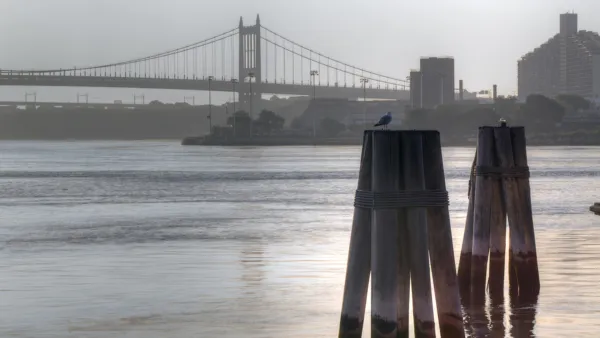
New York Resilience Plan to Get Second Opinion
The price tag for the de Blasio administration’s stormwater and sea-level rise plan rose $1.3 billion after some costly additions. Now some city council members are bringing in a second group to examine the plan.
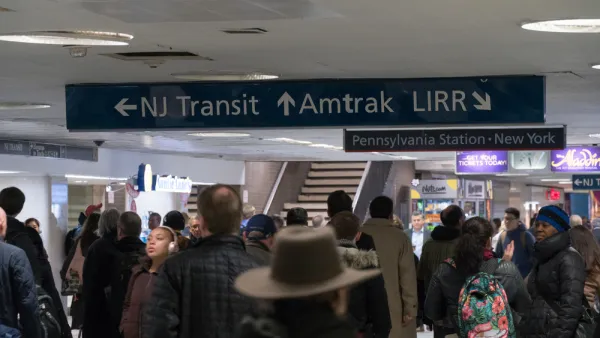
Gateway Program Encounters Barrier in Trump
President Trump has not been a friend to the $30 billion Gateway Program, a transportation project meant to replace aging rail infrastructure connecting New York and New Jersey.

Car Ownership Continues to Rise in New York City
The de Blasio administration says they're committed to the Vision Zero goal of shrinking car ownership, but they don't seem to be doing much to slow its growth.

Planetizen Federal Action Tracker
A weekly monitor of how Trump’s orders and actions are impacting planners and planning in America.

The state-sanctioned urbicide of Austin
People don’t kill cities. Freeways do.

US to reduce Colorado River water deliveries to Mexico
A new Colorado Treaty amendment reduces Mexico’s Colorado River water allocation by 250,000 acre feet.

5 New England states march closer to 800 megawatt wind energy project
Securing federal approval for the project may be complicated under the Trump administration, which has historically been hostile towards domestic wind power.

Baltimore to break ground on $50 million Transit Priority Project
The project will bring faster bus trips, safer streets and better bike connections to Baltimore.

Airbnb launches $250 million 'last-dollar financing' housing accelerator, makes first investment in Austin
The company will put $6.4 million towards affordable housing development in Texas’ capital.

FREE Course: Walkable City 1: Why Walkability?
After describing his path towards focusing on walkability as the essence of good planning, Jeff Speck marches through his five principal reasons for making more walkable places.
Reinventing Malls: Planning Alchemy—Turning Gray Fields Into Gold
The course focuses on the opportunities and imperatives that shape reinvention of mall sites.

Eagle County Government
Harvard University Graduate School of Design
Nashville Planning Department
The Architects Foundation
University of Cincinnati Online
The Pocatello Development Authority
The Urban Renewal Agency of the City of Pocatello
Journal of the American Planning Association