Sacramento Mayor Darrell Steinberg hopes that an infusion of EV funds can jumpstart a new, clean economy in the city.



As part of Volkswagen's $800 million settlement, subsidiary Electrify America selected Sacramento to launch its "Green City" program—a $44 million initiative to increase electric vehicle use through a variety of programs, including infrastructure installation, outreach, and accessibility measures.
While the promise of an electric car-sharing service and low-cost mobility options are significant, Mayor Darrell Steinberg's vision for the program is much broader. In The Planning Report, he explains his hope that the investment will completely reshape Sacramento's industry and identity.
"We want to use this relationship with Electrify America to catalyze new industry in Sacramento around alternative fuels and electrification," he tells TPR. "Ultimately, I want Sacramento to become a center for the research and development of advanced transportation technologies and the rapid electrification of the automotive industry."
Already, he says, the Green City investment has sent "a major market signal," attracting electric vehicle manufacturers and charging companies to the city. Meanwhile, Sacramento is also working to attract tech companies from Silicon Valley and San Francisco, as part of efforts to build the "Northern California megaregion."
On one hand, Steinberg hopes to help California's capital city branch out of the government sector and build a robust private-sector economy. But as he pursues a high-tech economy, he also plans to use the city's close ties to the state Legislature to its advantage. As transportation technology advances past the limits of existing law, he says, Sacramento "can be the test site for innovations like autonomous vehicles—the laboratory that helps inform the state regulatory decisions around new technologies. Sacramento can draft templates for how the state might achieve that balance" between regulation and innovation.
Read the full story: Sacramento Rebrands as Center of Alternative Fuel Research
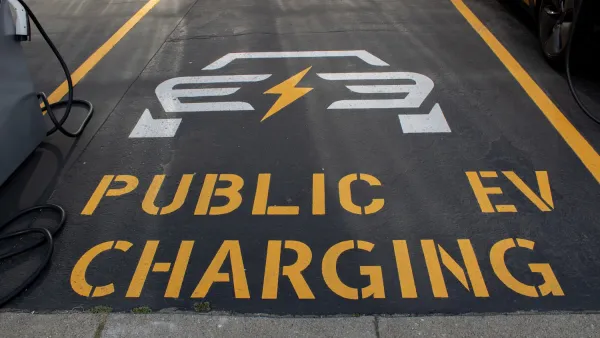
The Future of EV Charging Stations and Urban Planning
Explore the future of EV charging in cities and discover urban planning strategies for integrating electric vehicle infrastructure and promoting sustainable transportation.
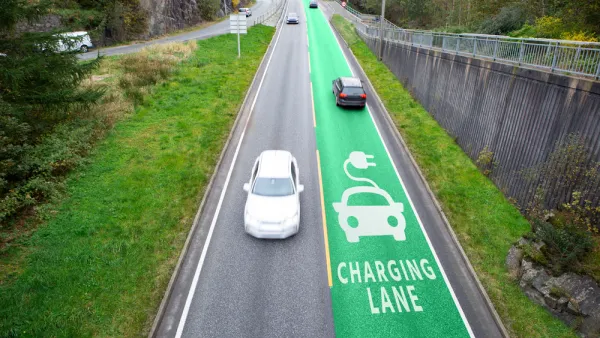
The Marriage of Technology and Road Infrastructure
The future of road infrastructure likely includes wireless electric charging, innovative construction materials, and more data collection. Will cities remember to prioritize pedestrian safety, too?

Companies Eyeing EV Charging as Next Big Opportunity
More electric vehicles on the road will mean more demand for charging stations where drivers can power up away from home.

Planetizen Federal Action Tracker
A weekly monitor of how Trump’s orders and actions are impacting planners and planning in America.

California plans to bury El Niño’s downpour
If the state plays its cards right, it may be able to store a billion acre-feet of El Niño’s water in aquifers.

Desperate measures: Advocates weigh draining Lake Powell to fill Colorado River
Draining the reservoir could reduce evaporation losses by a couple hundred thousand acre-feet.

In Texas, data centers are swallowing promised parkland
Residents who moved to Taylor, Texas for a rural community now have to contend with three data centers in their backyard.

How a Chicago-sized wind farm beat the odds and powered on
The project spanned five presidential administrations and a standoff with a U.S. military base.

MTA gives itself 30 days to transform pit into basketball court
The site has been under construction since 2022; the city originally estimated it would finish the court in 2024.

FREE Course: Walkable City 1: Why Walkability?
After describing his path towards focusing on walkability as the essence of good planning, Jeff Speck marches through his five principal reasons for making more walkable places.
Reinventing Malls: Planning Alchemy—Turning Gray Fields Into Gold
The course focuses on the opportunities and imperatives that shape reinvention of mall sites.

City of Rosemead
Rutgers University, Edward J. Bloustein School of Planning and Public Policy
One Hundred Miles
Hunter College, City University of New York (CUNY)
The Architects Foundation
University of Cincinnati Online
City of Cambridge
Montrose County
The Pocatello Development Authority