According to data compiled by the Lincoln Institute, public revenue and spending on the local and municipal levels hasn't truly bounced back following the Great Recession.


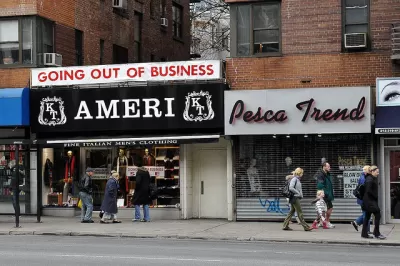
The Lincoln Institute of Land Policy's Fiscally Standardized Cities (FiSC) database show only a modest level of local public sector recovery since 2008. "Created in 2013 and updated annually, the FiSC database provided the country's first meaningful comparison of local government finances at the city level by untangling the complex web of governments within each city."
FiSC tracks revenue sources like property tax, user charges, and state and federal aid, as well as "spending for capital outlays and for current operating expenses for a wide array of services including education, public safety, transportation, health and social services, and natural resources, parks, solid waste and sewage."
"In the 150 cities in the database, per capita revenues were still 3.6 percent lower in 2015 than before the Great Recession after adjusting for inflation according to an analysis of new data from the U.S. Census Bureau."
"Despite small increases in 2014 and 2015, overall per-capita spending in 2015 was still two percentage points lower in the average city than in 2007, after adjusting for inflation. Capital outlays were nearly 15 percent below 2007 levels, reflecting continued underinvestment in public infrastructure."
Read the full story: America’s large cities show signs of long, slow recovery: new Lincoln Institute data

Mortgage Lending in Homogenous Neighborhoods
A new study examines mortgage lending practices in racially homogenous neighborhoods for clues about how those neighborhoods differ from the aggregate, national market.
The Vacancy Epidemic
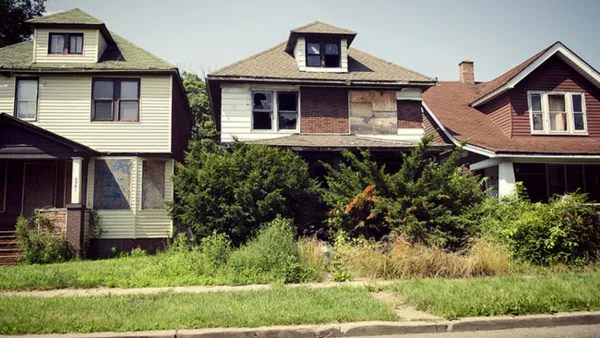
A new report uses terms like epidemic and hyper-vacancy to drive home the point about the effects of vacancies on communities like Cleveland, Gary, Toledo, and Detroit.

U.S. Housing Prices Still Haven't Recovered from the Great Recession
While some cities become more and more expensive, most of the country's housing prices still haven't recovered from the great recession.

Planetizen Federal Action Tracker
A weekly monitor of how Trump’s orders and actions are impacting planners and planning in America.

California plans to bury El Niño’s downpour
If the state plays its cards right, it may be able to store a billion acre-feet of El Niño’s water in aquifers.

Desperate measures: Advocates weigh draining Lake Powell to fill Colorado River
Draining the reservoir could reduce evaporation losses by a couple hundred thousand acre-feet.

Chicago voters approve permanent festival grounds, penalty for vacant property owners
Currently, major summer and fall festivals take over public parks for weeks at a time, drawing criticism from nearby residents

NYC votes to cut outdoor dining red tape, speed up permitting
New York City also voted to allow the Department of Transportation to begin work on urgent projects before notifying elected officials.

California appears to reject Prop. 45
The proposition would have expanded the projects that qualify for a streamlined environmental review, effectively paring down the California Environmental Quality Act.

FREE Course: Walkable City 1: Why Walkability?
After describing his path towards focusing on walkability as the essence of good planning, Jeff Speck marches through his five principal reasons for making more walkable places.
Reinventing Malls: Planning Alchemy—Turning Gray Fields Into Gold
The course focuses on the opportunities and imperatives that shape reinvention of mall sites.

City of Rosemead
Rutgers University, Edward J. Bloustein School of Planning and Public Policy
One Hundred Miles
Hunter College, City University of New York (CUNY)
The Architects Foundation
University of Cincinnati Online
City of Cambridge
Montrose County
The Pocatello Development Authority