Delivery-by-drone continues to make strides to becoming a feasible reality, as testing in rural Australia has seen burritos fly through the air from restaurant to customers' back yards.


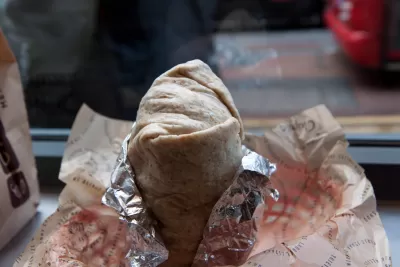
Ongoing testing of delivery-by-drone has reached the point of door-to-door burrito and meds delivery. The drone delivery program piloted by Google-parent company Alphabet is slowly progressing with test runs taking place in rural communities in Australia. Alex Hern of The Guardianwrites that Alphabet's 'Project Wing' drone delivery program is helping the company understand how people prefer to receive their deliveries while also understanding the challenges that businesses, such as Mexican restaurant Guzman y Gomez, face in delivering fresh and hot food by air.
The company also needs to learn how a variety of businesses actually pack their products for flight. “In the case of Guzman y Gomez, who is our first delivery partner for this trial, we’ll need to make sure our technology fits in smoothly into their kitchen operations, as their staff have to juggle many orders at once to ensure that every customer is served fresh, hot food in a timely fashion,” [Project Wing’s co-lead James Ryan Burgess] wrote.
Hern notes that the delivery-by-drone market is becoming more crowded, as companies including Amazon have continued to develop their drone programs.
FULL STORY: Alphabet tests Project Wing drones by delivering burritos and medicine

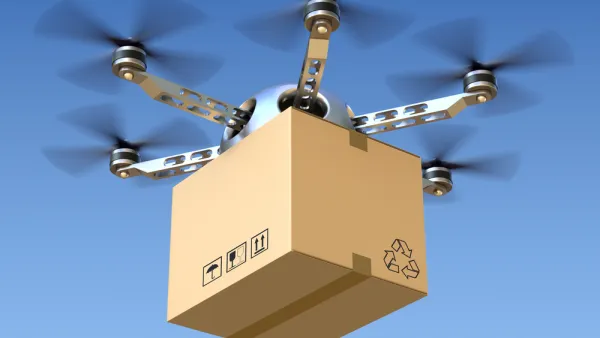
The Hidden Costs of Drone Delivery
Ultra-fast drone delivery promises convenience, but comes at a high cost for workers, the environment, and public space.
Envisioning a Future Urban Dronescape
Jeff Bezos' proposal to deliver packages by aerial drone has the potential to upset traditional models of logistics and distribution, but it's most powerful effect may be on the urban airspace. Are blue skies ahead for Bezos' vision?
Could Amazon Drones Increase Urban Property Values?
Developers at Google and Amazon are among those working diligently to produce a near future full of autonomous cars and delivery devices. Economics professor Casey B. Mulligan suggests such advances will increase the value of urban land.

The state-sanctioned urbicide of Austin
People don’t kill cities. Freeways do.

US to reduce Colorado River water deliveries to Mexico
A new Colorado Treaty amendment reduces Mexico’s Colorado River water allocation by 250,000 acre feet.

New Jersey’s second-largest city bans standalone data centers
Jersey City will continue to allow co-location facilities, such as those meant for research institutions that store their own data.

Amtrak not solely to blame for New Jersey commuter rail's unreliability, report finds
A new study from the Garden State Initiative found that NJ Transit’s budget grew 20% across a 4 year period, but reliability declined significantly over the same period.

EPA erases limits on planet-warming pollution from power plants
Under Monday’s plan, power plants would still have some limits on how much mercury, arsenic and other contaminants they can emit.

Phoenix announces new on-demand transit service, more frequent RAPID buses
Both new services will launch in October, and are part of Phoenix's Project Effective Access Solutions for Easing Congestion.

FREE Course: Walkable City 1: Why Walkability?
After describing his path towards focusing on walkability as the essence of good planning, Jeff Speck marches through his five principal reasons for making more walkable places.
Reinventing Malls: Planning Alchemy—Turning Gray Fields Into Gold
The course focuses on the opportunities and imperatives that shape reinvention of mall sites.

Eagle County Government
Harvard University Graduate School of Design
Nashville Planning Department
The Architects Foundation
University of Cincinnati Online
The Pocatello Development Authority
The Urban Renewal Agency of the City of Pocatello
Journal of the American Planning Association