London-based study ties obesity to sprawl and finds that suburbs have a bigger obesity problem than rural areas.


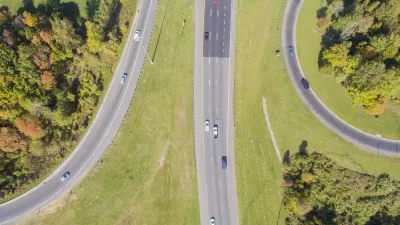
A massive study with data from more than 400,000 Britons recently published in The Lancet found a close tie between obesity and suburbs. "Residents’ health is highly likely to improve when sprawling suburbs are made more dense," Feargus O'Sullivan reports in CityLab.
"The worst obesity rates, the study finds, are among British people who live in areas with 1,800 homes per square kilometer (around 4,662 dwellings per square mile). That’s close to the typical density for London’s more sprawling, low-density outer boroughs, whose average density of 1,590 dwellings per square kilometer is brought down by the large areas of parkland and small areas of farmland still within the city limits," O'Sullivan reports.
Rural residents maintained healthier BMIs than their suburban countrymen, the authors of the study suggest. This may be due to more active lifestyles. Still, even rural Britons were more likely to be obese than city dwellers and among city dwellers the healthiest BMIs were in the most densely populated areas.
FULL STORY: Obesity Thrives in the Suburbs


Study: Transit Really Does Reduce Obesity
It's difficult to definitively link transit use with lower rates of obesity, but it makes intuitive sense. Here's another attempt, using county-level data.
Study: Active Commutes Correlate to Positive Public Health Outcomes
The Alliance for Biking and Walking’s 2014 Benchmarking report found a strong correlation between active commuting rates and health outcomes like diabetes, obesity, and high blood pressure.
What's More Dangerous - Cycling or Watching TV?
As Britain confronts the silent epidemic of inactivity and obesity, Peter Walker examines how the invisible dangers of a sedentary lifestyle are compared to the more publicized risk of injury from activities designed to get people moving.

Planetizen Federal Action Tracker
A weekly monitor of how Trump’s orders and actions are impacting planners and planning in America.

The state-sanctioned urbicide of Austin
People don’t kill cities. Freeways do.

US to reduce Colorado River water deliveries to Mexico
A new Colorado Treaty amendment reduces Mexico’s Colorado River water allocation by 250,000 acre feet.

Mamdani overhauls NYC's Vision Zero plan with 100 new policy goals
The overhaul aims to reduce traffic deaths and make streets safer for pedestrians, cyclists and drivers through lower speed limits, new safety infrastructure and more.

Amtrak not solely to blame for New Jersey commuter rail's unreliability, report finds
A new study from the Garden State Initiative found that NJ Transit’s budget grew 20% across a 4 year period, but reliability declined significantly over the same period.

EPA erases limits on planet-warming pollution from power plants
Under Monday’s plan, power plants would still have some limits on how much mercury, arsenic and other contaminants they can emit.

FREE Course: Walkable City 1: Why Walkability?
After describing his path towards focusing on walkability as the essence of good planning, Jeff Speck marches through his five principal reasons for making more walkable places.
Reinventing Malls: Planning Alchemy—Turning Gray Fields Into Gold
The course focuses on the opportunities and imperatives that shape reinvention of mall sites.

Eagle County Government
Harvard University Graduate School of Design
Nashville Planning Department
The Architects Foundation
University of Cincinnati Online
The Pocatello Development Authority
The Urban Renewal Agency of the City of Pocatello
Journal of the American Planning Association