New Jersey's 107-year-old Portal Bridge has been a symbol of the region's crumbling rail infrastructure. A $1.7 billion project to replace the bridge, launched this week, is designed to improve the situation.


"Officials broke ground Friday on the first piece of a complex and costly project to rebuild and replace the aging rail infrastructure that carries thousands of New Jersey commuters daily into New York," reports Curtis Tate.
The Portal Bridge Project will spend $1.5 billion to add "critical residency and create new capacity" on a ten-mile stretch of the Northeast Corridor between Newark and Penn Station, according to the article.
The Portal Bridge, a 107-year-old span in the Meadowland, "sometimes gets stuck when it opens a few times a week for barges on the Hackensack River" and has "become a major bottleneck on the nation's busiest commuter corridor," according to Tate. Planetizen has been covering the saga of the Portal Bridge since 2014.
FULL STORY: $1.5B project to replace critical New Jersey rail bridge over Hackensack River starts


Funding Approved for Key Rail Connection Between New Jersey and New York
The Portal Bridge is a key component of the larger Gateway Program that includes tunnels under the Hudson River. Fixing the Portal Bridge across the Hackensack River will provide tremendous relief to NJ Transit and Amtrak commuters.
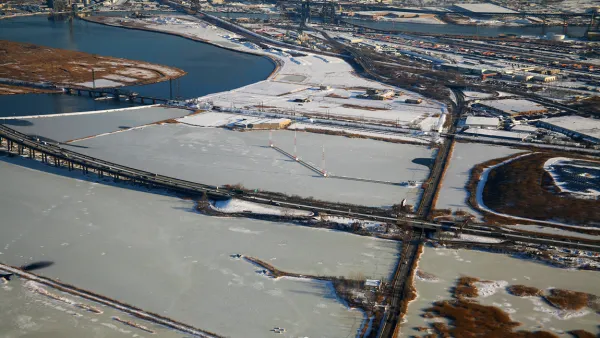
Amtrak's Achilles Heel, Infrastructurally Speaking
Aging, obsolete, and deteriorating bridges affect both road and rail. The 104-year-old Portal Bridge, a swing bridge over the Hackensack River in New Jersey that frequently fails to close properly, tops Amtrak's list for replacement.
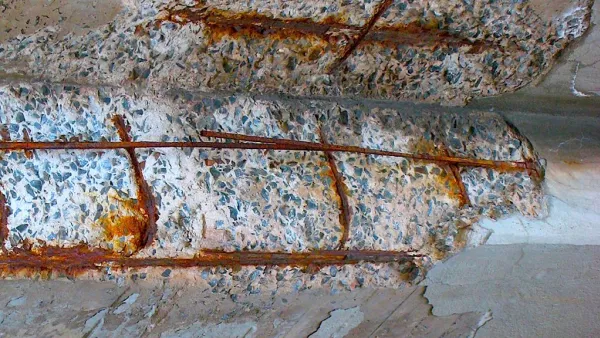
60 Minutes Examines America's Failing Infrastructure
Steve Kroft of 60 Minutes reviews road, rail, bridges, and ports to see how much investment is needed to improve the country's infrastructure, beginning in Pittsburgh and ending at a key Amtrak rail bridge in New Jersey.

Planetizen Federal Action Tracker
A weekly monitor of how Trump’s orders and actions are impacting planners and planning in America.

The state-sanctioned urbicide of Austin
People don’t kill cities. Freeways do.

US to reduce Colorado River water deliveries to Mexico
A new Colorado Treaty amendment reduces Mexico’s Colorado River water allocation by 250,000 acre feet.

Mamdani overhauls NYC's Vision Zero plan with 100 new policy goals
The overhaul aims to reduce traffic deaths and make streets safer for pedestrians, cyclists and drivers through lower speed limits, new safety infrastructure and more.

Amtrak not solely to blame for New Jersey commuter rail's unreliability, report finds
A new study from the Garden State Initiative found that NJ Transit’s budget grew 20% across a 4 year period, but reliability declined significantly over the same period.

EPA erases limits on planet-warming pollution from power plants
Under Monday’s plan, power plants would still have some limits on how much mercury, arsenic and other contaminants they can emit.

FREE Course: Walkable City 1: Why Walkability?
After describing his path towards focusing on walkability as the essence of good planning, Jeff Speck marches through his five principal reasons for making more walkable places.
Reinventing Malls: Planning Alchemy—Turning Gray Fields Into Gold
The course focuses on the opportunities and imperatives that shape reinvention of mall sites.


Eagle County Government
Harvard University Graduate School of Design
Nashville Planning Department
The Architects Foundation
University of Cincinnati Online
The Pocatello Development Authority
The Urban Renewal Agency of the City of Pocatello
Journal of the American Planning Association