The ongoing project aims to show how LGBT history is embedded throughout the city.



A collaboration of Washington University, the Missouri History Museum, the State Historical Society of Missouri, and the St. Louis LGBT History Project has launched Mapping LGBTQ St. Louis, an interactive online map documenting queer history across the city. Researchers identified 800 sites representing slices of queer life across a nearly 50-year period—including bars and nightclubs, bookstores, places of worship, HIV clinics, cruising spots, protest sites, and locations of police raids and arrests. Clicking on the markers brings up photographs, news clippings, and other background; a time-lapse view by decade is also available.
The site also offers a broader context for the project as a whole. "The distribution of LGBTQ space across metropolitan space wasn't random," researchers explain. "Instead, the geography of St. Louis's LGBTQ spaces has always been related to the region's history of racial segregation, socioeconomic inequality, suburbanization, and urban decline and renewal. St. Louis's LGBTQ history isn't somehow separate from the city's wider history—it's embedded in everything else."
The project accepts public feedback and will continue to grow, eventually representing Pride parades, same-sex marriage, and gay villages. For now, the St. Louis Post-Dispatch reports, it focuses on LGBT life in the city from 1945 ("the beginning of rapid demographic changes in the region") to 1992 ("the year the St. Louis Board of Aldermen passed an ordinance that prohibited discrimination in housing, education and employment because of race, age, religion, disability or sexual orientation.")
FULL STORY: St. Louis gay history unfolds on an interactive map


New Interactive Mapping Tool Tracks all of NYC's Infrastructure Projects, Housing Permits, and City Facilities
The New York Department of City Planning has taken its open data practices to a new level with the launch of the Capital Planning Explorer.
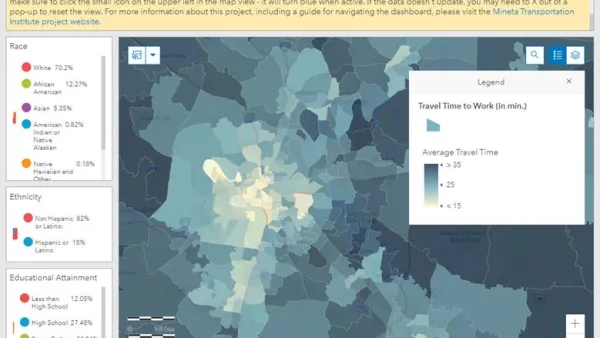
Smart Growth Loves Heatmaps
Smart growth can provide many important benefits that are easy to see using informative and beautiful heatmaps—our complex world as viewed by all-knowing gods.
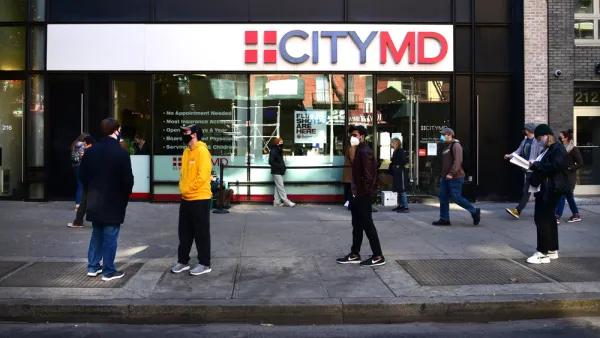
COVID-19, AIDS, and CDC Guidance
Music critic Joel Rozen pens a unique perspective for Slate's "Coronavirus Diaries" on the Provincetown, Massachusetts cluster that prompted the CDC on July 27 to reverse its masking guidance for the fully vaccinated issued a month earlier.

Planetizen Federal Action Tracker
A weekly monitor of how Trump’s orders and actions are impacting planners and planning in America.

The state-sanctioned urbicide of Austin
People don’t kill cities. Freeways do.

US to reduce Colorado River water deliveries to Mexico
A new Colorado Treaty amendment reduces Mexico’s Colorado River water allocation by 250,000 acre feet.

5 New England states march closer to 800 megawatt wind energy project
Securing federal approval for the project may be complicated under the Trump administration, which has historically been hostile towards domestic wind power.

Baltimore to break ground on $50 million Transit Priority Project
The project will bring faster bus trips, safer streets and better bike connections to Baltimore.

Airbnb launches $250 million 'last-dollar financing' housing accelerator, makes first investment in Austin
The company will put $6.4 million towards affordable housing development in Texas’ capital.

FREE Course: Walkable City 1: Why Walkability?
After describing his path towards focusing on walkability as the essence of good planning, Jeff Speck marches through his five principal reasons for making more walkable places.
Reinventing Malls: Planning Alchemy—Turning Gray Fields Into Gold
The course focuses on the opportunities and imperatives that shape reinvention of mall sites.

Eagle County Government
Harvard University Graduate School of Design
Nashville Planning Department
The Architects Foundation
University of Cincinnati Online
The Pocatello Development Authority
The Urban Renewal Agency of the City of Pocatello
Journal of the American Planning Association