With lessons from high-profile urban revitalization in place, organizers and philanthropists are working to ensure the 11th Street Bridge Park doesn't push low-income residents out of surrounding neighborhoods.


JPMorgan Chase will donate $10 million to preserve affordable housing in Washington, D.C., reports Jonathan O'Connell. The announcement of J.P. Morgan's donation is the most recent philanthropic attention devoted to the project and its surrounding neighborhoods.
"The proposed 11th Street Bridge Park that would cross the Anacostia River continues to inspire big-name philanthropists to write big checks to revitalize some of the District’s poorest neighborhoods and help low-income residents prepare should an economic turnaround arrive," writes O'Connell.
The Building Bridges Across the River nonprofit worked to secre the funding from JPMorgan Chase, as a response to the threat of gentrification and displacement in the wake of the project. "Organizers are already concerned that the park project will drive up rents and property values to the degree that low- and moderate-income residents of the area will be forced out once the park opens, similar to what has happened when new development arrived in other parts of the city in recent years," writes O'Connell. The article includes more details on the previous donations to the cause of preventing the worst effects of gentrification.
About half of the project's funding has been raised, and construction could begin as soon as 2019.
Read the full story: r Big philanthropists flock to D.C.’s Bridge Park project to battle gentrification

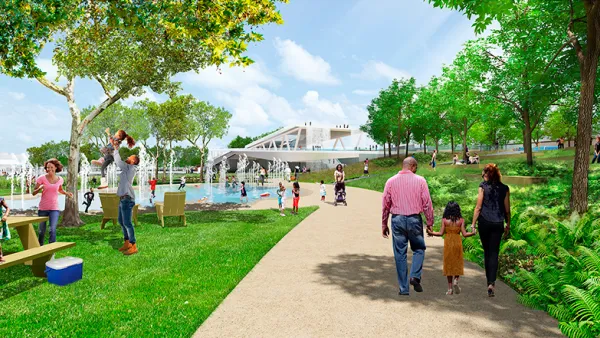
Can D.C. Build its Bridge Park Without Displacement?
The park's non-profit developer has engaged in a years-long community outreach process and invested over $60 million in community initiatives.
Working to Ease Gentrification Around D.C.'s Ambitious 11th Street Bridge Project
From the beginning of the proposal for the new 11th Street Bridge between Anacostia and Capitol Hill, planners and designers have promised to prevent the displacement of residents living nearby the new amenities offered by the bridge and its park.
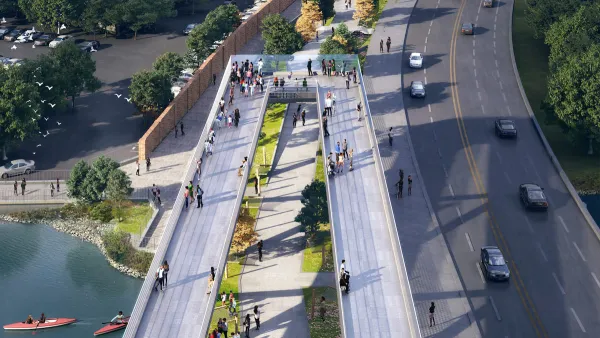
DC Park Aims for Equitable Development
Project leaders working on the 11th Street Bridge Park hope to prevent displacement of residents and bring economic and social benefits to the surrounding community.

Amtrak, CN end decades-long dispute with eight-year agreement
The new operating agreement establishes an updated framework for the companies to work together, including processes to resolve disputes.

Judges permit Denver to divert 77,000 acre feet from the Colorado River for reservoir expansion
Overuse and climate change have caused the Colorado River’s water levels to plummet.
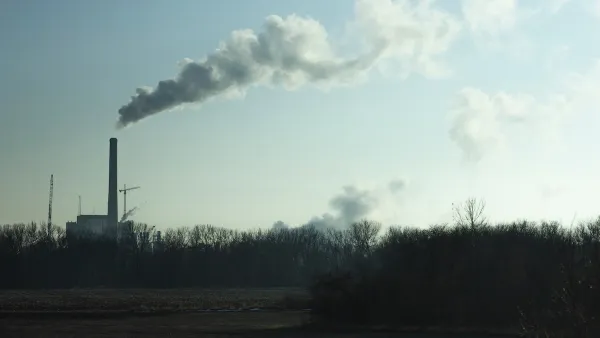
Nation's most wind-powered state turns to coal as data centers increase energy demand
For the first time in decades, Iowa has increased its generation of coal power.

Boston has spent millions making the Green Line more accessible — and there’s no end in sight
While the city has invested millions into expanding and adding platforms to the Green Line to make it more accessible, new train cars set to arrive next year will be too tall for disabled passengers to board without raising the current platforms.

Idaho may see an 18% drop in federal surface transit funding — the largest estimated cut in the US
Transit systems in rural communities are much more reliant on federal funding to provide their services.

How ‘post-disaster gentrification’ alters neighborhoods after natural calamities
After hurricanes, fires or other calamities, the original residents of a community are often replaced by younger, wealthier residents.

FREE Course: Walkable City 1: Why Walkability?
After describing his path towards focusing on walkability as the essence of good planning, Jeff Speck marches through his five principal reasons for making more walkable places.
Reinventing Malls: Planning Alchemy—Turning Gray Fields Into Gold
The course focuses on the opportunities and imperatives that shape reinvention of mall sites.

City of Wisconsin Rapids
Harvard University Graduate School of Design
KFH Group Inc.
The Architects Foundation
University of Cincinnati Online
The Pocatello Development Authority
The Urban Renewal Agency of the City of Pocatello