Reno is considering a law that critics say is a textbook example of the criminalization of homelessness and everyday life.


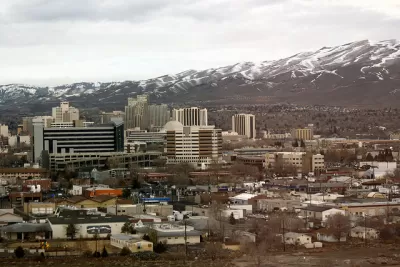
As part of an effort to revitalize Reno's downtown core, business owners and city officials are moving to push out a growing number of people living on the streets. Next City's Josh Cohen reports:
The proposed ordinance would make it illegal to climb, sit or lay on public structures not 'designated for such purpose'; to spit on public property; sleep on public or private property without permission; use a cell phone while crossing the street; or sit or lay in Retrac Plaza, a large, open plaza in the heart of downtown. Violators would face a penalty of eight to 200 hours of community service cleaning up downtown.
Supporters say that by focusing on these "aggressive" behaviors, the law avoids targeting a class of people. But Cohen writes, "Though the ordinance focuses on some behaviors that aren't specific to homeless people, there's no question it is an ordinance targeted at people living and sleeping downtown, a group that some business owners see as an impediment to downtown revitalization plans and a new business improvement district to help fund it."
Advocates say the proposal is an improvement over previous anti-homelessness efforts, primarily because it would usher in a new police protocol to prioritize assistance over arrest. Cohen has his doubts: "the city's priorities are out of order, [and] without first addressing macro issues such as a lack of affordable housing and robust social services for homeless residents, the ordinance will only exacerbate things."
Read the full story: In Push for Downtown Revitalization, Reno Might Criminalize Homelessness
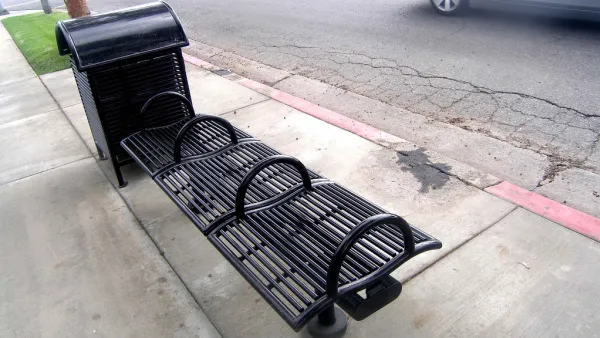
Booming Downtowns Are Squeezing Out Homeless Shelters
In downtowns across America, booming development has come at the expense of crucial homeless services that have traditionally located there.
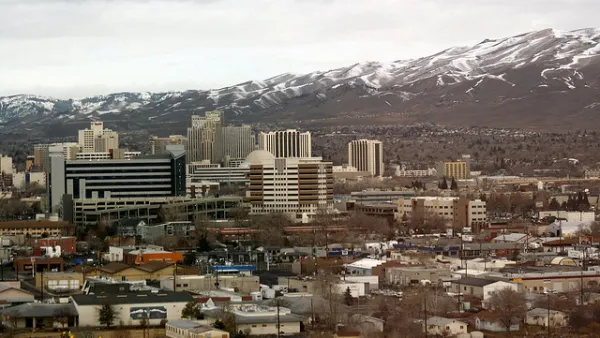
Downtown Reno: A Place Where Nobody Dared to Go
Residents of Reno, Nevada participating in a rewrite of the city’s master plan have spoken out about the myriad of problems afflicting their downtown—it's dirty, dangerous, and deserted.
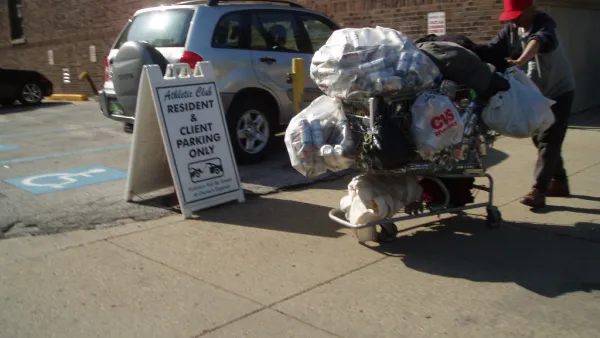
Indiana bans public homelessness
A new law prohibits sleeping or camping on public property.

Washington state to charge fee to drivers with fuel-efficient cars
Revenue from the fee will go towards supporting the state’s highways.

Illinois considers spending $1 billion in taxpayer money on data center
A quantum computing campus and data center are currently under construction in Chicago.

Trump to blast ‘hydrocarbon highway’ through ‘world’s longest art gallery’
Environmental and historic preservation groups are suing to stop the project.

NYC, state sue feds over mixed-immigration-status housing assistance rule
The state’s lawsuit argues that the rule change violates the Administrative Procedure Act.

Michigan to turn neighborhood into virtual power plant
Residents will soon be able to divert their excess energy to the grid in exchange for compensation.

Data center, mining project swarm to long-awaited Alaska railroad line
The state-owned railroad approved final plans for the spur line this week; the project is expected to cost $311 million, mostly funded by the federal government

FREE Course: Walkable City 1: Why Walkability?
After describing his path towards focusing on walkability as the essence of good planning, Jeff Speck marches through his five principal reasons for making more walkable places.
Reinventing Malls: Planning Alchemy—Turning Gray Fields Into Gold
The course focuses on the opportunities and imperatives that shape reinvention of mall sites.

City of Charlotte
City of Rosemead
Rutgers University, Edward J. Bloustein School of Planning and Public Policy
University of Michigan School for Environment and Sustainability (SEAS)
Hunter College, City University of New York (CUNY)
The Architects Foundation
University District Partnership