Plans to densify a busy Vancouver corridor have prompted concern among public health experts.


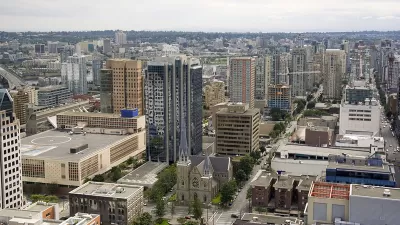
In response to plans by the city of Vancouver to add 18,000 new housing units to the high-traffic Cambie corridor over the next 25 years, public health experts discuss the impact of living near high traffic.
CBC spoke to one professor, Michael Brauer, from the University of British Columbia. He noted the benefits of density near transit, but also said that dense residential building in high-traffic areas means more prolonged exposure to air pollution. The emissions, particulates, and even noise caused by traffic can increase rates of lung cancer, heart attacks, and asthma in residents nearby, as well as birth difficulties.
Because the effects of air pollution are so localized—with even a block or two significantly reducing the risks—Brauer proposes mitigating exposure in dense areas by building housing a block or two off the busiest streets and locating retail on the lowest two floors.
FULL STORY: Dense development: is building along busy corridors unhealthy?

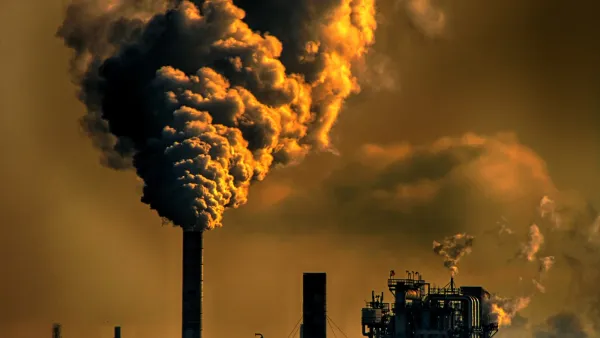
Study: Poor Air Quality Fuels COVID Transmission
Communities exposed to higher levels of air pollution experience higher rates of infection, particularly in areas with high population density.

Vancouver's Ride-Hail-Free Mobility Landscape
While ride-hailing is on the horizon for the Canadian city, the experience so far without the mode provides useful insight into its effects on regional mobility.
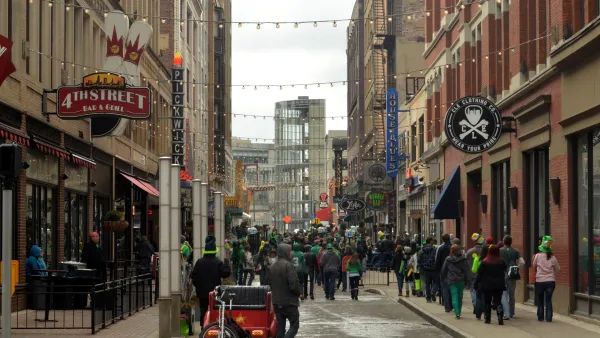
Can Density Prevent Diabetes?
In Australia, a new study will determine the best ways to make high-density developments healthy places to live.

Planetizen Federal Action Tracker
A weekly monitor of how Trump’s orders and actions are impacting planners and planning in America.

The state-sanctioned urbicide of Austin
People don’t kill cities. Freeways do.

US to reduce Colorado River water deliveries to Mexico
A new Colorado Treaty amendment reduces Mexico’s Colorado River water allocation by 250,000 acre feet.

Mamdani overhauls NYC's Vision Zero plan with 100 new policy goals
The overhaul aims to reduce traffic deaths and make streets safer for pedestrians, cyclists and drivers through lower speed limits, new safety infrastructure and more.

Amtrak not solely to blame for New Jersey commuter rail's unreliability, report finds
A new study from the Garden State Initiative found that NJ Transit’s budget grew 20% across a 4 year period, but reliability declined significantly over the same period.

EPA erases limits on planet-warming pollution from power plants
Under Monday’s plan, power plants would still have some limits on how much mercury, arsenic and other contaminants they can emit.

FREE Course: Walkable City 1: Why Walkability?
After describing his path towards focusing on walkability as the essence of good planning, Jeff Speck marches through his five principal reasons for making more walkable places.
Reinventing Malls: Planning Alchemy—Turning Gray Fields Into Gold
The course focuses on the opportunities and imperatives that shape reinvention of mall sites.

Eagle County Government
Harvard University Graduate School of Design
Nashville Planning Department
The Architects Foundation
University of Cincinnati Online
The Pocatello Development Authority
The Urban Renewal Agency of the City of Pocatello
Journal of the American Planning Association