A downward trend in deaths from car crashes reversed sharply in 2015. Many blamed cell phones and the distractions they can cause, but a recent study complicates that hypothesis.



A study investigating deaths from car crashes found a correlation between warmer weather, vehicle miles traveled (VMT), and, ultimately, deaths on the road. Conducted by Dr. Leon Robertson, formerly of Yale University, the study found that 2015 was a particularly warm year in the U.S. and suggests this might be why it was such a deadly year on the streets. "Road deaths in the U.S. jumped 7 percent in 2015, to 35,200 — an abrupt reversal of the downward trend that has persisted for the previous 35 years," Susan Perry writes in the Minneapolis Post.
Robertson undertook the study in part because he was not convinced by the hypothesis that the jump in deaths was attributable to distracted drivers with cell phones. Robertson points out that by 2014 cellphones were already ubiquitous in the U.S.
"[Robertson] found that for each degree increase in temperature, vehicles were driven an average of 60 extra miles per person per year. He also found that for each additional inch of rainfall, vehicles were driven an extra 66 miles per person," Perry reports. Still, this study can only show correlation (not causation) between weather and driving, especially since the participants were not surveyed.
Read the full story: Warmer temperatures, not cell phone use, was behind recent spike in road deaths, researcher says
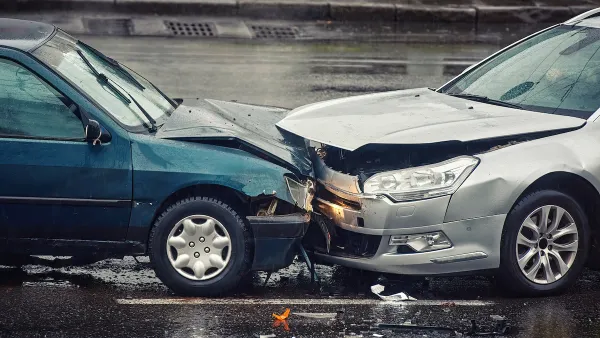
The Geography of Fatal Car Crashes
Where do the most traffic deaths happen?
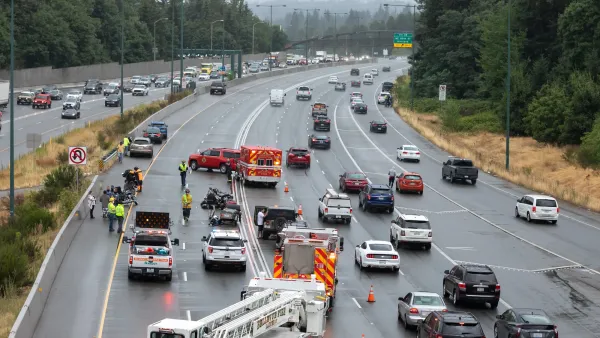
Commentary: Counting Road Deaths by VMT Minimizes the Harm and Normalizes Traffic Violence
When measured per capita, traffic fatalities in the United States far outstrip those in peer countries.
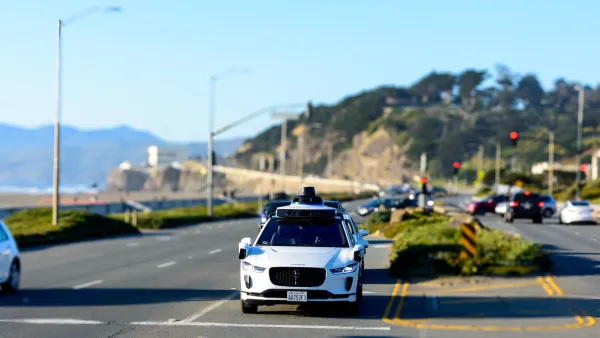
Study: Self-driving Cars Could Raise VMT by 6%, Increasing Congestion
The study contradicts early predictions that AVs would reduce driving miles.

Planetizen Federal Action Tracker
A weekly monitor of how Trump’s orders and actions are impacting planners and planning in America.

California plans to bury El Niño’s downpour
If the state plays its cards right, it may be able to store a billion acre-feet of El Niño’s water in aquifers.

Desperate measures: Advocates weigh draining Lake Powell to fill Colorado River
Draining the reservoir could reduce evaporation losses by a couple hundred thousand acre-feet.

Mamdani’s pied-à-terre tax survives legal challenge
A panel of judges found that the plaintiffs failed to demonstrate injury as a result of New York City's implementation of the tax.

Eastern Nebraska is running out of electricity
Data centers and electrification are straining eastern Nebraska’s grid, throttling economic development.

Seattle passes record-breaking transit services expansion
Proposition 1 will double the city’s transit tax to add 95,000 more bus trips and preserve 180,000 bus trips annually.

FREE Course: Walkable City 1: Why Walkability?
After describing his path towards focusing on walkability as the essence of good planning, Jeff Speck marches through his five principal reasons for making more walkable places.
Reinventing Malls: Planning Alchemy—Turning Gray Fields Into Gold
The course focuses on the opportunities and imperatives that shape reinvention of mall sites.

City of Rosemead
Rutgers University, Edward J. Bloustein School of Planning and Public Policy
One Hundred Miles
University of Michigan School for Environment and Sustainability (SEAS)
Hunter College, City University of New York (CUNY)
The Architects Foundation
City of Cambridge
Montrose County
The Pocatello Development Authority