In this second installment of a three-part review of Thomas More's Utopia in its 500th anniversary year, L.A. area planner Jodie Sackett looks at More's ideas for planning a Utopian city. Do More's ideas have current relevance?


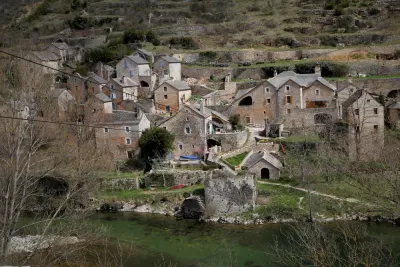
It's been 500 years since Thomas More penned his classic Utopia. Los Angeles Area planner Jodie Sackett thought it would be both interesting and informative to review More's ideas and consider how they hold up against modern planning concepts. In this second of a three-part series, Sackett looks at More's ideas for planning a Utopian city. In particular, Sackett looks at More's ideas on regional platting, water supply, streets, housing, social life, and shopping (actually trading) for daily necessities and not-so-daily luxuries, as well as More's ideas on political hierarchy and the urban form for a "capitol" city. For more details, please see the source article, as well as part one in the series.
Read the full story: Anecdotes on the Urban Design of Utopia: Part II of III of the Utopia 500th Anniversary Series
Elements of a Utopia: Revisiting Thomas More's Classic
It's been 500 years since Thomas More penned his classic Utopia. With the benefit of hindsight, Los Angeles area planner, Jodie Sackett, reviews some of the key ingredients More believed necessary for a utopian society.

Evidence-based planning in a time of information overload
The field of academic publishing has become complex and crowded. What does it mean for urban planners?

Children in 55 countries are redesigning their cities in Minecraft
A U.N.-backed program lets students and community members reimagine sites in their neighborhoods in the game — and translate them into real-life buildings.

Planetizen Federal Action Tracker
A weekly monitor of how Trump’s orders and actions are impacting planners and planning in America.

California plans to bury El Niño’s downpour
If the state plays its cards right, it may be able to store a billion acre-feet of El Niño’s water in aquifers.

Desperate measures: Advocates weigh draining Lake Powell to fill Colorado River
Draining the reservoir could reduce evaporation losses by a couple hundred thousand acre-feet.

In Texas, data centers are swallowing promised parkland
Residents who moved to Taylor, Texas for a rural community now have to contend with three data centers in their backyard.

How a Chicago-sized wind farm beat the odds and powered on
The project spanned five presidential administrations and a standoff with a U.S. military base.

MTA gives itself 30 days to transform pit into basketball court
The site has been under construction since 2022; the city originally estimated it would finish the court in 2024.

FREE Course: Walkable City 1: Why Walkability?
After describing his path towards focusing on walkability as the essence of good planning, Jeff Speck marches through his five principal reasons for making more walkable places.
Reinventing Malls: Planning Alchemy—Turning Gray Fields Into Gold
The course focuses on the opportunities and imperatives that shape reinvention of mall sites.

City of Rosemead
Rutgers University, Edward J. Bloustein School of Planning and Public Policy
One Hundred Miles
Hunter College, City University of New York (CUNY)
The Architects Foundation
University of Cincinnati Online
City of Cambridge
Montrose County
The Pocatello Development Authority