Most of the few people that are jumping fares on the New York subway are doing so out of necessity. One branch of the city government has decided that busting fare evaders isn't worth the trouble.



Manhattan District Attorney Cyrus Vance Jr. announced recently that his office would no longer prosecute the misdemeanor of fare evasion, reports Ryan Kailath.
Fare evasion was once at 11 percent in the 1990s, but "[t]oday, fare evasion is down to roughly 1.3 percent of riders." According to Kailath, "fare evasion is the most common criminal charge in Manhattan, with nearly 10,000 arrests a year."
Many fare evaders are repeat offenders, and the costs of prosecuting those crimes are more than the benefits, according to the article. "The outer boroughs of Brooklyn and Queens are looking into decriminalizing fare evasion as well," adds Kailath.
Read the full story: New York won't arrest you for stealing a subway ride anymore

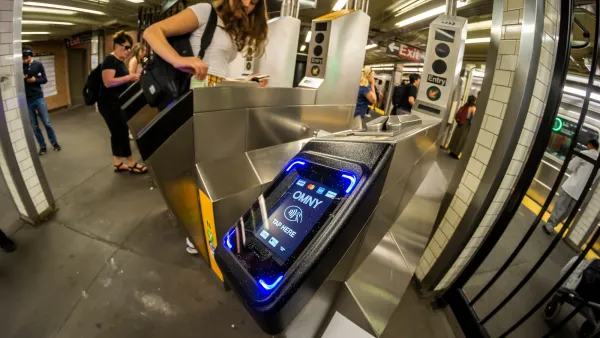
Popular transit payment system linked to Palantir could give ICE access to rider data
The tap-to-pay system is being used widely in transit systems including New York City, Boston and Chicago.
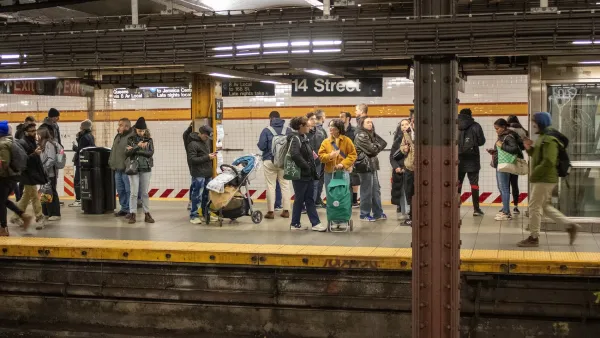
Report: Expanding MTA Fair Fares subway program would benefit New Yorkers more than free buses
A report from the city's Citizens Budget Commission recommends subsidizing fares for more low-income subway riders rather than making buses free for everyone.
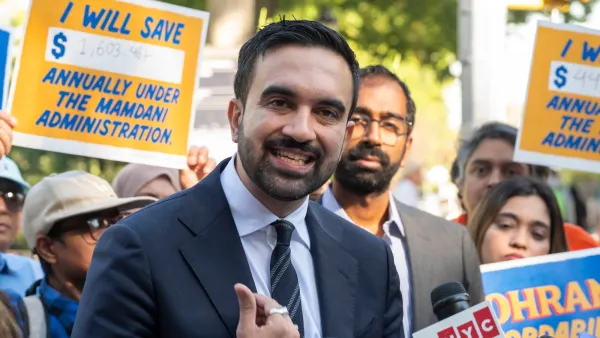
NYC mayor walks back free buses promise
Mayor Mamdani admitted that a key campaign promise, 'fast and free buses,' won't be fulfilled this year.

Planetizen Federal Action Tracker
A weekly monitor of how Trump’s orders and actions are impacting planners and planning in America.

Amtrak, CN end decades-long dispute with eight-year agreement
The new operating agreement establishes an updated framework for the companies to work together, including processes to resolve disputes.

Northwest rail fans eager for Sept. 30 debut of Amtrak’s Airo fleet
Get ready for that new train smell and more seats. But they won’t go faster or run more frequently on the Cascades route in Washington and Oregon.

St. Louis Metro to test if single-car trains can reduce operating costs, maintain rider satisfaction
The pilot program will run from October to spring 2027, and begin with one single-car train operating on Metrolink’s Red and Blue lines.

Pennsylvania is building data centers in abandoned mines
Housing data centers in mines provides an alternative to destroying local forests and may spare residents from data centers’ noise and air pollution.

If Corpus Christi can’t revive desalination plant project, it may owe Texas $235 million
Earlier this month, city officials declined to pursue developing the plant for the second time in a year.

FREE Course: Walkable City 1: Why Walkability?
After describing his path towards focusing on walkability as the essence of good planning, Jeff Speck marches through his five principal reasons for making more walkable places.
Reinventing Malls: Planning Alchemy—Turning Gray Fields Into Gold
The course focuses on the opportunities and imperatives that shape reinvention of mall sites.

City of Thousand Oaks
City of Wisconsin Rapids
Harvard University Graduate School of Design
The Architects Foundation
University of Cincinnati Online
The Pocatello Development Authority
The Urban Renewal Agency of the City of Pocatello