Some say that "nonprime" loans will create the same financial ruins as their "subprime" predecessors. Others say the housing market needs ways for more people to buy homes and drive the industry.


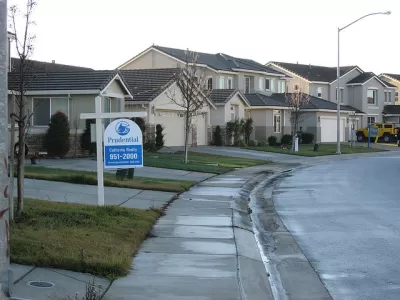
Ben McLannahan reports on the growing prominence of the "nonprime" home-loan market. Nonprime loans are the new name for what was once called subprime loans. "The sector is on course to produce about $10bn this year — a tiny slice of America's $1.6tn overall home-loan market but one that's growing rapidly," according to McLannahan.
McLannahan specifically focuses on the work of Dan Perl at Citadel Servicing Corp, based in Irvine, California.
The way Perl and his peers see it, there's nothing shady or menacing about the business of subprime. On the contrary, they say, specialist lenders in this area are performing a vital service for the world's largest economy. For every comfortably off professional who could walk into a branch of Chase or Wells Fargo and get a home loan without any fuss, they argue, there are many more who would struggle.
The concern, as anyone who was alive in 2007 and 2008 might recall, is that nonprime loans are raising from the dead the same forces that led to financial collapse and the ruins of the Great Recession. The article provides in-depth insight into the debate that has emerged over the current nonprime market.
Read the full story: ‘Nonprime has a nice ring to it’: the return of the high-risk mortgage

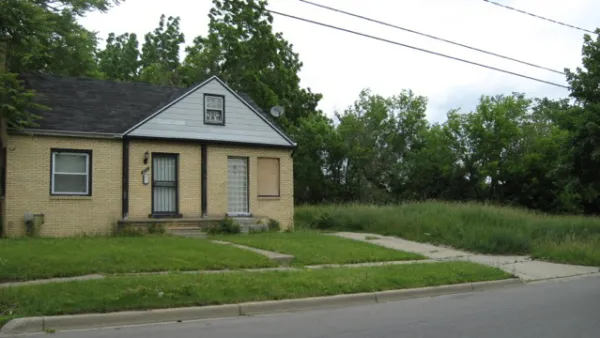
How Risky Lending Hollowed Out Detroit
Over one half of Detroit's foreclosed homes are blighted or abandoned. Buyers who purchased the homes for as little as $1 have little incentive to keep them in good shape—or pay taxes.
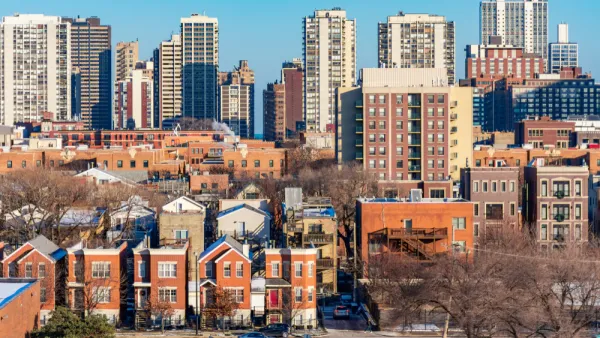
Mortgage Lending in Homogenous Neighborhoods
A new study examines mortgage lending practices in racially homogenous neighborhoods for clues about how those neighborhoods differ from the aggregate, national market.

Homebuyers Return to the Exurbs
It's been a while since 2008, and a new crop of homeowners is colonizing the far-flung exurbs. Mostly foreclosed and even abandoned last time around, the exurbs are still a risky buy.

Planetizen Federal Action Tracker
A weekly monitor of how Trump’s orders and actions are impacting planners and planning in America.

California plans to bury El Niño’s downpour
If the state plays its cards right, it may be able to store a billion acre-feet of El Niño’s water in aquifers.

Desperate measures: Advocates weigh draining Lake Powell to fill Colorado River
Draining the reservoir could reduce evaporation losses by a couple hundred thousand acre-feet.

Non-stop party: Chicago voters weigh permanent festival grounds
A stable place for bleachers, stages and drainage may streamline the setup and teardown of large events.

Metra may invest $9.1 billion in regional rail
The agency released a draft of a study examining potential ways to offer more frequent train service.

California city breaks ground on transit connector
The project includes three mobility hubs and a pedestrian bridge.

FREE Course: Walkable City 1: Why Walkability?
After describing his path towards focusing on walkability as the essence of good planning, Jeff Speck marches through his five principal reasons for making more walkable places.
Reinventing Malls: Planning Alchemy—Turning Gray Fields Into Gold
The course focuses on the opportunities and imperatives that shape reinvention of mall sites.

City of Rosemead
Rutgers University, Edward J. Bloustein School of Planning and Public Policy
One Hundred Miles
Hunter College, City University of New York (CUNY)
The Architects Foundation
University of Cincinnati Online
City of Cambridge
Montrose County
The Pocatello Development Authority