One of the nation's premier transit systems has a striking new addition.


"Wave hello to the Loop's striking new elevated station," writes Chicago Tribune Architecture Critic Blair Kamin. "It's going to wave back."
"The first new Loop elevated stop in 20 years, the $75 million Washington-Wabash Station stands out because the canopies covering its passenger platforms appear to undulate, like the skeleton of a skinny reptile," adds Kamin.
For more of the prosaic details about the new station, Kamin explains: "Located in the Jewelers Row historic district and funded by the federal government, the station replaces two aging elevated stations — one at Madison and Wabash, already demolished; the other at Randolph and Wabash, which will close Sunday. The new station will serve the CTA's Brown, Green, Orange, Pink and Purple lines."
For more of the poetic aspects of the new design, described as only a Pulitzer Prize-winning critic could, click through to the article.
Read the full story: First new Loop 'L' station in 20 years creates curvy gateway to Millennium Park

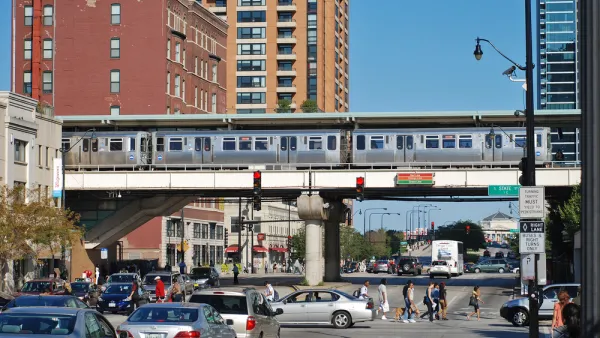
Chicago Transit Increasing Rail Service to Pre-Pandemic Levels
The Chicago Transit Authority is close to returning both rail and bus service to pre-pandemic schedules, with some adjustments for new travel demand.
Chicago Transit Releases 2024 Budget
The agency projects modest ridership growth while aiming to make long-term investments in bus and rail improvements.
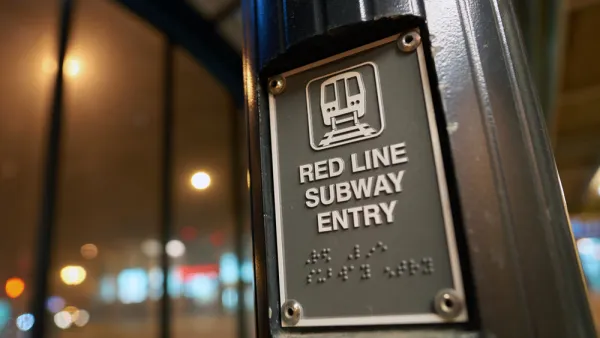
Red Line Extension to Chicago's Far South Side Making Steady Progress
A transit extension envisioned since the 1950s is this year making steady, tangible progress in the Windy City.

Planetizen Federal Action Tracker
A weekly monitor of how Trump’s orders and actions are impacting planners and planning in America.

Amtrak, CN end decades-long dispute with eight-year agreement
The new operating agreement establishes an updated framework for the companies to work together, including processes to resolve disputes.

Northwest rail fans eager for Sept. 30 debut of Amtrak’s Airo fleet
Get ready for that new train smell and more seats. But they won’t go faster or run more frequently on the Cascades route in Washington and Oregon.

Brightline Florida files for bankruptcy
The transit company is over $5 billion in debt.

St. Louis Metro to test if single-car trains can reduce operating costs, maintain rider satisfaction
The pilot program will run from October to spring 2027, and begin with one single-car train operating on Metrolink’s Red and Blue lines.

Pennsylvania is building data centers in abandoned mines
Housing data centers in mines provides an alternative to destroying local forests and may spare residents from data centers’ noise and air pollution.

FREE Course: Walkable City 1: Why Walkability?
After describing his path towards focusing on walkability as the essence of good planning, Jeff Speck marches through his five principal reasons for making more walkable places.
Reinventing Malls: Planning Alchemy—Turning Gray Fields Into Gold
The course focuses on the opportunities and imperatives that shape reinvention of mall sites.

City of Thousand Oaks
City of Wisconsin Rapids
Harvard University Graduate School of Design
The Architects Foundation
University of Cincinnati Online
The Pocatello Development Authority
The Urban Renewal Agency of the City of Pocatello