DeVon Douglass spoke with Laura Bliss about how she plans to help make the city more resilient, especially for those most at risk.



When Laura Bliss asked Devon Douglass how she planned to make Tulsa more resilient, Douglass starts by talking about students and schools: "We’ve had the lowest teacher salary and more cuts to public education than any state in the union since 2008. Across the state, we’re cutting programs, moving to four-day school weeks, taking away stuff these babies need." To face these challenges, Douglass talks about strategies to engage whole families at schools by making them the sites of services to train adult members of the family.
Douglass also talks about the way city government deals with political differences and how she squares her progressive politics and goals with Tulsa's Republican mayor's views, "When you have a mayor who has hired people of all different racial and economic backgrounds, folks who are and aren’t from Tulsa, and who brought in the last Democratic mayor as his chief of economic development—it allows people to see what politics could be like."
Douglass sees her role as someone who can give voice to those who might not otherwise be heard. "It’s part of my job is to amplify their voices and find out what they have to say, figure out strategies to help them, regardless of party, gender, and race," Douglass tells Bliss.
FULL STORY: What Makes a 'Resilient' City? For Tulsa's Chief Resilience Officer, It's People

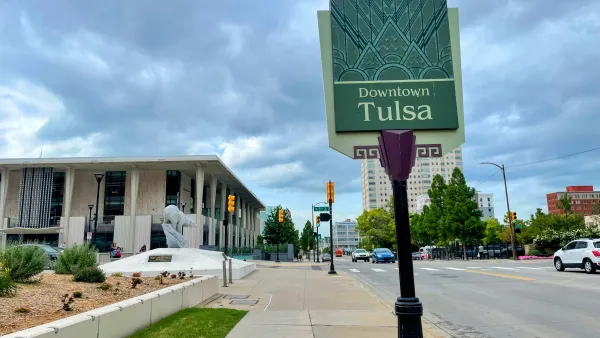
Tulsa dissolves city-county planning commission
The Tulsa Metropolitan Planning Commission, which previously oversaw both city and county planning issues, will split into two separate bodies on Sept. 2.
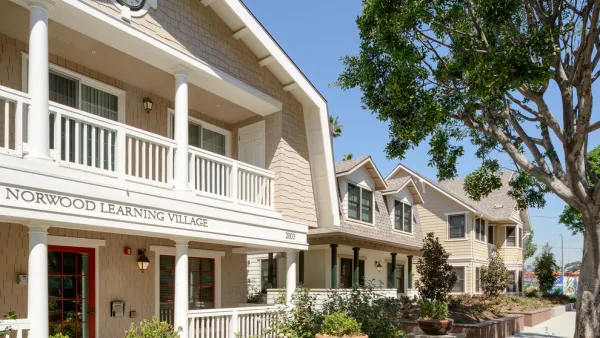
Teachers Make 5% Less Than a Decade Ago. These Districts are Building Housing for Them
The housing crisis is hitting education workers particularly hard, making it difficult to find housing near their workplaces.

Tulsa Paid Remote Workers $10,000 to Move In — Nearly All of Them Stayed
The Tulsa Remote program generated more than $4 in local economic benefits for every dollar spent.

Planetizen Federal Action Tracker
A weekly monitor of how Trump’s orders and actions are impacting planners and planning in America.

The state-sanctioned urbicide of Austin
People don’t kill cities. Freeways do.

US to reduce Colorado River water deliveries to Mexico
A new Colorado Treaty amendment reduces Mexico’s Colorado River water allocation by 250,000 acre feet.

5 New England states march closer to 800 megawatt wind energy project
Securing federal approval for the project may be complicated under the Trump administration, which has historically been hostile towards domestic wind power.

Baltimore to break ground on $50 million Transit Priority Project
The project will bring faster bus trips, safer streets and better bike connections to Baltimore.

Airbnb launches $250 million 'last-dollar financing' housing accelerator, makes first investment in Austin
The company will put $6.4 million towards affordable housing development in Texas’ capital.

FREE Course: Walkable City 1: Why Walkability?
After describing his path towards focusing on walkability as the essence of good planning, Jeff Speck marches through his five principal reasons for making more walkable places.
Reinventing Malls: Planning Alchemy—Turning Gray Fields Into Gold
The course focuses on the opportunities and imperatives that shape reinvention of mall sites.

Eagle County Government
Harvard University Graduate School of Design
Nashville Planning Department
The Architects Foundation
University of Cincinnati Online
The Pocatello Development Authority
The Urban Renewal Agency of the City of Pocatello
Journal of the American Planning Association