Western states that hold millions of acres in land trusts are working to turn some of them into affordable housing.


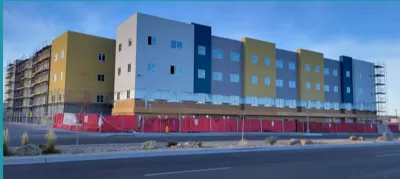
As the affordable housing crisis grows, states in the Western U.S. are looking to underutilized state-owned lands as potential sites for new housing development, reports Alex Brown in Stateline.
Many of the properties in question were granted to states as “working lands” designed to fund public schools and community services by “leasing them for activities such as logging, mining, grazing and oil and gas development,” and, more recently, renewable energy farms, campgrounds, and other uses.
The process has its own unique challenges. “State land agencies often lack the expertise to develop land themselves, and requirements that they sell parcels for market rates often mean affordable projects are priced out. Officials are still figuring out which mechanisms — leases, land exchanges with local governments, auctions to developers — might work best for getting housing built.” While much of this land isn’t suitable for housing, and some protects critical habitats or other sensitive environments, state leaders see it as an opportunity to diversify their revenue streams and build much-needed housing by making it easier to build on sites near current development.
In Colorado, a new Public-Private Partnership Collaboration Unit formed by the state will support building housing on state-owned land through financing and technical assistance. “Utah has begun looking at ways to promote affordable housing on trust lands, including working with local governments to enact zoning changes that allow increased density.” In New Mexico, an affordable senior housing facility built on trust land opened last year.
FULL STORY: Western states look to these lands for new affordable housing

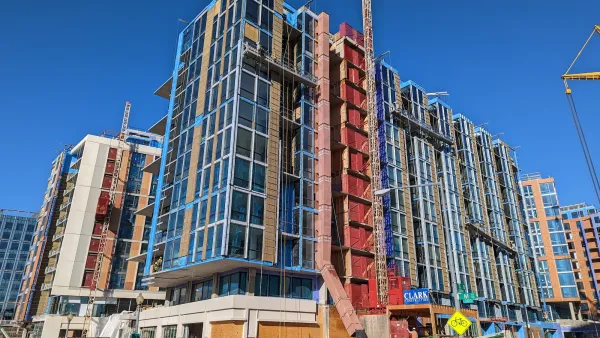
Analysis: DC needs tens of thousands of new homes — not just 'zoned capacity'
Estimates for Washington DC's housing needs range from 15,000 to 170,000.
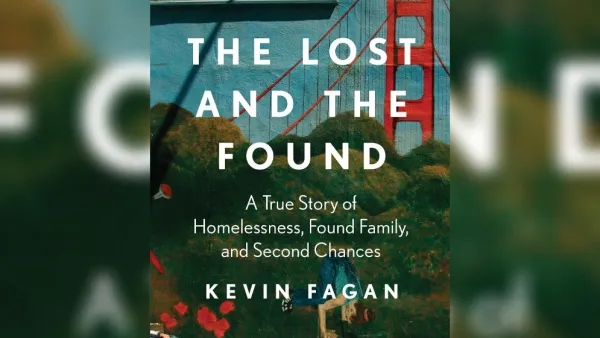
The "vicious cycle of real estate mania" — and how we might find our way home
Book review: In "The Lost and the Found: A True Story of Homelessness, Found Family, and Second Chances," Kevin Fagan humanizes the housing crisis like never before.
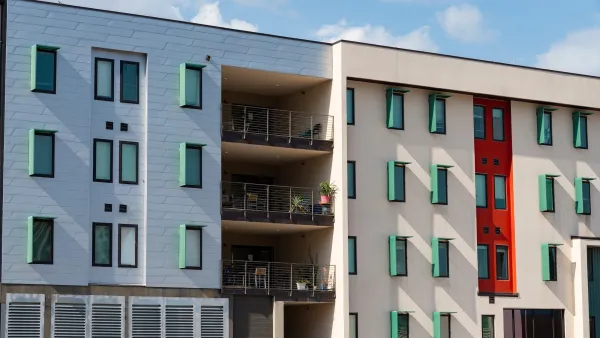
Austin's building boom fails to reach the poorest residents
Although the city has built thousands of new homes, few of them are available to the lowest-earning households.

Planetizen Federal Action Tracker
A weekly monitor of how Trump’s orders and actions are impacting planners and planning in America.

The state-sanctioned urbicide of Austin
People don’t kill cities. Freeways do.

US to reduce Colorado River water deliveries to Mexico
A new Colorado Treaty amendment reduces Mexico’s Colorado River water allocation by 250,000 acre feet.

5 New England states march closer to 800 megawatt wind energy project
Securing federal approval for the project may be complicated under the Trump administration, which has historically been hostile towards domestic wind power.

Baltimore to break ground on $50 million Transit Priority Project
The project will bring faster bus trips, safer streets and better bike connections to Baltimore.

Airbnb launches $250 million 'last-dollar financing' housing accelerator, makes first investment in Austin
The company will put $6.4 million towards affordable housing development in Texas’ capital.

FREE Course: Walkable City 1: Why Walkability?
After describing his path towards focusing on walkability as the essence of good planning, Jeff Speck marches through his five principal reasons for making more walkable places.
Reinventing Malls: Planning Alchemy—Turning Gray Fields Into Gold
The course focuses on the opportunities and imperatives that shape reinvention of mall sites.

Eagle County Government
Harvard University Graduate School of Design
Nashville Planning Department
The Architects Foundation
University of Cincinnati Online
The Pocatello Development Authority
The Urban Renewal Agency of the City of Pocatello
Journal of the American Planning Association