The 2017 "Worst Case Housing Needs" report paints a dire picture of the nation's low-income housing options, as the Trump Administration proposes drastic cuts to federal housing programs.


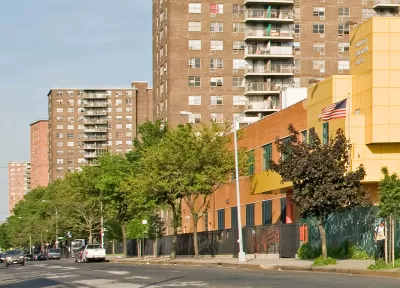
"The number of poor families struggling to pay their monthly rents or living in deplorable accommodations has grown 41 percent since the beginning of the Great Recession a decade ago," reports Tracy Jan.
That information comes from a recent report by the U.S. Department of Housing and Urban Development—the department's biennial assessment of "worst case housing needs."
"More than 8.3 million very low-income households in 2015 qualified for, but did not receive, federal housing assistance because there is not enough to go around," adds Jan to explain the reports findings.
"The report blamed growing competition for a shrinking supply of affordable residences for the increase, a result of declining homeownership and rising rents, in addition to a widening gap between the number of renters in need and the availability of federal assistance."
As Jan reported in an earlier article in May (and picked up by Planetizen via another article from The Washington Post), the Trump Administration's budget blueprint "calls for the most dramatic cuts to the Department of Housing and Urban Development since President Ronald Reagan slashed the agency’s funding in the early 1980s." The budget proposal, which is still far from a political reality, also "leaves a wide opening for introducing work requirements for people who receive federal housing subsidies."
FULL STORY: Millions of poor families could benefit from housing aid Trump wants to cut


Outrage Over Trump's Fair Housing Victory Lap
President Trump took to Twitter today to celebrate his administration's decision to rescind the Affirmatively Furthering Fair Housing rule, approved by the Obama administration to strengthen the Fair Housing Act of 1968.
Local Public Housing Agencies Resist HUD's Proposed Section 8 Rule
A proposed rule to disqualify all families living with an undocumented person from receiving federal housing aid is available for comment. We know a few people who oppose the rule.

HUD Mulling Work Requirements and Higher Rents for Housing Assistance
More details of the Trump Administration's agenda at the Department of Housing and Urban Development were revealed late last week.

Planetizen Federal Action Tracker
A weekly monitor of how Trump’s orders and actions are impacting planners and planning in America.

The state-sanctioned urbicide of Austin
People don’t kill cities. Freeways do.

US to reduce Colorado River water deliveries to Mexico
A new Colorado Treaty amendment reduces Mexico’s Colorado River water allocation by 250,000 acre feet.

Mamdani overhauls NYC's Vision Zero plan with 100 new policy goals
The overhaul aims to reduce traffic deaths and make streets safer for pedestrians, cyclists and drivers through lower speed limits, new safety infrastructure and more.

Amtrak not solely to blame for New Jersey commuter rail's unreliability, report finds
A new study from the Garden State Initiative found that NJ Transit’s budget grew 20% across a 4 year period, but reliability declined significantly over the same period.

EPA erases limits on planet-warming pollution from power plants
Under Monday’s plan, power plants would still have some limits on how much mercury, arsenic and other contaminants they can emit.

FREE Course: Walkable City 1: Why Walkability?
After describing his path towards focusing on walkability as the essence of good planning, Jeff Speck marches through his five principal reasons for making more walkable places.
Reinventing Malls: Planning Alchemy—Turning Gray Fields Into Gold
The course focuses on the opportunities and imperatives that shape reinvention of mall sites.

Eagle County Government
Harvard University Graduate School of Design
Nashville Planning Department
The Architects Foundation
University of Cincinnati Online
The Pocatello Development Authority
The Urban Renewal Agency of the City of Pocatello
Journal of the American Planning Association