Emory University wants the city of Atlanta to annex its campus. Transit benefits and more could await.



Melissa Korn reports:
Emory University for years has been making the case that it is engaged in, and contributing to, the city of Atlanta. Now, it wants to officially become part of the metropolis.
The nearly 15,000-student research university, which already brands itself as being in Atlanta and has an Atlanta address, filed paperwork Tuesday to annex itself into the city’s borders. Currently, the school’s 630 acre campus isn’t under the city’s jurisdiction, but lies in adjacent unincorporated DeKalb County.
One of the largest potential benefits of annexation, for the campus, would be better chances of locating a stop along a potential expansion of the MARTA light rail system.
Korn also ties the action by Emory to the larger national trend of universities and cities forging closer ties as an economic development strategy. Philadelphia, and its work with Drexel University and the University Pennsylvania, is held up as exemplar of the trend, as it has by Planetizen on several occasions over the years.
Read the full story: Emory University Looks to Be Incorporated Into City of Atlanta
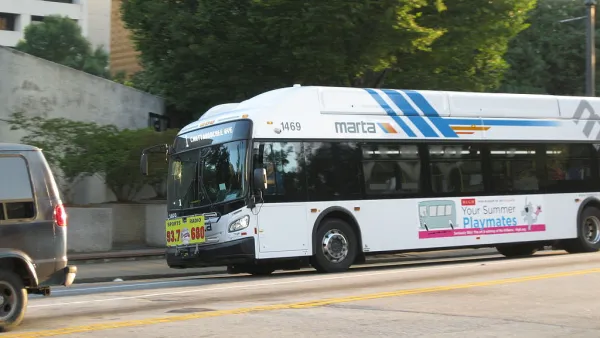
Light Rail Plans Could Become Bus Rapid Transit Plans in Atlanta
Light rail on the Clifton Corridor was once a centerpiece of a $2.7 billion, 40-year transit expansion plans funded by a voter-approved sales tax. Now MARTA is considering using bus rapid transit on the corridor instead.

Learning loss and urban schools, part 2
Did test scores in progressive cities drop more post-COVID than test scores in moderate ones?

Evidence-based planning in a time of information overload
The field of academic publishing has become complex and crowded. What does it mean for urban planners?

Planetizen Federal Action Tracker
A weekly monitor of how Trump’s orders and actions are impacting planners and planning in America.

California plans to bury El Niño’s downpour
If the state plays its cards right, it may be able to store a billion acre-feet of El Niño’s water in aquifers.

Desperate measures: Advocates weigh draining Lake Powell to fill Colorado River
Draining the reservoir could reduce evaporation losses by a couple hundred thousand acre-feet.

Los Angeles just elected an urban planner as its mayor
Transportation analysts are optimistic that Raman will be more aggressive in addressing transit issues than Bass.

Mamdani’s pied-à-terre tax survives legal challenge
A panel of judges found that the plaintiffs failed to demonstrate injury as a result of New York City's implementation of the tax.

Eastern Nebraska is running out of electricity
Data centers and electrification are straining eastern Nebraska’s grid, throttling economic development.

FREE Course: Walkable City 1: Why Walkability?
After describing his path towards focusing on walkability as the essence of good planning, Jeff Speck marches through his five principal reasons for making more walkable places.
Reinventing Malls: Planning Alchemy—Turning Gray Fields Into Gold
The course focuses on the opportunities and imperatives that shape reinvention of mall sites.

City of Rosemead
Rutgers University, Edward J. Bloustein School of Planning and Public Policy
One Hundred Miles
University of Michigan School for Environment and Sustainability (SEAS)
Hunter College, City University of New York (CUNY)
The Architects Foundation
City of Cambridge
Montrose County
The Pocatello Development Authority