As the YIMBY movement has gained momentum in high-cost cities, advocates for social justice and subsidized housing have taken aim, claiming that YIMBY's pro-development stance aligns them with predatory capitalism and neoliberalism.


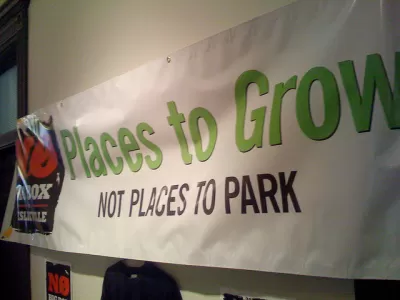
"(YIMBY activist Sonja) Trauss describes herself as an anarchist, with no love for political ideologies. Short of burning the whole place down, she has contented herself with supporting The Man (real estate developers) so as to stick it to The (other) Man (homeowners associations and other anti-development forces). It’s a compromise, to be sure. But even anarchists need someplace to live."
"Meronek and Szeto have decided that Trauss and her colleagues are 'pro-gentrification,' in league with 'greedy' real estate developers. They equate support for market-rate housing with support for 'luxury' housing. They also equate it with not just tolerance for but, it seems, approval of displacement. YIMBYism, they claim, is 'rooted in the same classist, racist ideologies it supposedly seeks to disrupt,' in line with redlining, slum clearance, urban renewal, and other explicitly discriminatory practices of decades past."
"Does YIMBYism have problems? Sure. No movement is perfect. But slander and willful misrepresentations are bigger problems. They create bitterness and fragmentation when there ought to be unity, cooperation, and respectful disagreement."
FULL STORY: Radical Left Burns Bridges amid Quest To Build Housing


Are Charter Cities Subject to California's Housing Laws?
After a San Mateo County Superior Court judge ruled that charter cities are exempt from the Housing Accountability Act, aka the anti-NIMBY law, the state stepped in to support the appellant, a YIMBY group that launched a "Sue the Suburbs" campaign.

The One Tech Company That's Engaging In California's Housing Debate
While tech giants like Google, Facebook, and Apple have approached the Bay Area's housing crisis gingerly the CEO of Yelp has thrown himself into the YIMBY movement. His activism says a lot about the real world and the virtual world.

Third Rail of the Housing Debate: More Density in Single-Family Neighborhoods
If California is going to address its chronic housing shortage, single-family residential neighborhoods can no longer be ruled "off limits." Opposition to a small Berkeley subdivision spawned new housing legislation and fostered the YIMBY movement.

Planetizen Federal Action Tracker
A weekly monitor of how Trump’s orders and actions are impacting planners and planning in America.

The state-sanctioned urbicide of Austin
People don’t kill cities. Freeways do.

US to reduce Colorado River water deliveries to Mexico
A new Colorado Treaty amendment reduces Mexico’s Colorado River water allocation by 250,000 acre feet.

5 New England states march closer to 800 megawatt wind energy project
Securing federal approval for the project may be complicated under the Trump administration, which has historically been hostile towards domestic wind power.

Baltimore to break ground on $50 million Transit Priority Project
The project will bring faster bus trips, safer streets and better bike connections to Baltimore.

Airbnb launches $250 million 'last-dollar financing' housing accelerator, makes first investment in Austin
The company will put $6.4 million towards affordable housing development in Texas’ capital.

FREE Course: Walkable City 1: Why Walkability?
After describing his path towards focusing on walkability as the essence of good planning, Jeff Speck marches through his five principal reasons for making more walkable places.
Reinventing Malls: Planning Alchemy—Turning Gray Fields Into Gold
The course focuses on the opportunities and imperatives that shape reinvention of mall sites.

Eagle County Government
Harvard University Graduate School of Design
Nashville Planning Department
The Architects Foundation
University of Cincinnati Online
The Pocatello Development Authority
The Urban Renewal Agency of the City of Pocatello
Journal of the American Planning Association