Engineers are searching for solid ground along the California coast at the scene of a massive landslide that wiped out California Highway 1 near San Luis Obispo.


"California’s restless new stretch of beachfront property in Big Sur will soon have a road," according to an article by Lisa M. Krieger.
The new road is actually just a step in the process toward a more permanent solution, but workers need to plan a route "across the loose debris field created by one of California’s largest coastal landslides in recent history" to erect a motion sensing radar. "There also are plans to start excavation on the southern side of now-buried highway just north of the San Luis Obispo County line in order to build a ledge for construction equipment," adds Krieger.
Motion sensing technology already saved lives, as workers had been evacuated from the area for several days when the slide released 2 million cubic meters of earth down the hill on May 20, 2017—earth loosened and unleashed by the winter's rains.
Now Highway 1 lies beneath some 80 feet of dirt and rock, and it could be a year before the picturesque highway is reopened.
Read the full story: Big Sur’s brave new route crosses epic Highway 1 landslide
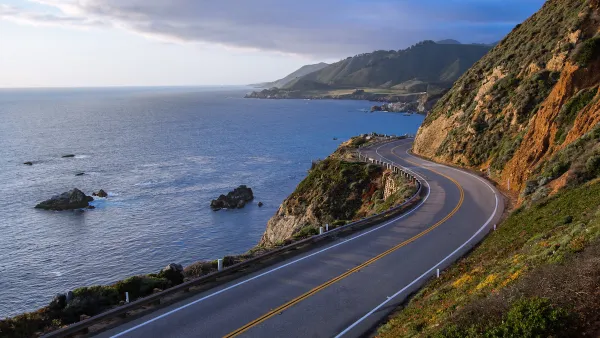
Landslide Strands Tourists in Big Sur
A segment of California’s famous Highway 1 collapsed, leaving the area completely cut off for a day and the southbound lane of the road still closed.

Southern California City Offers Buyout to Homeowners Facing Erosion Threat
Power and gas were shut off to dozens of homes in Rancho Palos Verdes as landslides threatened homes and infrastructure. Now, the city is offering to buy the homes to help residents relocate.
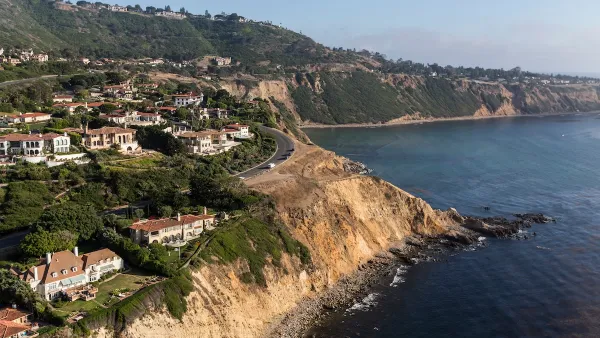
Southern California Utilities Cut Power, Gas to Hundreds of Households on Shifting Coastal Land
Slow but significant land movement is damaging infrastructure, prompting power shutoffs and calls for evacuation in Rancho Palos Verdes.

Planetizen Federal Action Tracker
A weekly monitor of how Trump’s orders and actions are impacting planners and planning in America.

Washington state to charge fee to drivers with fuel-efficient cars
Revenue from the fee will go towards supporting the state’s highways.

Illinois considers spending $1 billion in taxpayer money on data center
A quantum computing campus and data center are currently under construction in Chicago.

Did data centers change how voters cast their ballots?
Texas, Ohio, and Georgia all flipped party control. But in rural counties, the effect of local data centers was mixed.

Amtrak invests in eight new Airo trainsets
The new trainsets will begin serving passengers in 2031.

HUD to end aid for mixed-immigration-status households
The new rule is projected to impact 80,000 people, nearly half of whom are children.

FREE Course: Walkable City 1: Why Walkability?
After describing his path towards focusing on walkability as the essence of good planning, Jeff Speck marches through his five principal reasons for making more walkable places.
Reinventing Malls: Planning Alchemy—Turning Gray Fields Into Gold
The course focuses on the opportunities and imperatives that shape reinvention of mall sites.

City of Charlotte
City of Rosemead
Rutgers University, Edward J. Bloustein School of Planning and Public Policy
University of Michigan School for Environment and Sustainability (SEAS)
Hunter College, City University of New York (CUNY)
The Architects Foundation
University District Partnership