Malcom Gladwell takes on the racial and environmental problems related to the game of golf, particularly as it relates to L.A. property taxes and the Ship of Theseus.



Malcolm Gladwell argues that Los Angeles country clubs have used special carve outs as well as a legal argument that makes their owners legally immortal to dodge millions of dollars of property taxes.
Rents and home prices are going up around L.A. and the homeless population is ballooning. This makes the land that the many golf courses take up in and around Los Angeles all the more valuable. The city also lacks public green space and its parks lag behind those of other big cities. But California golf courses are not subject to taxes at the rate of their highest and best use, in part because of a Bob Hope-backed campaign to give their special interest group special treatment. But that's just the first piece of the tax dodge for Los Angeles area golf courses. Proposition 13 allows that properties owned since 1978 remain taxed at the same value they held in 1978 until 50 percent or more of their ownership changes hands.
When journalists pointed out that country clubs are continually turning over ownership, because they are owned by members who can leave or simply die, many of these courses should no longer be taxed at 1978 levels. But the city reasoned that as only small bits of ownership are replaced at a time, the overall ownership is not changed. Gladwell points out that this argument recalls the Ship of Theseus.
FULL STORY: A Good Walk Spoiled

Will L.A.'s Mayor Fight Prop 13?
Increasingly seen as an ineffective tool, the property tax limiting Proposition 13 has been derided in California for decades. Now, Los Angeles Mayor Antonio Villaraigosa looks to be willing to argue against the politically sensitive law.
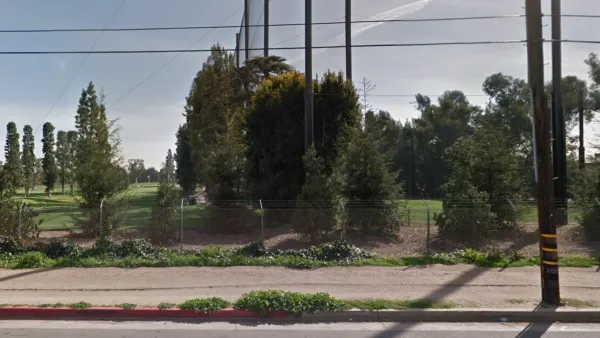
Brentwood Residents Recoil Over Barbed Wire Fence
In a wealthy Los Angeles enclave, an unsightly fence is prompting questions from local residents.

A Historic Golf Club's Community Revival
South LA’s Chester Washington Golf Club is experiencing a revitalization, blending its rich legacy with modern advancements while continuing to foster community, diversity, and fellowship.

Planetizen Federal Action Tracker
A weekly monitor of how Trump’s orders and actions are impacting planners and planning in America.

The state-sanctioned urbicide of Austin
People don’t kill cities. Freeways do.

US to reduce Colorado River water deliveries to Mexico
A new Colorado Treaty amendment reduces Mexico’s Colorado River water allocation by 250,000 acre feet.

5 New England states march closer to 800 megawatt wind energy project
Securing federal approval for the project may be complicated under the Trump administration, which has historically been hostile towards domestic wind power.

Baltimore to break ground on $50 million Transit Priority Project
The project will bring faster bus trips, safer streets and better bike connections to Baltimore.

Airbnb launches $250 million 'last-dollar financing' housing accelerator, makes first investment in Austin
The company will put $6.4 million towards affordable housing development in Texas’ capital.

FREE Course: Walkable City 1: Why Walkability?
After describing his path towards focusing on walkability as the essence of good planning, Jeff Speck marches through his five principal reasons for making more walkable places.
Reinventing Malls: Planning Alchemy—Turning Gray Fields Into Gold
The course focuses on the opportunities and imperatives that shape reinvention of mall sites.

Eagle County Government
Harvard University Graduate School of Design
Nashville Planning Department
The Architects Foundation
University of Cincinnati Online
The Pocatello Development Authority
The Urban Renewal Agency of the City of Pocatello
Journal of the American Planning Association