A Streetsblog NYC article argues that New York misses an opportunity to make itself more vibrant and accessible by focusing only on safety and not also on active transit infrastructure.


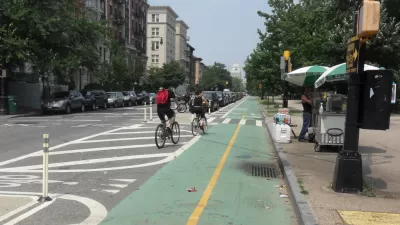
Updates to the design of New York's Grand Concourse have been a major success, "There have not been any traffic deaths on the Grand Concourse in more than two years, according to DOT, and crashes with injuries have dropped 40 percent. These are significant achievements and testament to both street design changes and the de Blasio administration’s expansion of speed cameras, which cut speeding in school zones on the Concourse 70 percent," David Meyer reports. But, he argues, "[t]he city should be incorporating bike infrastructure into its designs or they will be missing an opportunity. "
Biking is still dangerous enough to suppress cycling on what should be a major bike corridor. "The segments with bike lanes are obstructed too much, and while a few souls opt to ride in the main road’s painted median next to fast traffic, most people will never choose to do that," Meyer argues. Until the streets are safe enough to encourage bike commuters, the Grand Concourse project will only be a half success.
Read the full story: The Goal for NYC Streets Should Go Beyond “Vision Zero” — The Grand Concourse Shows Why

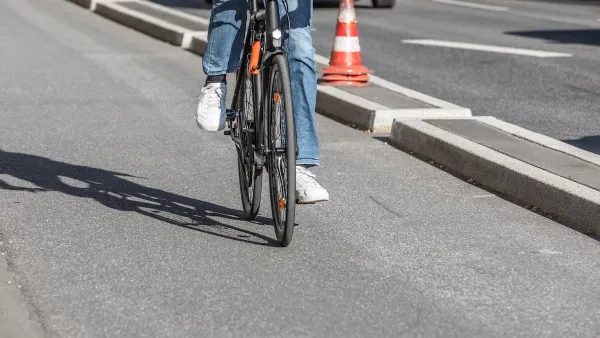
Southeast LA Road Safety Advocates Call for Improved Infrastructure
Streets in southeastern Los Angeles County have a severe lack of protected bike lanes and traffic safety measures, leading to high numbers of fatalities in a community where many residents depend on walking and biking for daily needs.

Florida Is the Deadliest State for Cyclists
Seven of the 10 U.S. counties with the highest cyclist fatality rates are located in Florida, new analysis shows.
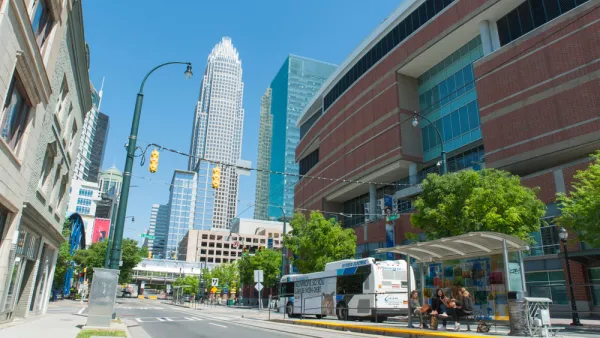
Charlotte Mobility Plan Centers Improved Multimodal Options and Economic Mobility
The city’s newly approved Strategic Mobility Plan highlights the need for better options when it comes to walking, biking, and public transit, setting a goal to reduce driving to half of total trips.

Planetizen Federal Action Tracker
A weekly monitor of how Trump’s orders and actions are impacting planners and planning in America.

Amtrak, CN end decades-long dispute with eight-year agreement
The new operating agreement establishes an updated framework for the companies to work together, including processes to resolve disputes.

Northwest rail fans eager for Sept. 30 debut of Amtrak’s Airo fleet
Get ready for that new train smell and more seats. But they won’t go faster or run more frequently on the Cascades route in Washington and Oregon.

Brightline Florida files for bankruptcy
The transit company is over $5 billion in debt.

St. Louis Metro to test if single-car trains can reduce operating costs, maintain rider satisfaction
The pilot program will run from October to spring 2027, and begin with one single-car train operating on Metrolink’s Red and Blue lines.

Pennsylvania is building data centers in abandoned mines
Housing data centers in mines provides an alternative to destroying local forests and may spare residents from data centers’ noise and air pollution.

FREE Course: Walkable City 1: Why Walkability?
After describing his path towards focusing on walkability as the essence of good planning, Jeff Speck marches through his five principal reasons for making more walkable places.
Reinventing Malls: Planning Alchemy—Turning Gray Fields Into Gold
The course focuses on the opportunities and imperatives that shape reinvention of mall sites.

City of Thousand Oaks
City of Wisconsin Rapids
Harvard University Graduate School of Design
The Architects Foundation
University of Cincinnati Online
The Pocatello Development Authority
The Urban Renewal Agency of the City of Pocatello