For decades the size of the average American house has trended upward. 2017 saw that trend slow and reverse.


The average American house is almost twice as big in 2017 as it was in 1980, but last year that trend saw a small reversal. "The median home size decreased slightly, to 2,422 square feet, in 2016, according to the U.S. Census Bureau’s annual report on the characteristics of new housing." reports Patrick Clark for Bloomberg. Down from 2,467 square feet in 2015, but still up from considerably from 1,645 square feet in 1980 or even 2,370 in 2010.
The trend is not being driven by the tiny homes or mansions, but rather because there are more homes in the range of 1,400-1,799 square feet.
Read the full story: U.S. Homes Are Finally Shrinking
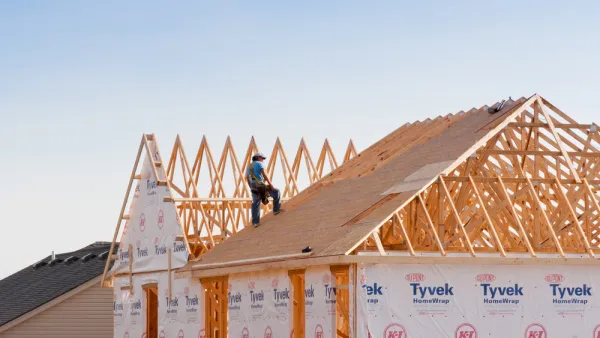
New Single-Family Homes Shrank in 2019
The Census Bureau's "Characteristics of New Housing" report shows declining size among single-family homes built and sold new in 2019.
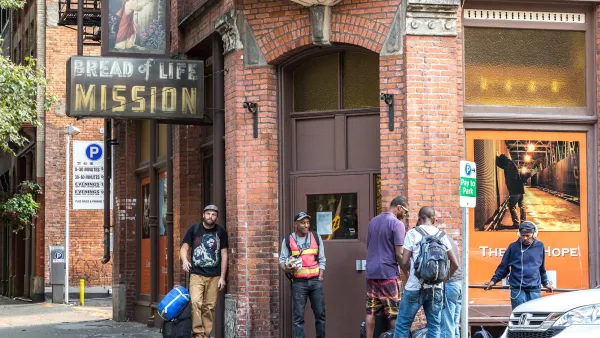
Seattle mayor pledges to build 500 shelter units by June
The Seattle Times editorial board expresses cautious optimism about the mayor's ambitious supportive housing plan.

These Las Vegas tiny homes can be assembled in an hour
The city approved a project using modular microhousing units that will rent for roughly $1,000 per month.

Desperate measures: Advocates weigh draining Lake Powell to fill Colorado River
Draining the reservoir could reduce evaporation losses by a couple hundred thousand acre-feet.

Eastern Nebraska is running out of electricity
Data centers and electrification are straining eastern Nebraska’s grid, throttling economic development.

Malls are becoming the midtowns of the future
Mall and office park redevelopments are a generational opportunity to create new nodes of urbanity.

NYC breaks ground on anti-flooding infrastructure project
New York City's new system will reduce stormwater flows to local sewers by 90%.

One Kentucky town’s secret to affordable housing
The Smoketown Community Land Trust has already built seven affordable homes for community members.

Houston gains petal-shaped cooling infrastructure to make streets more ‘delightful’
The city has installed the pavilions along 15 blocks in Houston.

FREE Course: Walkable City 1: Why Walkability?
After describing his path towards focusing on walkability as the essence of good planning, Jeff Speck marches through his five principal reasons for making more walkable places.
Reinventing Malls: Planning Alchemy—Turning Gray Fields Into Gold
The course focuses on the opportunities and imperatives that shape reinvention of mall sites.

City of Rosemead
Rutgers University, Edward J. Bloustein School of Planning and Public Policy
One Hundred Miles
University of Michigan School for Environment and Sustainability (SEAS)
Hunter College, City University of New York (CUNY)
The Architects Foundation
City of Cambridge
Montrose County
The Pocatello Development Authority