The Paris Agreement gave public officials an opportunity to criticize the President on his climate denial, but these statements ring truer when the officials seek out climate solutions at home as well.


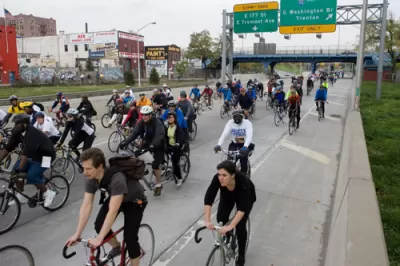
When Donald Trump announced his intention not to join the Paris Agreement, many mayors and governors were quick to denounce that move, but they have the power to do more than criticize. "State and city governments shape Americans' carbon footprints through the policies they make about land use and transportation," Josh Barro writes for Business Insider.
Barro argues that while mayors and governors in liberal places score easy points criticizing Trump, they could actually curb emissions by investing in public transit and encouraging density in their cities. "I was amused, for example, that New York Gov. Andrew Cuomo chose to highlight his support for the Paris Agreement by lighting up the new Kosciuszko Bridge in green," Barro says. Cuomo has spent funds to widen New York highways while neglecting the city's public transit.
Read the full story: Here's what mayors and governors should really do to support the Paris Agreement
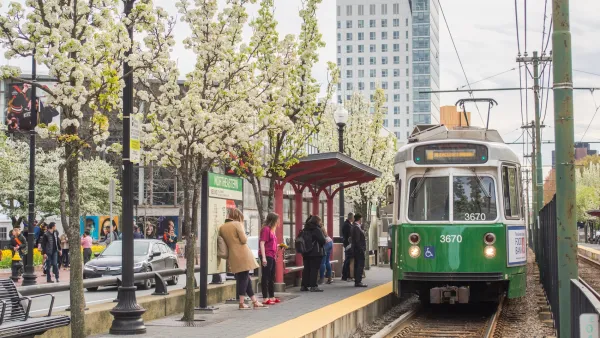
MBTA 'Resilience Roadmap' plans for climate change's impacts on transit infrastructure
The Massachusetts transit agency says its tunnels and power systems are at greatest risk from increasingly unpredictable extreme weather.
Planning Trends for 2026: States and Cities Take Initiative, Passenger Rail Gains Steam, and the Costs of AI Revealed
With federal funding for everything from transportation projects to housing assistance under threat, city and state governments are poised to take a stronger role in building strong, resilient local economies and public services.

Miami Lets Developers Buy Double Density with Climate Fund Contributions
City officials are close to passing a law that would give major density bonuses to developers in exchange for funding for seawalls, pump stations, and other climate resilience projects.

Planetizen Federal Action Tracker
A weekly monitor of how Trump’s orders and actions are impacting planners and planning in America.

California plans to bury El Niño’s downpour
If the state plays its cards right, it may be able to store a billion acre-feet of El Niño’s water in aquifers.

Desperate measures: Advocates weigh draining Lake Powell to fill Colorado River
Draining the reservoir could reduce evaporation losses by a couple hundred thousand acre-feet.

In Texas, data centers are swallowing promised parkland
Residents who moved to Taylor, Texas for a rural community now have to contend with three data centers in their backyard.

How a Chicago-sized wind farm beat the odds and powered on
The project spanned five presidential administrations and a standoff with a U.S. military base.

MTA gives itself 30 days to transform pit into basketball court
The site has been under construction since 2022; the city originally estimated it would finish the court in 2024.

FREE Course: Walkable City 1: Why Walkability?
After describing his path towards focusing on walkability as the essence of good planning, Jeff Speck marches through his five principal reasons for making more walkable places.
Reinventing Malls: Planning Alchemy—Turning Gray Fields Into Gold
The course focuses on the opportunities and imperatives that shape reinvention of mall sites.

City of Rosemead
Rutgers University, Edward J. Bloustein School of Planning and Public Policy
One Hundred Miles
Hunter College, City University of New York (CUNY)
The Architects Foundation
University of Cincinnati Online
City of Cambridge
Montrose County
The Pocatello Development Authority