Latino Chicagoans are more likely to live in diverse neighborhoods than whites or blacks do.


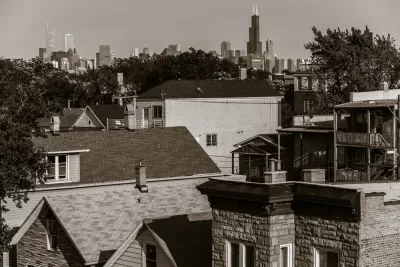
Chicagoans of all ethnicities tend to live in more segregated neighborhoods than they say they would like to, according to research from a study by Kasey Henricks and Amanda Lewis titled "A Tale of Three Cities: The State of Racial Justice in Chicago."
"Whites, blacks and Latinos all describe their ideal as a neighborhood where their own racial or ethnic group is less than half the population," Dennis Rodkin writes for Crain's, but Chicagoans from all three groups are likely to live in neighborhoods where their ethnicity represents the majority. According to Hendricks and Lewis' research the average white Chicagoans live in neighborhoods that are 74 percent white.
"In Cook County, affluent black people are more likely to live near poor blacks than near white people of their income level—or any income level—according to a new study from the University of Illinois at Chicago," Rodkin writes to explain more of the report's findings.
Read the full story: Wealthy blacks just as likely to be segregated as poor here

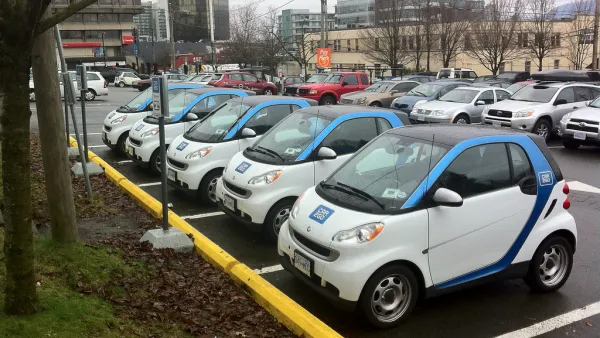
Point-to-Point Car Share Enters Chicago Market
Mode-share enthusiasts excited to get new car share option in the city, though some question why the service is limited to white areas of the city.
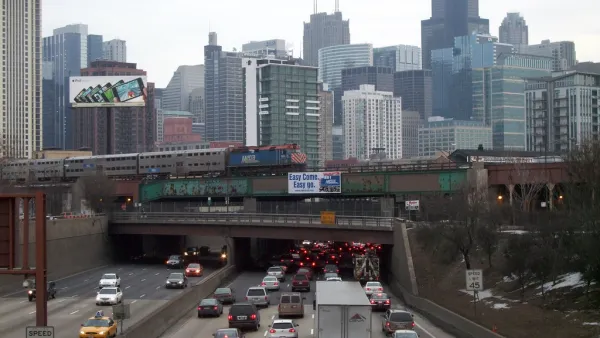
How Urban Diversity Equals Neighborhood Segregation
Statistics sage Nate Silver crunches the numbers illustrating the relationship between U.S. cities' overall diversity and their neighborhood diversity. His conclusion: the greater diversity, the greater the segregation.
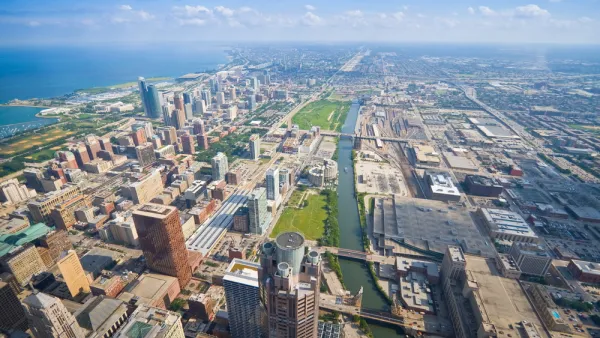
The Impact of Segregation and Disinvestment on Chicago's Black Population
The city is losing black residents, but those who stay are relocating to parts of the city with less transportation access and opportunities.

Planetizen Federal Action Tracker
A weekly monitor of how Trump’s orders and actions are impacting planners and planning in America.

Amtrak, CN end decades-long dispute with eight-year agreement
The new operating agreement establishes an updated framework for the companies to work together, including processes to resolve disputes.

Judges permit Denver to divert 77,000 acre feet from the Colorado River for reservoir expansion
Overuse and climate change have caused the Colorado River’s water levels to plummet.

NYC DOT wants faster, more permanent street upgrades
The city is examining ways to build more concrete infrastructure without getting entangled in 'decades-long' projects.

'Something we’ve never seen before:' rising utility rates could strain city finances nationwide
Data centers, climate change and other factors have caused utility rates in the United States to increase by 38% since 2020.

Trump to overrule local leaders, lease millions of acres of America’s Pacific Island territories’ seafloors to mining companies
International law says that the Indigenous people of America’s territories have a right to prior and informed consent regarding projects that impact their countries.

FREE Course: Walkable City 1: Why Walkability?
After describing his path towards focusing on walkability as the essence of good planning, Jeff Speck marches through his five principal reasons for making more walkable places.
Reinventing Malls: Planning Alchemy—Turning Gray Fields Into Gold
The course focuses on the opportunities and imperatives that shape reinvention of mall sites.

Harvard University Graduate School of Design
KFH Group Inc.
Greater Baltimore Committee
The Architects Foundation
University of Cincinnati Online
The Pocatello Development Authority
The Urban Renewal Agency of the City of Pocatello