The new plan to reduce delays on New York's subway system will rely on short-term fixes, rather than long-term modernization projects.


According to Emma G. Fitzsimmons, "officials announced a new plan to address soaring subway delays in New York City."
The Metropolitan Transportation Authority (MTA) announced a "six-point plan" to address the top causes of subway service delays. Included in the plan is a decision to restructure management "to separate the Chairman and CEO positions into two, to further strengthen the MTA’s leadership team and leadership structure," as described by an announcement on the MTA website.
According to Fitzsimmons, the plan will focus its efforts on 19 stations on the A,C, and E lines between 125th and Fulton streets, as well as two bottlenecks in the South Bronx. To address overcrowding, sick passengers, and track and signal problems, "the plan includes expanding rapid response teams to fix problems on the tracks; assigning EMTs at five crucial stations to respond when passengers need medical assistance; and directing riders to less crowded areas of a platform to make it easier for them to get on and off trains."
According to Fitzsimmons, transit advocates are hoping to parlay the plan's focus on short-term issues into discussions of larger, systematic problems, like an antiquated signaling system.
Read the full story: Frustrated by Subway Delays? How the M.T.A. Plans to Improve Commutes
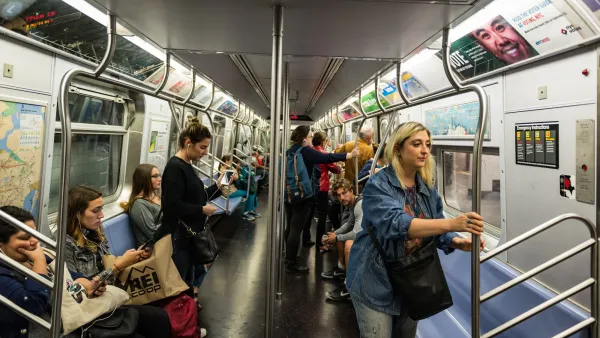
Unlocking the full potential of NYC's Interborough Express
A few strategic investments could turn the IBX into an essential spine of the regional transportation network, not just another branch of New York's subway system.

MTA plans to outfit all buses with stroller storage by next year
All buses will have seats that flip up to allow for stroller storage or more standing room.
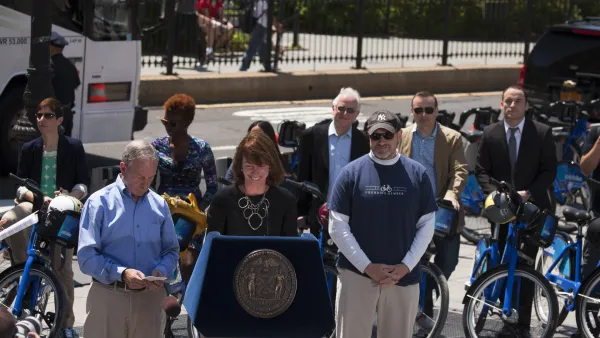
NYC 'bicycle visionary' Janette Sadik-Khan returns to public service with appointment to MTA board
The former DOT commissioner is known for her efforts to make NYC streets safe for people biking and walking.

Planetizen Federal Action Tracker
A weekly monitor of how Trump’s orders and actions are impacting planners and planning in America.

California plans to bury El Niño’s downpour
If the state plays its cards right, it may be able to store a billion acre-feet of El Niño’s water in aquifers.

Desperate measures: Advocates weigh draining Lake Powell to fill Colorado River
Draining the reservoir could reduce evaporation losses by a couple hundred thousand acre-feet.

Los Angeles just elected an urban planner as its mayor
Transportation analysts are optimistic that Raman will be more aggressive in addressing transit issues than Bass.

Mamdani’s pied-à-terre tax survives legal challenge
A panel of judges found that the plaintiffs failed to demonstrate injury as a result of New York City's implementation of the tax.

Eastern Nebraska is running out of electricity
Data centers and electrification are straining eastern Nebraska’s grid, throttling economic development.

FREE Course: Walkable City 1: Why Walkability?
After describing his path towards focusing on walkability as the essence of good planning, Jeff Speck marches through his five principal reasons for making more walkable places.
Reinventing Malls: Planning Alchemy—Turning Gray Fields Into Gold
The course focuses on the opportunities and imperatives that shape reinvention of mall sites.

City of Rosemead
Rutgers University, Edward J. Bloustein School of Planning and Public Policy
One Hundred Miles
University of Michigan School for Environment and Sustainability (SEAS)
Hunter College, City University of New York (CUNY)
The Architects Foundation
City of Cambridge
Montrose County
The Pocatello Development Authority