Why people don't walk much anymore and what we can do about it.


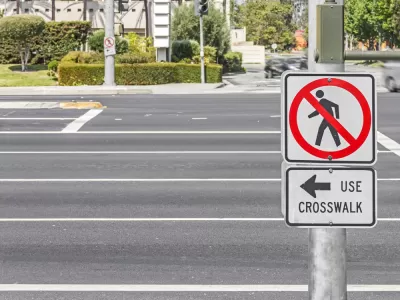
"If you’ve ever found yourself wondering, if only there was a concise resource available that articulated key reasons why walking is so much less prevalent in the modern age; why this presents unanticipated threats to safety, health, the environment, child development, and social equity; and what we in our communities can do to effectively advocate for change; and that argues the case in a manner compelling to folks across the political spectrum, then today’s your lucky day. Because yesterday marked the release of “The Criminalization of Walking” by law professor and congenial urbanist, Michael Lewyn, and it’s got all the tools you need to restore common sense, wherever you live."
Scott Doyon discusses highlights from the new book, and throws in an anecdote.
Read the full story: The (Irrational) Criminalization of Walking

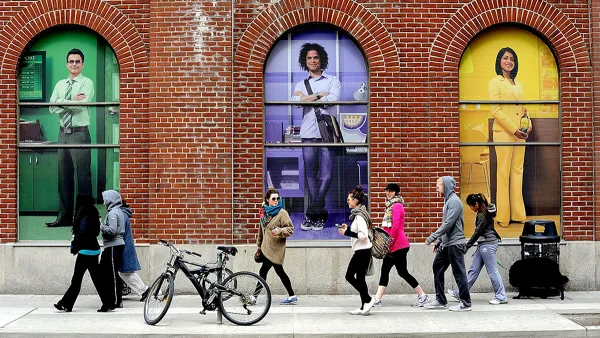
The Sidewalk to Hell is Paved with Good Intentions
When the vision's all right but the outcomes are all wrong, zoning's often the problem. And the public realm is left holding the bag.

The number of kids walking to school dropped from over 50% to 11% since the 1960s
Unsafe pedestrian infrastructure makes walking to school dangerous or impossible for a growing number of American students.
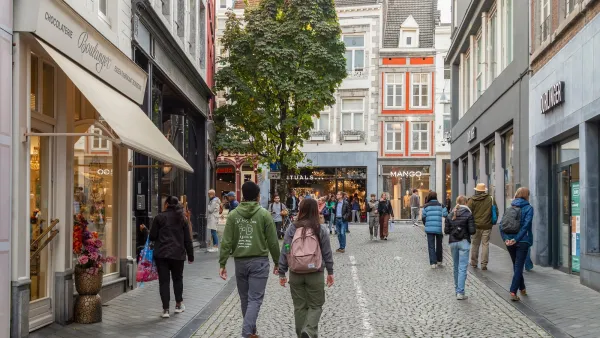
Planning for Love, Part 3: Enhancing human connection through walkability
In the third and final installment of this series, author Hannah Kosoff examines what her research findings say about modern dating and urban form.

Planetizen Federal Action Tracker
A weekly monitor of how Trump’s orders and actions are impacting planners and planning in America.

Amtrak, CN end decades-long dispute with eight-year agreement
The new operating agreement establishes an updated framework for the companies to work together, including processes to resolve disputes.
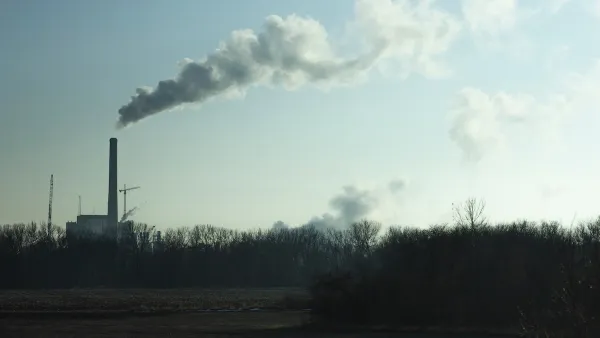
Nation's most wind-powered state turns to coal as data centers increase energy demand
For the first time in decades, Iowa has increased its generation of coal power.

Alabama scores up to $2.5 billion federal loan for largest infrastructure project in state’s history
The Mobile River Bridge and Bayway Project aims to ease congestion at Alabama’s worst bottleneck.

Trump is considering data centers on 6 states' public land — some state officials say they had no idea
If the administration approves the proposed projects, data center and data center-related developments will cover 17,600 acres of public land.

Despite court ruling, Trump is keeping nearly all wind projects in the US on hold
At least 110 wind energy projects have not heard from the government since a federal judge ruled that the Trump administration's freeze on wind turbine clearances was likely illegal.

FREE Course: Walkable City 1: Why Walkability?
After describing his path towards focusing on walkability as the essence of good planning, Jeff Speck marches through his five principal reasons for making more walkable places.
Reinventing Malls: Planning Alchemy—Turning Gray Fields Into Gold
The course focuses on the opportunities and imperatives that shape reinvention of mall sites.

KFH Group Inc.
Greater Baltimore Committee
Eagle County Government
The Architects Foundation
University of Cincinnati Online
The Pocatello Development Authority
The Urban Renewal Agency of the City of Pocatello