Considering it costs $1 billion per mile to dig L.A.'s subway tunnels, how does Elon Musk plan to build a series of car-carrying tunnels with out breaking the bank?


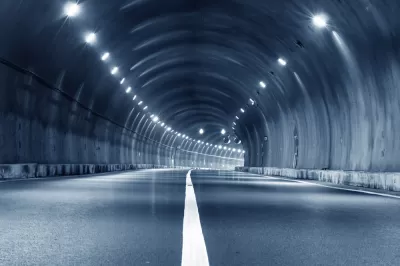
Elon Musk is serious enough about his plan to build tunnels for cars below L.A. that he has at least given thought to the huge hurdles his plan will have to overcome—namely, the cost of engineering such an endeavor. Ruth Reader of Fast Company writes that the entrepreneur plans to dig the tunnels in a much more cost effective manner, "correcting inefficiencies" in the process.
(Musk) plans to make the diameter of the tunnels only 12 feet wide, much smaller than the typical 26-28 feet. He also says that a machine that tunnels and reinforces continuously will allow the burrowing process to go more quickly—especially if he were to increase the power of such a machine.
Elon Musk's discussion of the tunnel project and the Hyperloop transportation system from the TED2017 conference can be viewed online here.
FULL STORY: Elon Musk Shows Off A “Boring” Tunnel Network To End L.A.’s Traffic Jams

Musk's Boring Co. Drops Westside L.A. Tunnel Plans
A lawsuit by a pair of Westside L.A. neighborhood groups has killed the Boring Company's plans to drill a tunnel below Sepulveda Boulevard.
A Scathing Critique of Elon Musk's Big Tunneling Idea
Not all ideas are worth attention. What does the fact that ideas like Elon Musk's The Boring Company get so much attention say about the quality of civic discourse, or the potential for planning to improve the built environment?
Two Boring Co. Projects Appear to Bite the Dust
References to the Dugout Loop, in Los Angeles, and the Baltimore-to-Washington Loop have been removed from the Boring Company's website.

The state-sanctioned urbicide of Austin
People don’t kill cities. Freeways do.

US to reduce Colorado River water deliveries to Mexico
A new Colorado Treaty amendment reduces Mexico’s Colorado River water allocation by 250,000 acre feet.

New Jersey’s second-largest city bans standalone data centers
Jersey City will continue to allow co-location facilities, such as those meant for research institutions that store their own data.

Amtrak not solely to blame for New Jersey commuter rail's unreliability, report finds
A new study from the Garden State Initiative found that NJ Transit’s budget grew 20% across a 4 year period, but reliability declined significantly over the same period.

EPA erases limits on planet-warming pollution from power plants
Under Monday’s plan, power plants would still have some limits on how much mercury, arsenic and other contaminants they can emit.

Phoenix announces new on-demand transit service, more frequent RAPID buses
Both new services will launch in October, and are part of Phoenix's Project Effective Access Solutions for Easing Congestion.

FREE Course: Walkable City 1: Why Walkability?
After describing his path towards focusing on walkability as the essence of good planning, Jeff Speck marches through his five principal reasons for making more walkable places.
Reinventing Malls: Planning Alchemy—Turning Gray Fields Into Gold
The course focuses on the opportunities and imperatives that shape reinvention of mall sites.

Eagle County Government
Harvard University Graduate School of Design
Nashville Planning Department
The Architects Foundation
University of Cincinnati Online
The Pocatello Development Authority
The Urban Renewal Agency of the City of Pocatello
Journal of the American Planning Association