If self-driving cars means more sharing and less car ownership, we may finally lose our appetite for parking, even in the motor city.


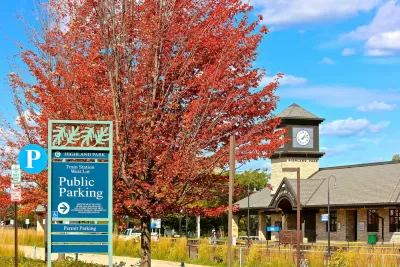
John Gallagher of The Detroit Free Press argues that the city of Detroit and its suburbs has been "disfigured" by parking lots, but he hopes that changes in technology and the city could alter that. "Most proponents of autonomous vehicles predict we’ll need a lot fewer parking spaces in the future because driverless cars will not need to park at all, except at night," Gallagher writes. He hopes that many people would share a single driverless car and rather than sitting idle, taking up space on a lot, shared cars would replace several cars by driving around picking up multiple people and running them to and from wherever they need to go.
Still, Gallagher writes, ride hailing services and the expansion of public transit has not yet saved Detroit from parking lot fever. "If anything, recent trends have pushed up — rather than reduced — demand for parking in Detroit and in suburban downtowns such as Birmingham and Ferndale," Gallagher reports.
Read the full story: Self-driving cars, QLINE and bikes could leave parking lots empty

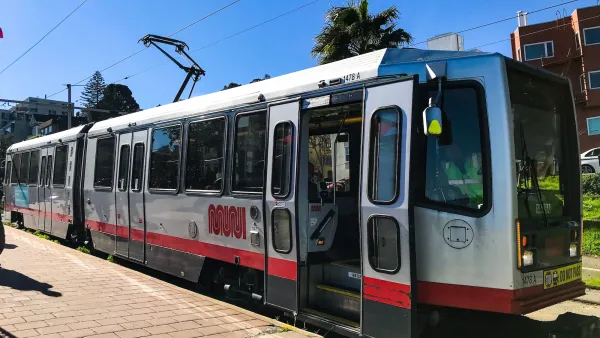
San Francisco cyclists push to allow bikes on Muni trains
The agency is one of few that bans bikes from its trains due to space constraints.
April must-reads: Top 10 articles from last month
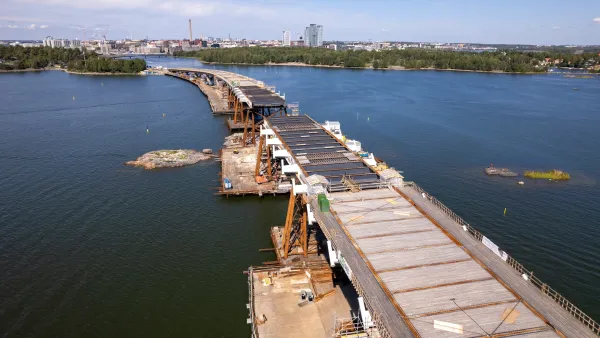
The world's longest car-free bridge opens in Finland, Amtrak's new Mardi Gras line shatters ridership predictions, and Bay Area commuters could lose a third of Caltrain stations.
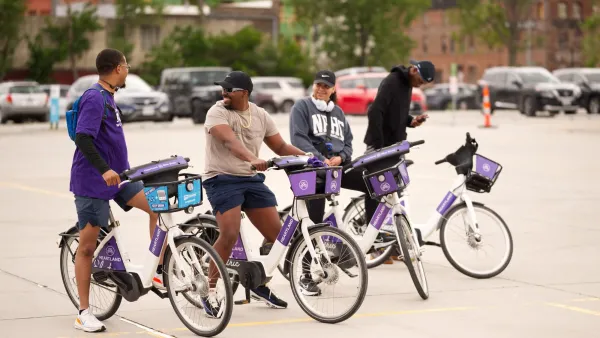
Omaha's 400 shared e-bikes are now free to all residents
Before eliminating fares for locals, the Heartland system only recovered 10%-15% of its operating costs through fare revenue.

Planetizen Federal Action Tracker
A weekly monitor of how Trump’s orders and actions are impacting planners and planning in America.

Amtrak, CN end decades-long dispute with eight-year agreement
The new operating agreement establishes an updated framework for the companies to work together, including processes to resolve disputes.

Judges permit Denver to divert 77,000 acre feet from the Colorado River for reservoir expansion
Overuse and climate change have caused the Colorado River’s water levels to plummet.

NYC DOT wants faster, more permanent street upgrades
The city is examining ways to build more concrete infrastructure without getting entangled in 'decades-long' projects.

'Something we’ve never seen before:' rising utility rates could strain city finances nationwide
Data centers, climate change and other factors have caused utility rates in the United States to increase by 38% since 2020.

Trump to overrule local leaders, lease millions of acres of America’s Pacific Island territories’ seafloors to mining companies
International law says that the Indigenous people of America’s territories have a right to prior and informed consent regarding projects that impact their countries.

FREE Course: Walkable City 1: Why Walkability?
After describing his path towards focusing on walkability as the essence of good planning, Jeff Speck marches through his five principal reasons for making more walkable places.
Reinventing Malls: Planning Alchemy—Turning Gray Fields Into Gold
The course focuses on the opportunities and imperatives that shape reinvention of mall sites.

Harvard University Graduate School of Design
KFH Group Inc.
Greater Baltimore Committee
The Architects Foundation
University of Cincinnati Online
The Pocatello Development Authority
The Urban Renewal Agency of the City of Pocatello