Some local officials in unincorporated Hillsborough County, outside of Tampa, Florida, are trying to take local residents up to the consequences of unmitigated sprawl.



Steve Contorno reports on the methods and mission of Hillborough County (Florida) County Commissioner Stacy White, who is on a one-person mission against sprawl.
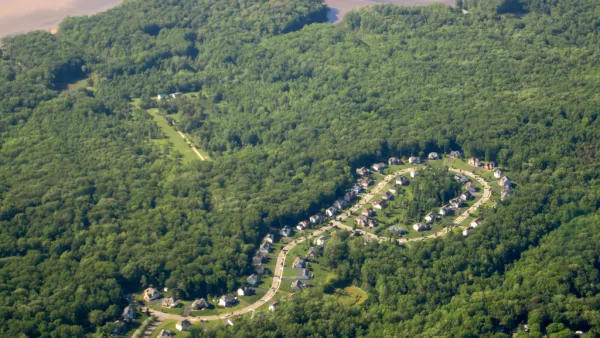
Contorno describes a recent helicopter ride, where White had Sheriff David Gee as a captive audience and a sympathetic ear for his anti-sprawl message:
Looking down, Gee took in the thousands of houses that have sprung up since he joined the department in 1978. For him, they mean one thing: "Calls for service," he said.
Since 1978, the population of the county has more than doubled, with another 600,000 people expected in the 25 years. Much of that past growth has settled into suburban areas with low density, and much of the future growth will follow a similar pattern.
In all those people, White sees an encroachment on the county's rural and environmental lands. He sees an influx of cars turning two-lane country roads into makeshift thoroughfares. He sees the final nail in the coffin of southeast Hillsborough's once flourishing tomato farms and citrus groves.
As a response, White, a Republican, "has made preventing unmitigated sprawl his top priority as commissioner," according to Contorno. The article includes a lot more detail about the current and past plans that have enabled the county's sprawling development patterns, and the consequences, especially with regard to public safety, of those decisions.
Read the full story: In his fight to stop sprawl, Hillsborough commissioner takes to the sky

Opinion: Ohio Needs Public Transit
A new Intel facility is set to bring thousands of workers to rural Ohio. Will the state embrace mass transit or give in to auto-centric sprawl?

Carbon Offsets for Suburban Developments? The Courts Could Decide
The county of San Diego wants sprawling suburban developments to buy carbon offsets, billing the idea as a fix to the region's housing affordability crisis.
Limitations on Rural Sprawl in Maryland Nixed
Changes in state law that rolls back regulations on septic systems could spark more residential sprawl in Maryland's rural areas.

Planetizen Federal Action Tracker
A weekly monitor of how Trump’s orders and actions are impacting planners and planning in America.

California plans to bury El Niño’s downpour
If the state plays its cards right, it may be able to store a billion acre-feet of El Niño’s water in aquifers.

Desperate measures: Advocates weigh draining Lake Powell to fill Colorado River
Draining the reservoir could reduce evaporation losses by a couple hundred thousand acre-feet.

Chicago voters approve permanent festival grounds, penalty for vacant property owners
Currently, major summer and fall festivals take over public parks for weeks at a time, drawing criticism from nearby residents

NYC votes to cut outdoor dining red tape, speed up permitting
New York City also voted to allow the Department of Transportation to begin work on urgent projects before notifying elected officials.

California appears to reject Prop. 45
The proposition would have expanded the projects that qualify for a streamlined environmental review, effectively paring down the California Environmental Quality Act.

FREE Course: Walkable City 1: Why Walkability?
After describing his path towards focusing on walkability as the essence of good planning, Jeff Speck marches through his five principal reasons for making more walkable places.
Reinventing Malls: Planning Alchemy—Turning Gray Fields Into Gold
The course focuses on the opportunities and imperatives that shape reinvention of mall sites.

City of Rosemead
Rutgers University, Edward J. Bloustein School of Planning and Public Policy
One Hundred Miles
Hunter College, City University of New York (CUNY)
The Architects Foundation
University of Cincinnati Online
City of Cambridge
Montrose County
The Pocatello Development Authority