Climate change means cities around the world will have to deal with a growing number of heat waves.


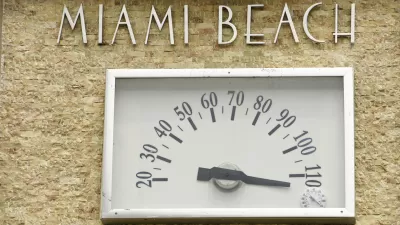
Cities heat up faster than rural areas because of heat shields and as global temperatures rise cities must design to mitigate heat waves. "The build-up of heat-trapping greenhouses in the Earth’s atmosphere vastly increases the chances of heat waves, and they are becoming more frequent, more intense, longer, and deadlier," reports Bob Berwyn in Pacific Standard.
The problem of cooling down hot cities is not new and some strategies can still apply. "Since the Middle Ages, and perhaps longer, central squares with fountains and trees have served as urban cooling shelters on hot summer days, and, at the Delft University of Technology, Anna Solcerova is quantifying that cooling effect and studying how modern cities can use water to reduce the effects of extreme heat," Berwyn reports. Rain water or gray water sprinkled on the ground can have a big impact on temperatures. "On hot days, just one liter of water applied over three square meters can cool the air by about two degrees Celsius at head height, and by three degrees Celsius at ground level," Berwyn writes.
Read the full story: Is Your City Ready for Global Warming’s Coming Heat Waves?

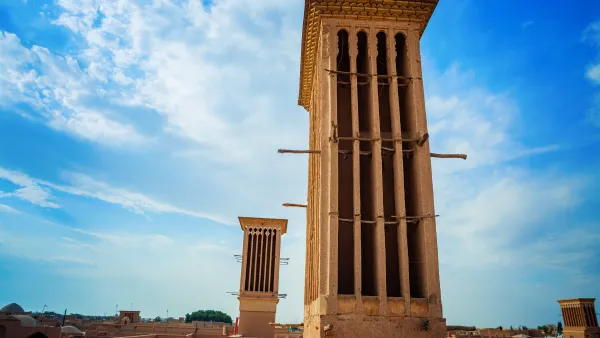
Looking to the Middle East for Cooling Architecture
Cooling mechanisms built into traditional architecture offer lessons for U.S. builders as heat waves grow more intense.

California’s Energy Emergency: Fodder for Democrats and Republicans
What are the lessons to be learned from California's 10-day power grid emergency this month? Democrats and Republicans in Congress have their own takeaways, and both may be right.

Legislature Extends $1.4 Billion Lifeline to California's Last Operating Nuclear Power Plant
A bipartisan bill, fiercely opposed by many in the environmental community, would keep the Diablo Canyon Power Plant operating beyond 2025. The bill received overwhelming approval after it was amended to shorten the duration of the extension.

Planetizen Federal Action Tracker
A weekly monitor of how Trump’s orders and actions are impacting planners and planning in America.

Amtrak, CN end decades-long dispute with eight-year agreement
The new operating agreement establishes an updated framework for the companies to work together, including processes to resolve disputes.

Northwest rail fans eager for Sept. 30 debut of Amtrak’s Airo fleet
Get ready for that new train smell and more seats. But they won’t go faster or run more frequently on the Cascades route in Washington and Oregon.

Brightline Florida files for bankruptcy
The transit company is over $5 billion in debt.

St. Louis Metro to test if single-car trains can reduce operating costs, maintain rider satisfaction
The pilot program will run from October to spring 2027, and begin with one single-car train operating on Metrolink’s Red and Blue lines.

Pennsylvania is building data centers in abandoned mines
Housing data centers in mines provides an alternative to destroying local forests and may spare residents from data centers’ noise and air pollution.

FREE Course: Walkable City 1: Why Walkability?
After describing his path towards focusing on walkability as the essence of good planning, Jeff Speck marches through his five principal reasons for making more walkable places.
Reinventing Malls: Planning Alchemy—Turning Gray Fields Into Gold
The course focuses on the opportunities and imperatives that shape reinvention of mall sites.

City of Thousand Oaks
City of Wisconsin Rapids
Harvard University Graduate School of Design
The Architects Foundation
University of Cincinnati Online
The Pocatello Development Authority
The Urban Renewal Agency of the City of Pocatello