In New York state, municipalities can apply to use a new tool that gathers property data and sifts for red flags. The intent is to identify potential blight before it sets in.


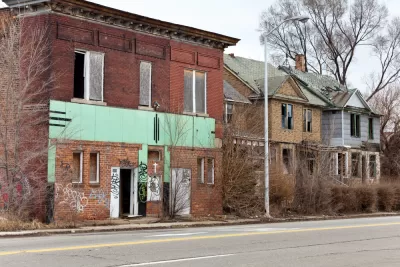
Oscar Perry Abello gives us an anecdote: two properties, one successfully rehabilitated and another left to the whim of absentee landlords and problem tenants. With new data tools like the one New York state is using, municipalities may be able to pinpoint these problem properties.
The issue is that in many cities, "the department of finance uses one filing system to track tax liens, the utilities providers use another, the building code enforcement uses another, the housing authority uses another, and the police department uses another."
A tool called BuildingBlocks, from Boston-based OpportunitySpace Inc, will "reconcile databases of all kinds, from Microsoft Excel spreadsheets to ancient IBM AS/400 database systems. Up to 40 municipalities with a minimum population of 25,000 will be part of the program, which is funded using settlement dollars recovered by the attorney general's office."
Abello mentions that the tool's ability to pinpoint specific properties could help municipalities concerned about unfairly targeting certain communities for code enforcement.
FULL STORY: New Big Data Tool Would Help N.Y. Cities With Blight


Harnessing Data for Community Development
Using data and insights encourages the development of a community, offering an evidence-based strategy to directly address the needs within.
Demolitions Can't Keep Pace With Vacancies in Baltimore
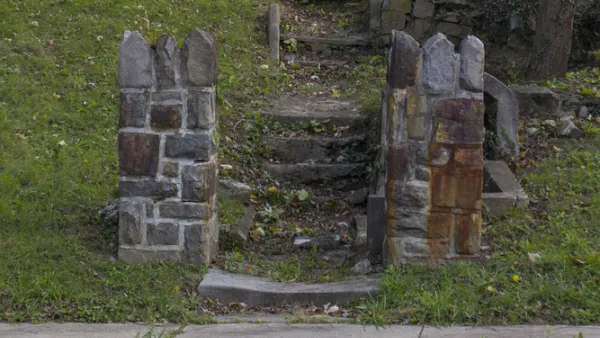
As the city of Baltimore grapples with a declining population, it faces obstinate challenges in controlling the problems associated with vacant buildings, including the "vicious cycle" of vacancies causing more vacancies.
Court Restores 'Doors and Windows' Code Enforcement Ordinance in Philadelphia
One of Philadelphia's most potent code enforcement tools is back in effect after the state Supreme Court overturned a previous ruling by a lower court.

The state-sanctioned urbicide of Austin
People don’t kill cities. Freeways do.

US to reduce Colorado River water deliveries to Mexico
A new Colorado Treaty amendment reduces Mexico’s Colorado River water allocation by 250,000 acre feet.

New Jersey’s second-largest city bans standalone data centers
Jersey City will continue to allow co-location facilities, such as those meant for research institutions that store their own data.

Amtrak not solely to blame for New Jersey commuter rail's unreliability, report finds
A new study from the Garden State Initiative found that NJ Transit’s budget grew 20% across a 4 year period, but reliability declined significantly over the same period.

EPA erases limits on planet-warming pollution from power plants
Under Monday’s plan, power plants would still have some limits on how much mercury, arsenic and other contaminants they can emit.

Phoenix announces new on-demand transit service, more frequent RAPID buses
Both new services will launch in October, and are part of Phoenix's Project Effective Access Solutions for Easing Congestion.

FREE Course: Walkable City 1: Why Walkability?
After describing his path towards focusing on walkability as the essence of good planning, Jeff Speck marches through his five principal reasons for making more walkable places.
Reinventing Malls: Planning Alchemy—Turning Gray Fields Into Gold
The course focuses on the opportunities and imperatives that shape reinvention of mall sites.

Eagle County Government
Harvard University Graduate School of Design
Nashville Planning Department
The Architects Foundation
University of Cincinnati Online
The Pocatello Development Authority
The Urban Renewal Agency of the City of Pocatello
Journal of the American Planning Association