One of Philadelphia's most potent code enforcement tools is back in effect after the state Supreme Court overturned a previous ruling by a lower court.


"Pennsylvania’s Supreme Court has given Philadelphia back its favorite blight-fighting tool," reports Jake Blumgart.
That is, by restoring the "Door's and Windows" ordinance, "state justices unanimously reaffirmed the city’s ability to force property owners to maintain the appearances of their vacant buildings."
"The regulation intends to serve as a hedge against creeping neighborhood blight. It requires owners on blocks where 80 percent of buildings are occupied to install operable windows and doors on empty structures, instead of just boarding them up," according to Blumgart.
While city officials view the policy as a tool for stopping the "cycle of disinvestment," also known as blight, the dispute over the ordinance began when a property owner pushed back on numerous violations.
Read the full story: Pennsylvania's Supreme Court restores Philly's right to fight blight with fines for boarded windows and doors
How Cities Are Stopping the Blight Contagion
Every city with neighborhoods in decline and a lack of demand for new investment is faced with the challenge of how to address blight. Each city's challenges are unique, but many are finding new and effective strategies to end the spread of blight.
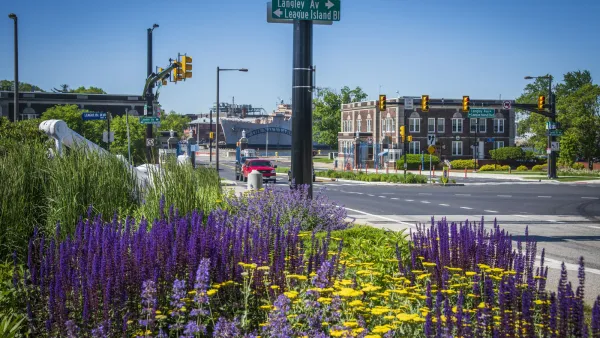
Philadelphia sees 29% drop in gun violence near new green spaces
A city-backed program that cleans up blighted and vacant lots is creating new public spaces and reducing crime in surrounding communities.
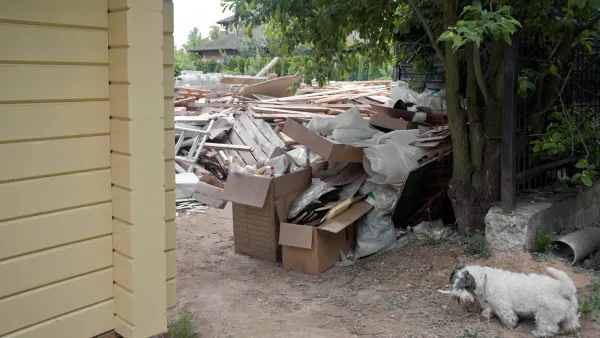
Controversial Blight Ordinance in Gilbert, Arizona, Zeroes in on Backyards
Local officials in Gilbert, Arizona, say a new town ordinance that will fine homeowners for unsightly debris in their backyards is about fighting blight; critics say it’s a violation of their Fourth Amendment right against unreasonable search and seizure.

Planetizen Federal Action Tracker
A weekly monitor of how Trump’s orders and actions are impacting planners and planning in America.

California plans to bury El Niño’s downpour
If the state plays its cards right, it may be able to store a billion acre-feet of El Niño’s water in aquifers.

Desperate measures: Advocates weigh draining Lake Powell to fill Colorado River
Draining the reservoir could reduce evaporation losses by a couple hundred thousand acre-feet.

US buildings threatened, destroyed by fires set to triple by 2060
Researchers found a high fire risk for socioeconomically vulnerable neighborhoods in the American West.

LA residents may be allowed to paint their own crosswalks
Councilwoman Katy Yaroslavsky put out a motion instructing the Los Angeles Department of Public Transportation to study the feasibility of allowing volunteers to paint crosswalks.

Dallas moves to overhaul its zoning code
The city's zoning reform will allow more multi-family and mixed-use developments.

FREE Course: Walkable City 1: Why Walkability?
After describing his path towards focusing on walkability as the essence of good planning, Jeff Speck marches through his five principal reasons for making more walkable places.
Reinventing Malls: Planning Alchemy—Turning Gray Fields Into Gold
The course focuses on the opportunities and imperatives that shape reinvention of mall sites.

City of Rosemead
Rutgers University, Edward J. Bloustein School of Planning and Public Policy
One Hundred Miles
Hunter College, City University of New York (CUNY)
The Architects Foundation
University of Cincinnati Online
City of Cambridge
Montrose County
The Pocatello Development Authority