According to a report in The Telegraph, some U.K. cities want to use air pollution as a reason to remove speed bumps, Peter Walker argues this idea is ludicrous.


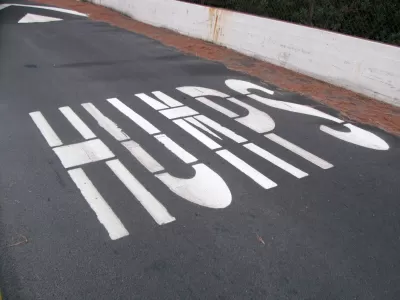
Speed bumps are generally installed to slow drivers enough to keep them moving at a safe speed, but some local city council members in the U.K. think that without them their towns would be less polluted. Because drivers slow down to pass speed bumps and accelerate after them (the argument goes) without speed bumps, drives would move at a more steady pace, use less gas, and produce less emissions, an argument that seems to completely misunderstand the process of induced demand.
"Vehicle pollution isn’t a national crisis because some traffic engineers got carried away with speed bumps or, to mention the other current idiocy of our times, because some councils have built bike lanes. It is because, to put it in the bluntest terms, people drive too often," Peter Walker points out in an editorial for The Guardian.
Speeding up streets by removing their speed bumps would increase their throughput and make driving a more attractive transit option. This would likely increase driving and, consequently, increase air pollution.
Read the full story: Scrapping speed bumps is a ludicrous 'solution' to air pollution

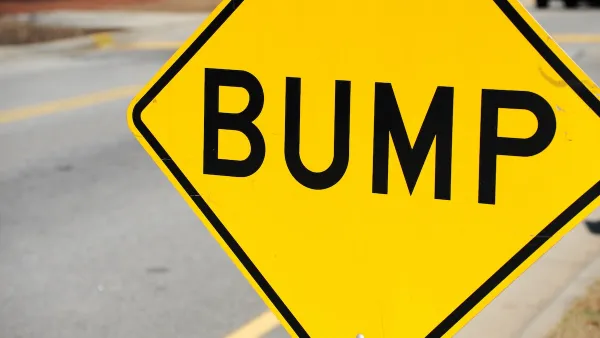
Kansas City Adding Speed Bumps for Traffic Safety
The city is adding the traffic calming measures at 50 high-risk intersections.
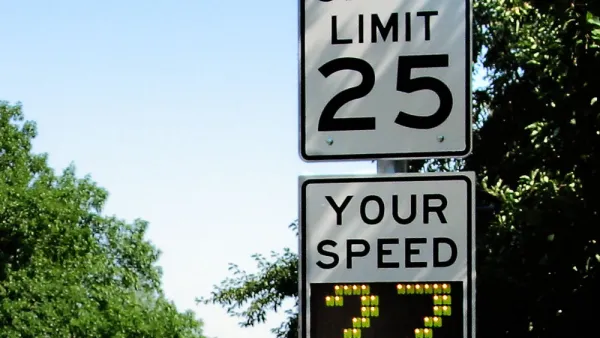
The Case for Slower Cities
Lower speed limits make cities safer, more livable, and, in the long run, more functional.
America's Killer Roads
This oped takes on American street design and blames it for causing countless road injuries and deaths.

Planetizen Federal Action Tracker
A weekly monitor of how Trump’s orders and actions are impacting planners and planning in America.

The state-sanctioned urbicide of Austin
People don’t kill cities. Freeways do.

US to reduce Colorado River water deliveries to Mexico
A new Colorado Treaty amendment reduces Mexico’s Colorado River water allocation by 250,000 acre feet.

Nation's most wind-powered state turns to coal as data centers increase energy demand
For the first time in decades, Iowa has increased its generation of coal power.
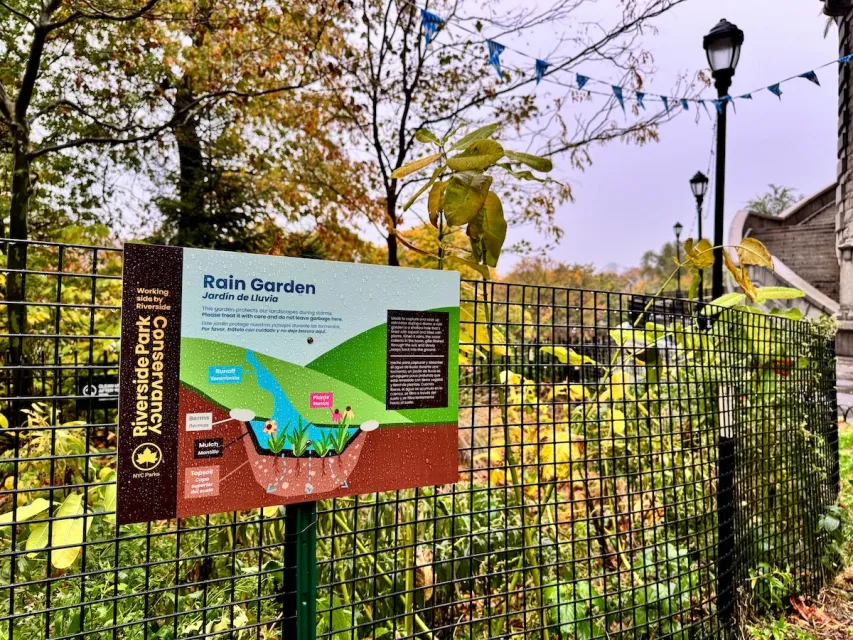
NYC cools commuters with city's first rain garden above a bus stop
New York City officials say the plants in the rain garden can absorb 16 gallons of rainwater during heavy storms.

Brightline West’s future may rely on $6 billion federal loan
The company has until Nov. 2 to make a $400 million equity investment into its proposed high-speed rail line.

FREE Course: Walkable City 1: Why Walkability?
After describing his path towards focusing on walkability as the essence of good planning, Jeff Speck marches through his five principal reasons for making more walkable places.
Reinventing Malls: Planning Alchemy—Turning Gray Fields Into Gold
The course focuses on the opportunities and imperatives that shape reinvention of mall sites.

Eagle County Government
Harvard University Graduate School of Design
Nashville Planning Department
The Architects Foundation
University of Cincinnati Online
The Pocatello Development Authority
The Urban Renewal Agency of the City of Pocatello
Journal of the American Planning Association